
How to Fix Double Barreled Questions in Surveys

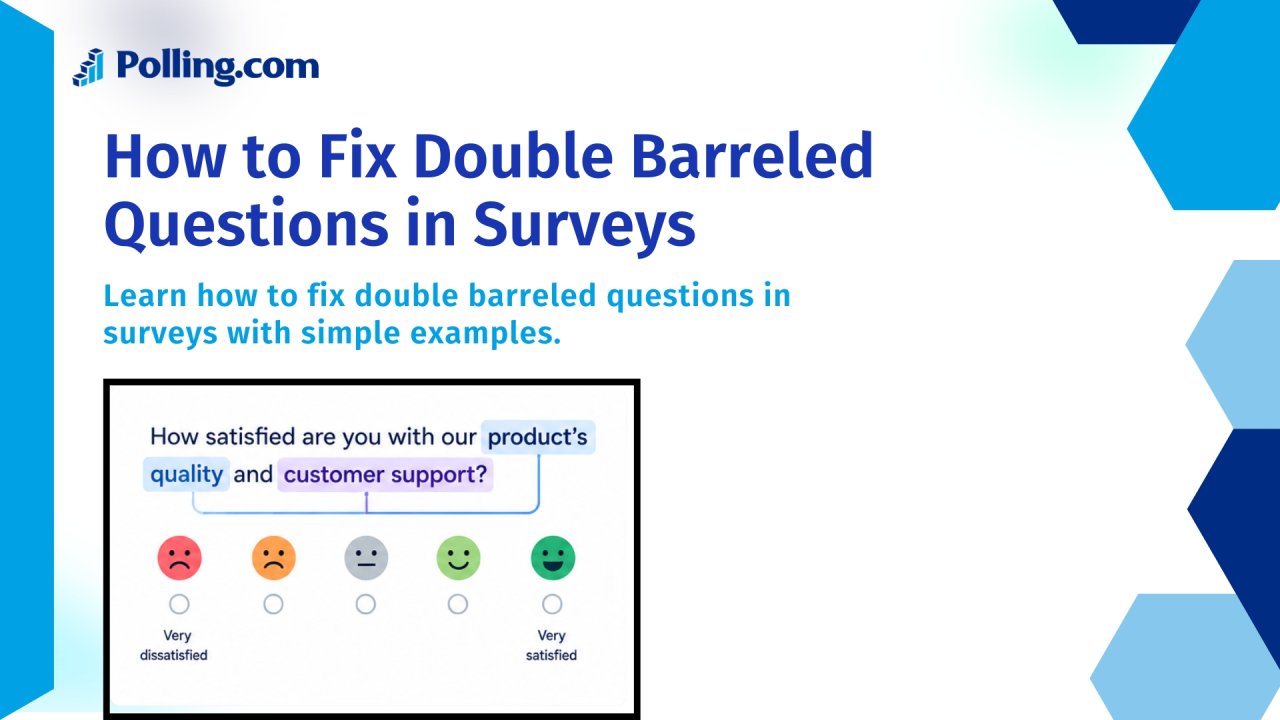
How satisfied are you with our product quality and customer service? At first glance, this may seem like a simple survey question.
But a respondent could be happy with the product while being unhappy with the customer service.
Since the question asks for one answer, there is no clear way to express both opinions.
This is a double-barreled question, a common survey design mistake that can make responses difficult to interpret.
In this guide, you will learn what double barreled questions are, why they can hurt survey data quality, how to identify them, and how to rewrite them into clearer survey questions.
What Are Double Barreled Questions?
A double barreled question asks respondents to evaluate two distinct things but gives them only one response.
The problem is that those two things may not have the same answer.
A respondent could feel positively about one and negatively about the other, making their single response difficult to interpret.
A Simple Double Barreled Question Example
Double barreled: “How satisfied are you with our product’s price and quality?”
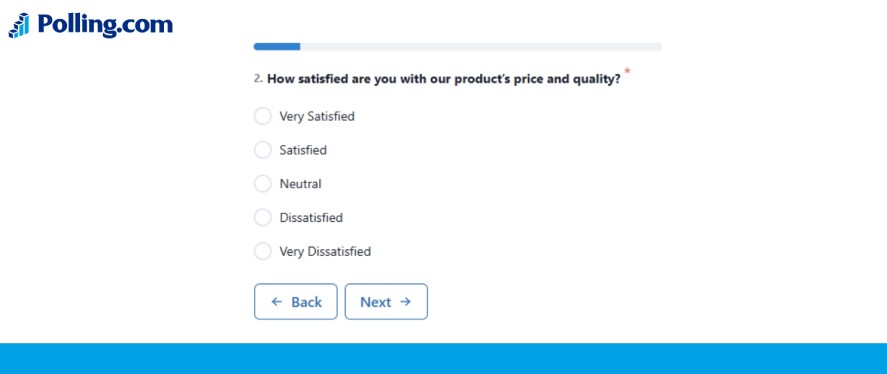
The respondent might think the price is reasonable but believe the product quality is poor.
So, a single satisfaction rating cannot clearly show which part they are rating.
A better approach is to separate the two concepts:
- “How satisfied are you with our product’s price?”
- “How satisfied are you with our product’s quality?”
Now each question measures one concept and gives the respondent a clear way to answer.
The resulting responses are also easier to analyze because you can see how people evaluate price and quality separately.
Why They Are Also Called Compound Questions
You may see terms such as compound question, double-barreled question, and double direct question used to describe this type of survey question.
The terminology can vary between survey and research resources, but the underlying problem is similar: one question combines separate concepts that may need separate answers.
The name matters less than recognizing the structure.
If a respondent could reasonably give different answers to different parts of a question, those parts should usually be separated.
Why Are Double Barreled Questions a Problem?
The main problem with double barreled questions is not awkward wording. It is measurement ambiguity.
When one question asks about two different concepts, a single response may not show what the respondent actually thinks about each one.
Respondents May Have Different Answers to Each Part
A respondent may have different opinions about the two parts of a question.
For example, a customer might be satisfied with a product’s price but dissatisfied with its quality.
If both topics are included in one question, the respondent has to combine these opinions into a single answer.
That makes the response less precise and harder to interpret.
You Cannot Tell Which Part the Respondent Answered
Suppose a respondent selects “Very satisfied” for a question about both product price and quality.
You cannot reliably tell whether they feel very satisfied with both or whether one part influenced their answer more than the other.
This becomes a problem when researchers need to understand the results at a more detailed level.
Double Barreled Questions Can Reduce Survey Data Quality
Ambiguous questions can make survey data less useful.
When respondents interpret a question in different ways, their answers may not measure the same thing.
Instead, separating multiple concepts gives respondents a clearer way to answer and makes the results easier to interpret.
We recommend avoiding questions that combine multiple concepts because they can make responses difficult to understand and analyze.
They Can Lead to Poor Business Decisions
The problem can become more serious when survey results are used to guide decisions.
For example, a company might ask: How satisfied are you with our product quality and customer support?
If the overall rating is low, the company cannot tell from that question whether customers are unhappy with the product quality, the customer support, or both.
Separate questions would show which area needs attention.
This gives the business more useful information for deciding what to improve.
10 Double Barreled Questions Examples and How to Fix Them
Examples make double barreled questions easier to spot.
In each case, the question combines two concepts that could receive different answers. The fix is usually simple: separate the concepts into individual questions.
1. Customer Satisfaction
Bad Question: How satisfied are you with our price and quality?
Problem: A customer may think the product is reasonably priced but be unhappy with its quality. One rating cannot clearly capture both opinions.
Better Questions:
- How satisfied are you with our product’s price?
- How satisfied are you with our product’s quality?
2. Customer Service
Bad Question: Was our support team friendly and helpful?
Problem: A support agent can be friendly without providing useful help. Respondents should be able to rate these qualities separately.
Better Questions:
- How friendly was our support team?
- How helpful was our support team?
3. Employee Surveys
Bad Question: Are you satisfied with your salary and benefits?
Problem: An employee may be happy with their salary but unhappy with their benefits. Combining both topics hides that difference.
Better Questions:
- How satisfied are you with your salary?
- How satisfied are you with your employee benefits?
4. Product Research
Bad Question: Is our product useful and easy to use?
Problem: A product can be useful but difficult to use. A single response does not show whether respondents value the product but struggle with its usability.
Better Questions:
- How useful is our product for your needs?
- How easy is our product to use?
5. Website and UX
Bad Question: Was the website attractive and easy to navigate?
Problem: A respondent may like the website’s visual design but have trouble finding information. These are separate aspects of the user experience.
Better Questions:
- How attractive did you find the website?
- How easy was it to navigate the website?
6. Event Surveys
Bad Question: Was the event informative and enjoyable?
Problem: An event can provide useful information without being enjoyable, or it can be entertaining without providing much useful content. Combining these evaluations makes the result less specific.
Better Questions:
- How informative was the event?
- How enjoyable was the event?
7. Education
Bad Question: Was your instructor knowledgeable and engaging?
Problem: Students may believe an instructor knows the subject well but does not make the lessons engaging. Each quality should be measured separately.
Better Questions:
- How knowledgeable was your instructor?
- How engaging was your instructor?
8. Healthcare Research
Bad Question: Was the clinic clean and the staff professional?
Problem: A patient may be satisfied with the clinic’s cleanliness but have concerns about the staff’s professionalism. One answer cannot clearly identify which experience the respondent is describing.
Better Questions:
- How clean was the clinic?
- How professional was the clinic staff?
9. Market Research
Bad Question: Is this product affordable and reliable?
Problem: A product may be affordable but unreliable, or reliable but too expensive for the target customer. These factors can influence purchase decisions in different ways.
Better Questions:
- How affordable do you consider this product?
- How reliable do you consider this product?
10. Political and Public-Opinion Research
Bad Question: Do you support the proposed policy because it would improve public safety and reduce government spending?
Problem: This question combines multiple claims and asks for one response. A respondent might support the policy for one reason but not the other. The wording also introduces specific assumptions about the policy’s effects, which can make the measurement less clear.
Better Questions:
- How much do you support or oppose the proposed policy?
- How important, if at all, is public safety to your opinion about the proposed policy?
- How important, if at all, is government spending to your opinion about the proposed policy?
The goal in political and public-opinion research is not to favor a particular position.
It is to construct questions that measure one concept clearly and give respondents a fair way to express their views.
How to Identify Double Barreled Questions
You can catch most double barreled questions with a quick review before sending out your survey.
Instead of looking only for certain words, focus on what the question is actually asking respondents to evaluate.
Look for “And” or “Or”
Words such as “and” and “or” can be warning signs.
For example, “How satisfied are you with our price and quality?” should prompt you to check whether the question covers two separate concepts.
However, not every question containing “and” or “or” is double barreled.
The key is whether the conjunction connects two things that could reasonably receive different answers.
Ask Whether the Question Measures More Than One Concept
Identify the main thing you want the question to measure. Then check whether another distinct concept has been added.
For example: How satisfied are you with our product’s price and quality?
This question measures both price and quality.
Since respondents may have different opinions about each one, they should be measured separately.
Ask Whether Someone Could Agree With One Part but Disagree With the Other
This is one of the quickest ways to identify a double barreled question.
Take the question: Do you find our app useful and easy to use?
Could someone answer “yes” to one part and “no” to the other?
If a respondent could find the app useful but difficult to use, the question combines two concepts that should be separated.
Check Whether One Response Can Accurately Answer the Entire Question
Finally, look at the response options and ask whether one answer can represent the respondent’s view of every part of the question.
If someone selects “Very satisfied”, can you tell exactly what they are very satisfied with?
If the question covers multiple concepts, the answer may not provide enough information.
When one response cannot clearly represent the whole question, split the question into separate items.
This makes the survey easier to answer and gives you more useful data to analyze.
How to Fix Double Barreled Questions
Fixing a double barreled question usually means separating the concepts it combines.
A few additional checks can make each question easier to answer and the results easier to interpret.
Split the Question Into Separate Survey Questions
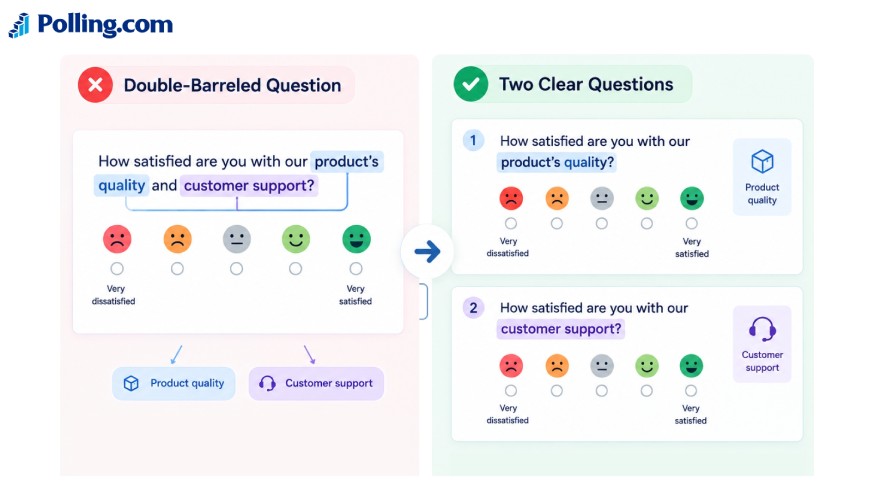
The simplest solution is to turn one double barreled question into two or more separate questions.
Each question should focus on one concept so respondents can give a clear answer.
For example, instead of asking: How satisfied are you with our product’s price and quality?
Separate them into:
- How satisfied are you with our product’s price?
- How satisfied are you with our product’s quality?
This lets you measure each area separately and see where respondents are satisfied or dissatisfied.
Give Each Question a Clear Measurement Goal
Before writing a question, decide exactly what you want to measure.
This helps prevent separate concepts from being combined into one item.
For example, price satisfaction and product-quality satisfaction should have different measurement goals.
Keeping those goals separate makes it easier to choose the right wording and response options for each question.
Match the Response Scale to Each Question
The response scale should fit what the question is measuring.
A satisfaction question might use options from Very dissatisfied to Very satisfied, while a frequency question could use options such as Never, Sometimes, and Often.
Using a response scale that matches the measurement goal gives respondents a clearer way to answer and makes the results easier to interpret.
Keep Survey Questions Short and Specific
Clear wording can help prevent multiple concepts from getting mixed together.
Use concrete language and remove unnecessary details that could make the question harder to understand.
Shorter, more specific questions are easier for respondents to interpret consistently.
Pretest Your Questions Before Launch
Reviewing questions before launch can reveal problems that are easy to miss while writing.
A preview or pilot survey can show whether respondents interpret a question differently than you intended.
If people understand the same question in different ways, revise it before collecting the full set of responses.
Pretesting is an important part of questionnaire development and can help identify unclear wording before it affects your survey data.
Double Barreled Questions vs. Other Bad Survey Questions
Double barreled questions are only one type of poorly worded survey question.
Knowing how they differ from other common problems can help you identify the right issue and fix it correctly.
Double Barreled Questions vs. Leading Questions
A double barreled question combines two or more distinct concepts into one question.
The respondent may have different opinions about each part, but can give only one answer.
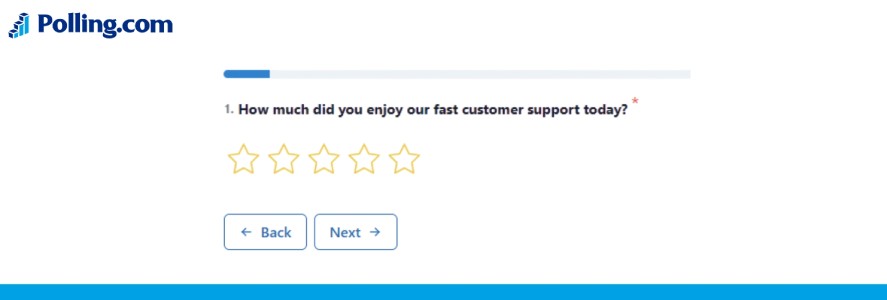
A leading question, on the other hand, uses wording that encourages respondents toward a particular answer.
The main problem is not the number of concepts in the question, but the influence created by its wording.
Double Barreled Questions vs. Loaded Questions
A double barreled question combines separate concepts that may need separate answers.
A loaded question includes an assumption, judgment, or emotionally charged wording that can influence how respondents answer.
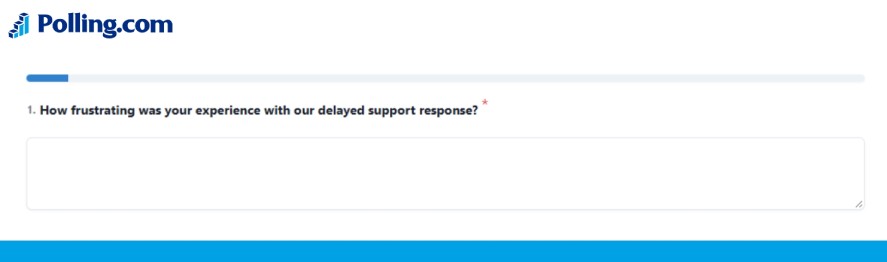
For example, asking whether someone supports a policy that is described as “wasteful” introduces a judgment that may influence the response.
Double Barreled Questions vs. Ambiguous Questions
An ambiguous question can focus on just one concept but still be unclear because it uses vague or undefined terms.
For example: How often do you use our service regularly?
The question focuses on usage frequency, but “regularly” is not specific enough to give every respondent the same meaning.
Double Barreled Questions vs. Double Negative Questions
Double negative questions use two negative terms in a way that can make the question difficult to understand.
Respondents may have trouble determining what agreeing or disagreeing actually means.
For example: Do you disagree that customers should not receive refunds?
A respondent has to work through both “disagree” and “not receive” to determine what agreeing or disagreeing actually means.
This can make the intended meaning harder to follow.
Double Barreled Questions in Different Types of Surveys
Double barrelled questions can appear in almost any type of survey.
The specific topics may change, but the basic rule stays the same: measure separate concepts with separate questions.
Customer Satisfaction Surveys
Customer satisfaction surveys often cover several parts of the customer experience.
Price, product quality, customer support, delivery, and ease of use should be evaluated separately.
For example, instead of asking whether customers are satisfied with the product’s quality and delivery, ask about each one individually.
This helps identify whether problems come from the product itself or another part of the customer experience.
Employee Surveys
Employee surveys can also combine topics that employees may view differently.
Pay, benefits, management, workload, workplace culture, and career opportunities should each have their own questions.
An employee might be satisfied with their salary but unhappy with their workload.
So, separate questions make these differences visible and give employers more useful feedback.
Market Research Surveys
Market research surveys often measure several product attributes at once.
Avoid combining factors such as affordability, reliability, attractiveness, and usefulness in a single question.
For example, a product can be affordable but unreliable.
Asking about each attribute separately shows which qualities matter most and where the product may need improvement.
Political Surveys
Political questionnaires should also measure one concept at a time.
Combining separate policy areas can make it difficult to determine what is driving a respondent’s answer.
Separating the topics makes it easier to understand each part of public opinion.
UX and Product Surveys
UX and product surveys often ask respondents to evaluate different aspects of a design or product.
These aspects should not be combined when people could have different opinions about each one.
For example, ease of use and visual appeal should be measured separately. A website or app could be easy to use but visually unappealing, or attractive but difficult to navigate.
Separate questions make those differences easier to identify and act on.
How Polling.com Helps You Build Clearer Surveys
Polling.com gives survey creators tools to build and review questions before collecting responses.
Survey Builder
Polling.com’s survey builder lets you add questions individually, choose from different question types, set up branching logic, and preview the survey before launch.
The preview can also be checked across different screen sizes, making it easier to catch unclear questions or layout issues before respondents see them.
Templates
You can start a survey from a blank survey, use a template, generate one with AI, or duplicate an existing survey.
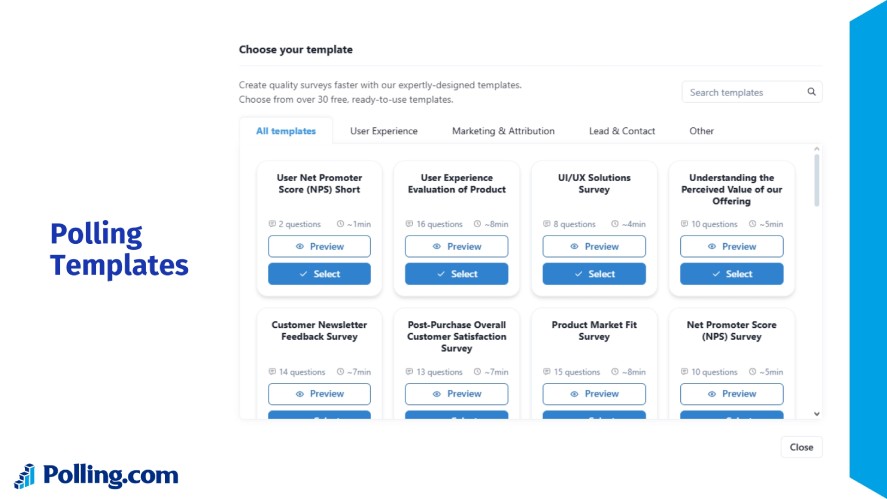
This gives you different ways to build a questionnaire while still allowing you to review and edit individual questions before launch.
Free Plan
Another useful option is Polling.com’s current free plan.
This includes unlimited surveys, survey responses, and survey questions.
Plan details can change, so check the latest pricing and documentation before publishing this claim.
For surveys where question wording matters, the combination of individual question editing, branching, and previewing makes it easier to review each question and fix problems such as double barreled wording before the survey goes live.
Double Barreled Question Checklist
Before launching your survey, review each question with this quick checklist:
- Does it measure one concept? Make sure the question focuses on one clear topic.
- Does it contain an unnecessary “and” or “or”? Check whether the conjunction connects two separate concepts.
- Could respondents give conflicting answers? If someone could agree with one part but disagree with another, split the question.
- Is the wording clear and specific? Remove vague terms or wording that could be interpreted in different ways.
- Do the response options match the question? Make sure respondents have a clear way to answer what you are actually measuring.
- Have you previewed or pretested the question? Review the survey before launch and, when possible, test questions with respondents to identify unclear wording.
If a question fails any of these checks, revise it before collecting responses.
A few minutes of review can make your survey questions clearer and your results easier to interpret.
Frequently Asked Questions About Double Barreled Questions
A double barreled question asks respondents to evaluate two distinct concepts in one question while providing only one response. Because respondents may have different opinions about each concept, the answer can be difficult to interpret.
For example: How satisfied are you with our delivery speed and packaging?
A respondent may be happy with the delivery speed but unhappy with the packaging. Asking about each one separately makes the results easier to understand.
Double barreled questions can create ambiguity because respondents may interpret the question differently or have different opinions about each part. A single response then cannot clearly show what the respondent thinks about each concept, which can make the survey data harder to interpret.
Separate the concepts into individual questions. For example, instead of asking about a product’s price and quality in one question, ask one question about price and another about quality. This gives respondents a clear way to answer each part.
No. “And” is a warning sign, not proof that a question is double barreled. The important test is whether the question asks respondents to evaluate distinct concepts that could reasonably receive different answers. If the concepts belong together and one response can accurately represent them, the question may not be double barreled.
A double barreled question combines two or more concepts and asks for one response. A leading question uses wording that encourages respondents toward a particular answer. One problem concerns the number of concepts being measured, while the other concerns the influence of the wording.
Conclusion
A simple rule can help you avoid most double barreled questions: one question should measure one concept whenever those concepts could reasonably receive different answers.
Before launching a survey, review each question for multiple concepts, unclear wording, and response options that do not match what you are measuring.
Previewing and testing the survey can also help you catch problems before collecting responses.
Polling.com gives you tools to build individual questions, review your questionnaire, and preview how it will appear before launch.
Using these features can help you create clearer questions and collect more useful survey data.