

Exit Survey: Best Practices to Improve Employee Retention

An exit survey helps organizations understand why employees leave and how they can improve the workplace.
It gives departing employees a chance to share honest feedback about their experience and helps HR teams identify issues that may affect retention and engagement.
Many employees feel more comfortable speaking openly once they have decided to leave. Their feedback can reveal patterns related to management, career growth, company culture, compensation, or work-life balance.
These insights often do not appear in day-to-day conversations or regular employee surveys.
Over time, employee exit surveys help organizations make better decisions, strengthen the employee experience, and reduce avoidable turnover.
They also provide valuable data for workforce planning and continuous improvement.
In this guide, you’ll learn what an exit survey is, when to send one, which exit survey questions to ask, best practices for designing effective surveys, common mistakes to avoid, and how modern exit survey software can simplify the entire process.
What Is an Exit Survey?
An exit survey is a questionnaire completed by an employee before or shortly after leaving a company.
Its purpose is to understand why the employee decided to leave and gather feedback that can improve the workplace.
Unlike informal conversations, an employee exit survey follows a consistent format.
This makes it easier to compare responses, identify trends, and measure changes over time.
HR teams, People Operations teams, or managers usually oversee the survey as part of the offboarding process.
Exit Survey vs. Exit Interview
An exit survey and an exit interview both collect feedback from departing employees, but they do so in different ways.
An exit survey is usually a written questionnaire completed through an exit survey form or online platform.
It can be anonymous, which often encourages employees to share more honest opinions about management, communication, or workplace culture.
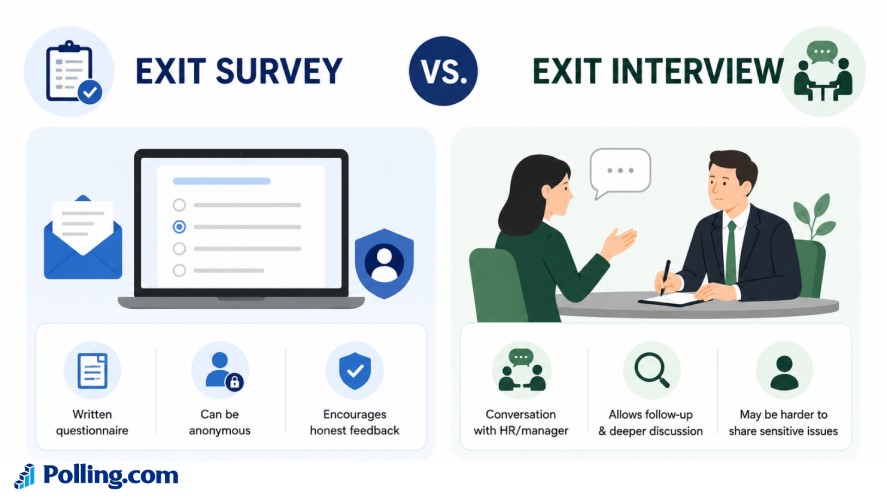
An exit interview survey takes place as a conversation with HR or a manager.
It allows follow-up questions and deeper discussion, but some employees may hesitate to raise sensitive issues face to face.
Many organizations use both methods together.
Surveys provide structured data that is easy to analyze, while interviews add context and detail that numbers alone cannot provide.
Why Exit Surveys Matter
Employees are often more candid when they leave a company.
This makes an exit survey a valuable opportunity to collect feedback that might never surface during employment.
Responses from multiple employee exit surveys can reveal recurring issues across teams and departments.
These insights help organizations improve onboarding, strengthen management, and create better retention strategies.
Instead of guessing why employees leave, HR teams can make decisions based on real feedback and measurable trends.
Benefits of Using an Exit Survey
An exit survey is not designed to convince an employee to stay. Instead, it helps organizations learn from each departure and improve the experience for everyone who remains.
Identify the Real Reasons Employees Leave
Employees rarely leave for a single reason. An employee exit survey helps organizations understand the factors that influence their decision.
Common themes include:
- Compensation
- Limited career growth
- Management style
- Company culture
- Work-life balance
- Unclear job expectations
Looking at one response may not reveal much, but reviewing dozens or hundreds of surveys often highlights recurring issues.
These patterns help HR teams focus on the problems that have the biggest impact on turnover instead of relying on assumptions.
Improve Employee Retention
Exit surveys can uncover issues that lead to preventable turnover.
For example, employees may leave because they lack career opportunities, receive limited support from managers, or experience poor onboarding.
Once these trends become clear, organizations can take action by updating training programs, strengthening leadership development, or improving onboarding processes.
Over time, these changes create a better employee experience and increase retention across the organization.
Strengthen Workplace Culture
A healthy workplace culture encourages employees to stay engaged and perform at their best.
Exit survey feedback can reveal how employees feel about communication, collaboration, inclusion, and recognition.
It can also highlight concerns about psychological safety or whether employees feel comfortable sharing ideas and raising issues.
By addressing these themes, organizations can build a more supportive culture that benefits both current and future employees.
Improve Management Effectiveness
Managers have a direct impact on employee satisfaction and retention. As a result, employee exit surveys often provide valuable feedback about leadership.
Employees may comment on communication, coaching, support, or performance expectations.
When multiple surveys identify similar concerns, HR teams can work with leaders to improve management skills and strengthen team relationships.
This feedback also helps organizations recognize high-performing managers and share successful leadership practices across departments.
Improve Recruitment and Hiring
Exit surveys do more than explain why employees leave, as they also improve future hiring decisions.
For example, feedback may show that job descriptions set unrealistic expectations or that candidates receive an incomplete picture of the role during interviews.
Organizations can use these insights to create clearer job postings, improve candidate communication, and attract people who are a better long-term fit for the position.
Support Data-Driven HR Decisions
Individual responses are useful, but the greatest value comes from analyzing trends over time.
HR teams can compare results across departments, monitor turnover patterns, and identify changes in employee sentiment.

They can also use employee exit survey data to support workforce planning, leadership development, and retention strategies.
By turning feedback into measurable insights, organizations can move beyond guesswork and make decisions backed by real employee experiences.
When Should You Send an Exit Survey?
The timing of an exit survey can have a big impact on the quality of the feedback you receive.
Send it too early, and employees may not have reflected on their experience. Send it too late, and response rates may drop as they move on to new opportunities.
Immediately After Resignation
Many organizations send an employee exit survey soon after an employee submits their resignation.
At this stage, the employee’s experience is still fresh, making it easier to capture initial impressions and the main reasons behind their decision.
Early feedback also gives HR teams more time to review responses before the employee leaves.
However, waiting too long after the resignation notice can reduce participation.
Employees often become busy with handovers, interviews, or preparing for their next role, making them less likely to complete the survey.
During the Notice Period
Sending the survey during the notice period is one of the most common and effective approaches.
Employees still remember their day-to-day experiences and can provide detailed feedback about their role, team, and manager.
If responses need clarification, HR can easily follow up while the employee is still available.
This timing also increases the likelihood of receiving a completed survey before the employee officially leaves the organization.
On the Employee’s Final Day
Some companies include an exit survey form as part of the final offboarding process.
This approach ensures that every departing employee has the opportunity to provide feedback before access to company systems ends. It also fits naturally into existing HR workflows.
However, the final day can be emotional or hectic.
Employees may be focused on saying goodbye, returning equipment, or finishing last-minute tasks. As a result, some responses may be shorter or less detailed than expected.
After Employment Ends
In some cases, organizations wait until after employment ends before sending an employee exit survey.
Former employees may feel more comfortable sharing honest opinions once they are no longer part of the organization.
This can lead to more candid feedback about management, workplace culture, or compensation.
A good practice is to send the survey one to two weeks after departure. This gives employees time to reflect while their experience is still fresh.
The trade-off is that response rates are often lower. Some former employees may ignore the survey or no longer feel motivated to participate.
| Timing | Advantages | Potential Drawbacks |
|---|---|---|
| Immediately after resignation | Captures initial impressions and key reasons for leaving | Delays can reduce response rates |
| During the notice period | Fresh memories, easy follow-up, high completion rates | Employees may still hesitate to share sensitive feedback |
| On the final day | Fits naturally into offboarding and reaches most employees | Time pressure and emotions may affect responses |
| 1–2 weeks after departure | Often encourages more honest feedback | Lower participation and fewer completed surveys |
There is no single best approach for every organization.
Many HR teams find that sending an exit survey during the notice period provides the best balance between response quality, completion rates, and actionable feedback.
Essential Questions to Include in an Exit Survey
A good exit survey should collect both measurable data and detailed feedback.
Below are sample employee exit survey questions organized by category and practical exit survey examples that can also serve as a sample exit survey or inspiration for questions to ask for surveys.
You can use them as a starting point for your own employee exit survey template or customize them to fit your organization.
Questions About the Employee’s Experience
These questions measure overall job satisfaction and whether employees had the support they needed to succeed.
- How satisfied were you with your role?
- Did your job match the expectations set during the hiring process?
- Did you have the tools and resources needed to perform your work?
- Did your responsibilities align with your skills and experience?
- Did you feel your contributions were valued by the organization?
These questions help identify gaps between employee expectations and their actual experience.
Questions About Management
Managers have an important influence on employee engagement and retention. These exit interview survey questions help evaluate leadership effectiveness.
- Did your manager provide adequate support when needed?
- Were performance expectations communicated clearly?
- Did you receive regular and useful feedback?
- Did your manager encourage your professional development?
- Did you feel comfortable raising concerns with your manager?
Looking for patterns across departments can help organizations improve leadership training and coaching.
Questions About Company Culture
Company culture often influences whether employees stay or leave. These questions measure inclusion, communication, and the overall work environment.
- Did you feel respected by your colleagues and leaders?
- Did you feel included and welcomed within your team?
- Did the company’s values match your day-to-day experience?
- Did communication across the organization feel open and transparent?
- Did you feel comfortable sharing ideas or concerns?
Responses can reveal cultural strengths as well as areas that need attention.
Questions About Career Growth
Limited growth opportunities are a common reason employees leave.
These questions help organizations understand whether employees felt supported in their development.
- Were opportunities for advancement available?
- Did you receive enough training to succeed in your role?
- Did you feel encouraged to develop new skills?
- Did you have clear career goals within the organization?
- Did you believe you had opportunities for long-term growth?
These insights can guide improvements to career development, internal mobility programs, and intern exit survey questions for early-career talent.
Questions About Compensation and Benefits
Compensation is only one part of employee satisfaction, but it remains an important factor in retention.
- Were you satisfied with your compensation?
- Did you feel your salary was competitive for your role?
- Were the company’s benefits valuable to you?
- Did compensation influence your decision to leave?
- Which benefits would you most like to see improved?
These questions help HR teams evaluate whether compensation packages remain competitive.
Open-Ended Exit Survey Questions
Open-ended questions allow employees to explain their experiences in their own words. They often provide insights that rating scales cannot capture.
- What was the primary reason you decided to leave?
- What could the company have done differently to retain you?
- What did you enjoy most about working here?
- What was the biggest challenge you faced during your employment?
- What advice would you give to improve the employee experience?
- Were there any policies or processes that made your job more difficult?
- Would you consider returning to the company in the future? Why or why not?
- Is there anything else you would like us to know?
These questions add context to quantitative results and often uncover ideas for meaningful organizational improvements.
Best Practices for Creating an Effective Exit Survey
A well-designed survey makes it easier for departing employees to share honest opinions and easier for HR teams to turn those responses into meaningful action.
Below are the best practices for creating effective exit surveys.
Keep the Survey Concise
Long surveys often lead to survey fatigue and lower completion rates.
Instead of covering every possible topic, focus on the questions that provide the most actionable insights.
A good employee exit survey typically includes 10–20 questions and takes less than 10 minutes to complete.
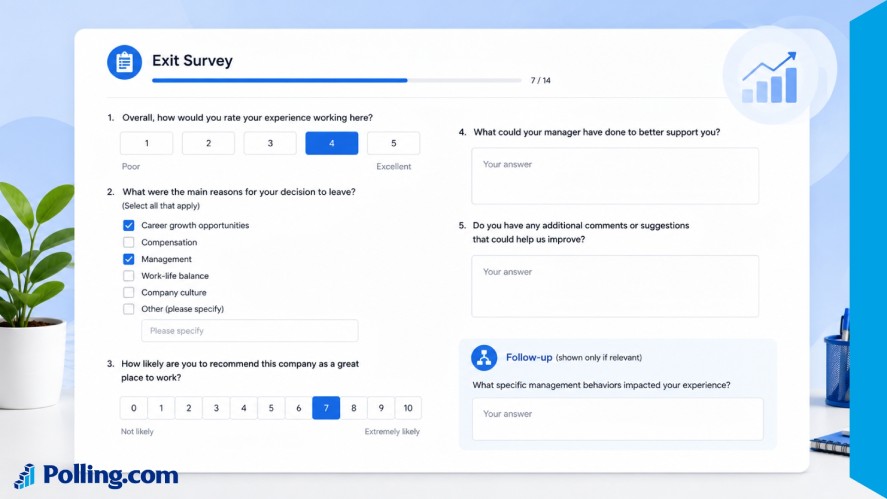
This gives employees enough time to provide thoughtful feedback without feeling overwhelmed.
If you need more detailed information, use conditional logic to show follow-up questions only when they are relevant.
Offer Anonymous Responses When Appropriate
Employees are more likely to provide honest feedback when they know their responses cannot be linked back to them.
Anonymous surveys help build trust and often produce more candid comments about management, workplace culture, or leadership.
They also reduce the pressure employees may feel during the offboarding process.
However, identifiable surveys can be useful when HR teams want to follow up on specific concerns or better understand individual experiences.
Many organizations use anonymous surveys for company-wide reporting and interviews for deeper conversations.
The best approach depends on your goals, but employees should always understand how their feedback will be used.
Use Neutral, Unbiased Questions
The wording of your exit survey questions has a direct impact on response quality.
Avoid leading questions such as: “How supportive was your excellent manager?”
Instead, use neutral language like: “How would you rate the support provided by your manager?”
Each question should focus on a single topic and use clear, objective wording. This makes responses easier to understand and compare across employees and departments.
Combine Ratings with Open Comments
Rating-scale questions make it easy to measure trends over time, while open-ended questions explain the reasons behind those scores.
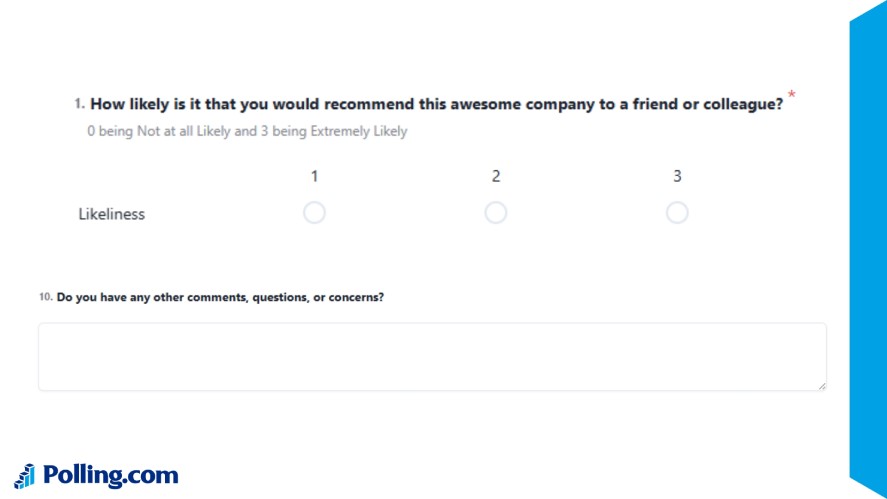
For example, a low management rating tells you there is a problem, but an open comment can reveal whether the issue involves communication, workload, or leadership style.
Combining both formats creates a more complete picture and helps HR teams move from simple reporting to meaningful action.
Review Results Regularly
Collecting feedback is only the first step.
Organizations should review employee exit surveys on a regular schedule instead of waiting until turnover becomes a problem.
Quarterly trend reviews can highlight recurring issues before they grow larger.
Regular reviews also make it easier to measure whether previous improvements are producing better outcomes.
Communicate Organizational Improvements
Employees are more likely to trust the dating exit survey process when they see that feedback leads to real change.
Organizations should share major improvements that result from employee feedback, such as updated onboarding programs, leadership training, or new career development initiatives.
These updates demonstrate that employee opinions are valued and taken seriously.
Over time, this transparency increases confidence in future employee exit surveys.
It also helps build a culture where feedback drives continuous improvement rather than simply collecting data.
Common Exit Survey Mistakes to Avoid
Even the best exit survey questions will produce limited value if the survey is poorly designed or the feedback is ignored.
Avoiding these issues helps organizations collect more reliable insights and make better HR decisions.
Waiting Too Long to Ask for Feedback
Timing plays a major role in the success of an employee exit survey.
If you wait too long after an employee leaves, they may lose interest in participating or simply forget important details about their experience.
This often leads to lower response rates and less useful feedback.
Sending the survey during the notice period or within one to two weeks after departure usually results in more complete and accurate responses.
Asking Too Many Questions
More questions do not always lead to better insights.
Long surveys can create survey fatigue, causing employees to rush through answers or abandon the survey before finishing it.
Even if they complete it, response quality often declines as the survey gets longer.
A focused exit survey form with 10–20 well-written questions is usually more effective than a lengthy questionnaire that covers every possible topic.
Ignoring Employee Feedback
Collecting feedback without taking action is one of the biggest mistakes organizations can make.
When recurring concerns remain unresolved, employees lose confidence that their opinions matter.
Over time, this damages trust and reduces participation in future employee exit surveys and other feedback programs.
Instead, HR teams should review survey results regularly, identify common themes, and communicate the improvements made based on employee feedback.
Asking Leading or Defensive Questions
Poor wording can influence responses and reduce the accuracy of your data.
For example, this question is leading: “Did your manager provide excellent support throughout your employment?”
A more neutral version is: “How would you rate the support provided by your manager?”

Similarly, avoid defensive wording such as: “Why didn’t you take advantage of the career opportunities available?”
Instead, ask: “Did you feel you had enough opportunities for career growth?”
Neutral language encourages honest responses and produces more reliable insights.
Focusing Only on Satisfaction Scores
Satisfaction scores are useful, but they tell only part of the story.
An employee may report low satisfaction because of poor leadership, limited career opportunities, excessive workload, or communication challenges.
Looking only at overall ratings makes it difficult to identify the real cause of the problem.
A strong exit survey should evaluate multiple aspects of the employee experience, including:
- Leadership quality
- Career development opportunities
- Workplace culture
- Communication and collaboration
- Workload and work-life balance
- Employee wellbeing
Combining these measures with open-ended feedback gives organizations a clearer picture of why employees leave and what changes will have the greatest impact on retention.
How to Create an Exit Survey with Polling.com
Creating an effective employee exit survey should be simple, consistent, and easy to manage.
Below are the steps on how to create an exit survey and how Polling.com can help you with the process.
Step 1: Define Your Survey Objectives
Start by deciding what you want to learn from the survey.
Clear objectives help you choose the right questions and focus on feedback that supports business decisions.
Common goals include:
- Understanding why employees leave
- Identifying ways to improve retention
- Evaluating managers and leadership
- Measuring workplace culture
- Improving onboarding and employee development
A focused survey produces more useful data than one that tries to cover every possible topic.
Step 2: Build Your Survey
Once your objectives are clear, you can start building your exit survey form.
Polling.com makes this process faster with ready-to-use templates that can be customized to fit your organization.
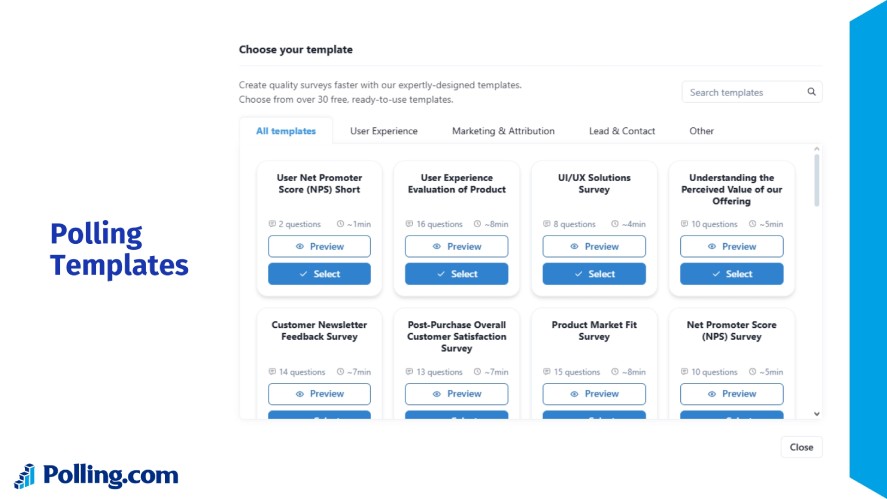
You can add or remove questions, adjust response formats, and apply your company’s branding for a consistent employee experience.
You can also choose whether responses will be anonymous or linked to individual employees, depending on your reporting needs and feedback strategy.
Step 3: Add Survey Logic
Not every employee needs to answer the same sample exit survey questions.
Using survey logic, you can display follow-up questions based on previous responses.
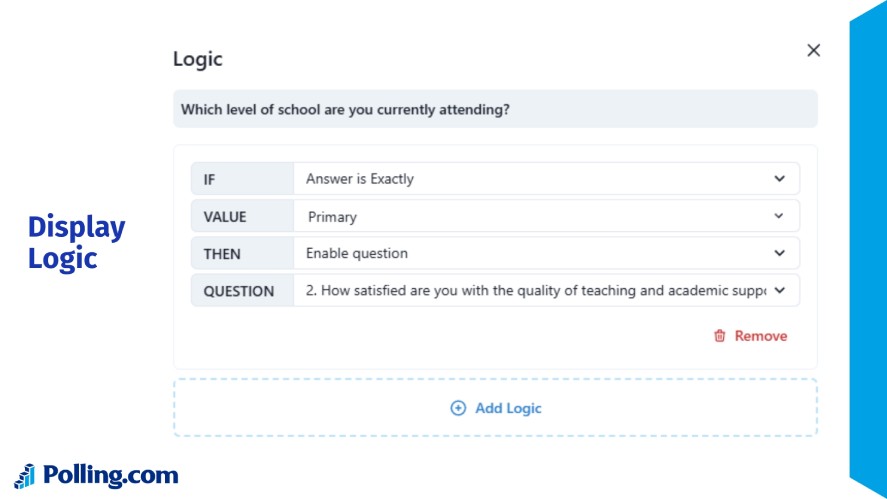
For example, an employee who selects “career growth” as their reason for leaving can automatically receive additional questions about development opportunities.
You can also create department-specific or role-specific survey paths, making the survey more relevant while reducing unnecessary questions.
Step 4: Distribute the Survey
The next step is making sure the survey reaches employees at the right time.
Polling.com supports multiple distribution methods, including workflows that create exit survey website detect user leaving scenarios alongside with:
- Email invitations
- Secure survey links
- HR and People Operations workflows
- Automated offboarding processes
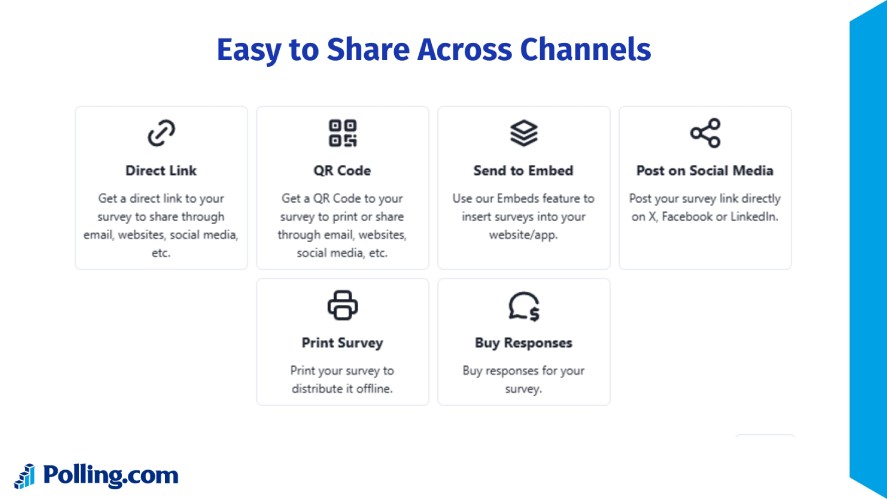
These options help organizations deliver surveys consistently while making participation simple for departing employees.
Step 5: Analyze and Share Results
Collecting feedback is only the beginning. The real value comes from understanding the data and acting on it.
Polling.com provides dashboards that help HR teams monitor trends, compare departments, and identify recurring issues.
Exportable reports make it easy to share findings with leadership, while collaboration features and integrated feedback tools allow multiple stakeholders to review results together.
By combining trend analysis with actionable recommendations, organizations can turn employee exit surveys into continuous improvement initiatives.
Why Choose Polling.com?
Polling.com is designed as an exit survey tool that simplifies every stage of the exit survey process, from survey creation to reporting and analysis.
Key features include:
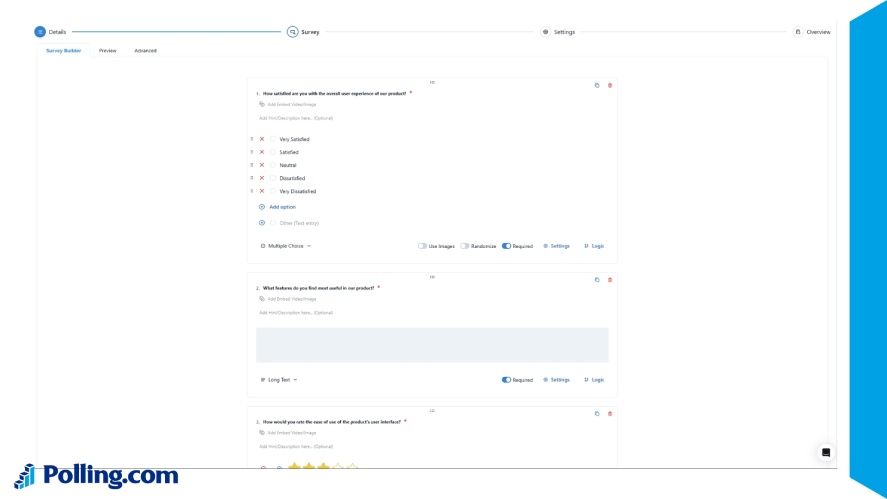
- Easy drag-and-drop survey builder
- Ready-to-use exit survey templates
- Anonymous response options
- Conditional logic and branching
- Real-time dashboards
- Team collaboration tools
- Custom branding
- Secure data handling
- Reporting and export capabilities
- Scalable workflows for organizations of all sizes
Other popular survey tools such as SurveyMonkey, Typeform, Google Forms, and Qualtrics also support exit surveys and employee feedback collection.
However, Polling.com combines flexible survey creation, advanced reporting, and actionable employee insights in a streamlined workflow.
For organizations looking to build better employee exit surveys and make data-driven HR decisions, Polling.com provides a practical solution that scales with business needs.
Metrics to Track After Running an Exit Survey
An individual exit survey can provide valuable feedback, but the greatest insights come from analyzing trends over time.
Below are the core metrics you need to track after running an exit survey.

Employee Turnover Metrics
Turnover metrics provide a high-level view of workforce stability and help HR teams identify where problems may exist.
Some of the most important metrics include:
- Overall Turnover Rate: The percentage of employees who leave the organization during a specific period.
- Voluntary Turnover: Employees who choose to resign on their own.
- Involuntary Turnover: Employees whose employment ends because of company decisions.
- Early Turnover: Employees who leave within their first few months or first year often point to onboarding or hiring issues.
- Retention Rate: The percentage of employees who remain with the organization over a given period.
Tracking these metrics alongside employee exit surveys helps organizations understand not only how many employees are leaving but also which types of turnover require the most attention.
Exit Survey Metrics
Survey-specific metrics measure the quality of your feedback program and highlight the most common reasons employees leave.
Key metrics to monitor include:
- Survey Response Rate: The percentage of departing employees who complete the survey.
- Survey Completion Rate: The percentage of respondents who finish every question.
- Primary Reasons For Leaving: The most frequently selected factors behind employee departures.
- Manager Satisfaction Scores: Ratings that measure leadership effectiveness and employee support.
- Workplace Culture Scores: Employee perceptions of communication, inclusion, recognition, and collaboration.
- Compensation Satisfaction: Feedback on salary, benefits, and overall rewards.
- Career Development Ratings: Employee opinions about growth opportunities, training, and internal mobility.
Reviewing these metrics regularly makes it easier to identify recurring themes and prioritize improvement efforts.
Long-Term HR Metrics
The real value of an employee exit survey appears when organizations connect survey feedback with broader HR performance indicators.
Useful long-term metrics include:
- Employee Engagement Trends: Measure whether engagement scores improve after organizational changes.
- Internal Promotion Rates: Track how often employees advance within the company instead of leaving for new opportunities.
- Recruitment Quality: Evaluate whether new hires remain with the organization and perform successfully.
- Time-to-fill Vacancies: Monitor how quickly open positions are filled and whether turnover affects hiring efficiency.
- Rehire Eligibility: Measure how many former employees are willing to return, which can reflect their overall experience with the organization.
- Retention Improvements After Implementing Changes: Compare turnover and survey results before and after new HR initiatives, leadership training, or policy updates.
Together, these metrics provide a complete picture of employee retention and organizational health.
Instead of focusing on individual responses, HR teams can measure long-term trends, evaluate the success of workplace improvements, and make better decisions based on reliable data.
Frequently Asked Questions About Exit Surveys
An exit survey is a questionnaire completed by employees before or shortly after they leave an organization. It collects feedback about their experience, reasons for leaving, and suggestions for improvement. Companies use this information to identify workplace trends, improve retention strategies, and strengthen the overall employee experience.
Employee exit surveys help organizations understand why employees leave instead of relying on assumptions. They reveal patterns related to leadership, compensation, career growth, communication, and workplace culture.
An exit survey is a structured questionnaire that employees complete in writing, often through an online platform. An exit interview is a conversation with HR or a manager that allows follow-up questions and discussion. Many organizations use both methods together because surveys provide measurable data while interviews add context and deeper insights.
The best time to send an employee exit survey is usually during the employee’s notice period or within one to two weeks after they leave. Sending it too early may limit reflection, while sending it too late can reduce response rates.
Anonymous exit surveys often encourage employees to provide more honest feedback, especially about leadership, workplace culture, or management. However, identifiable surveys can be useful when HR teams need additional context or want to follow up on specific concerns. The best approach depends on the organization’s goals and feedback process.
A well-designed employee exit survey should include around 10 to 20 questions and take less than 10 minutes to complete.
An effective exit survey should ask about overall job satisfaction, management support, company culture, career development, compensation, work-life balance, and the primary reason for leaving.
The best exit survey software depends on your organization’s needs, but features like customizable templates, anonymous responses, conditional logic, real-time reporting, and team collaboration are essential. Polling.com combines these capabilities in an easy-to-use platform that helps HR teams collect feedback, analyze trends, and turn employee insights into meaningful action.
Conclusion
An exit survey is more than an offboarding checklist.
When organizations consistently review employee exit intent surveys, they can spot turnover trends, strengthen leadership, improve workplace culture, and build more effective retention strategies.
However, collecting feedback is only the first step.
The greatest value comes from acting on the results, measuring progress over time, and making continuous improvements across the organization.
If you’re ready to build a smarter feedback process, Polling.com makes it easy to create, distribute, and analyze employee exit surveys with customizable templates, real-time reporting, and actionable insights that support long-term organizational success.