
25 Attitudinal Questions You Can Use in Surveys Today

Attitudinal questions help you understand what people think, feel, believe, and prefer.
Unlike demographic questions that describe who respondents are, or behavioral questions that measure what they do, attitudinal questions reveal the opinions and perceptions behind their decisions.
This type of feedback is valuable because attitudes often explain behavior.
Two customers may buy the same product, but for completely different reasons. One may trust the brand, while the other simply found the best price.
Understanding those differences helps businesses improve products, strengthen customer relationships, and make better decisions.
In this guide, you’ll learn what attitudinal questions are, how they differ from other survey question types, when to use them, how to write effective survey questions, and explore more than 25 examples you can use in your own surveys.
What Are Attitudinal Questions?
Before writing effective attitudinal questions, it’s important to understand their purpose and how they’re used in surveys.
Definition of Attitudinal Questions
So, what is an attitudinal question in a survey?
Attitudinal questions ask respondents to express how they feel about a person, product, service, brand, idea, or experience.
They are commonly used in customer perception surveys, employee feedback, market research surveys, and public opinion studies.

How are attitudes measured in surveys?
Typically, responses are collected using Likert scales, rating scale questions, semantic differential scales, or agreement statements.
This makes it easy to compare attitudes across different groups.
For example:
- I trust this brand.
- I am satisfied with the quality of this product.
- This website is easy to use.
These are all examples of attitudinal questions for surveys because they measure perceptions rather than observable facts.
How They Differ From Behavioral and Demographic Questions
Each question type captures different information. The table below highlights the key differences.
| Question Type | Measures | Example |
|---|---|---|
| Attitudinal | Beliefs, feelings, opinions, preferences | I believe this product offers good value. |
| Behavioral | Actions or habits | How often do you purchase this product? |
| Demographic | Personal characteristics | What is your age group? |
Each type serves a different purpose.
Demographic questions help segment respondents, behavioral questions show what people do, and attitudinal questions explain why they think or feel a certain way.
Why Measuring Opinions and Perceptions Matters
Attitudes often influence future behavior.
A customer who trusts a brand is more likely to buy again, while an employee who feels valued is more likely to stay with the company.
Measuring these opinions helps organizations identify problems, understand motivations, and uncover opportunities for improvement.
Because attitudes reflect beliefs, feelings, preferences, values, and perceptions rather than observable actions, they provide insights that demographic and behavioral data alone cannot.
When combined with other survey data, attitudinal data questions help businesses build a more complete picture of their audience and make better-informed decisions.
Why Attitudinal Questions Are Important
Below are some of the main reasons to include attitudinal questions in your surveys.
Understand Customer Perceptions
Customers don’t always make decisions based on price or features alone.
Their perceptions of quality, trust, value, and customer service often influence whether they purchase a product or remain loyal to a brand.
For example:
- I believe this company delivers high-quality products.
- I trust this brand to protect my personal information.
These customer perception surveys help businesses understand how customers view their brand and identify areas for improvement.
Measure Brand Sentiment
Brand sentiment reflects how people feel about a company, product, or service.
Tracking these attitudes over time helps businesses evaluate marketing campaigns, product launches, and changes in customer perception.
Example questions:
- I would recommend this brand to others.
- This brand stands out from its competitors.
Brand attitude research can reveal whether public perception is improving, staying consistent, or declining.
Improve Products And Services
Attitudinal feedback helps businesses understand what customers value most and where they experience frustration.
While behavioral data may show that customers stop using a feature, attitudinal questions explain why.
For example, a product feedback survey might ask respondents whether they agree with statements such as:
- The product is easy to use.
- The new features meet my needs.
This information helps product teams prioritize improvements based on customer perceptions rather than assumptions.
Predict Future Behaviors
Although attitudes don’t guarantee future actions, they often indicate what people are likely to do next.
Customers with positive attitudes are generally more likely to make repeat purchases, while employees with negative attitudes may be more likely to leave an organization.
For example, respondents who strongly agree with the statement “I intend to purchase from this brand again” are more likely to become repeat customers than those who disagree.
Support Better Business Decisions
Attitudinal data gives decision-makers the context they need to interpret survey results and act with greater confidence.
Instead of relying only on sales numbers or website analytics, organizations can understand the opinions driving those outcomes.
Attitudinal questions are widely used in:
- Customer satisfaction surveys to measure trust, satisfaction, and loyalty.
- Employee engagement surveys to understand morale, motivation, and workplace culture.
- Market research surveys to evaluate product concepts, pricing, and consumer preferences.
- Political polling to measure opinions on candidates, policies, and public issues.
- Healthcare surveys to assess patient satisfaction, confidence in providers, and perceptions of care quality.
By measuring attitudes alongside behavioral and demographic data, organizations gain a more complete understanding of their audience and make better-informed decisions.
Common Types of Attitudinal Questions
There are several ways to measure attitudes in surveys. The right question type depends on the kind of feedback you want to collect.
Likert Scale Questions
Likert scale questions ask respondents how strongly they agree or disagree with a statement.
They are one of the most common formats for attitudinal survey questions because they make it easy to measure opinions consistently.
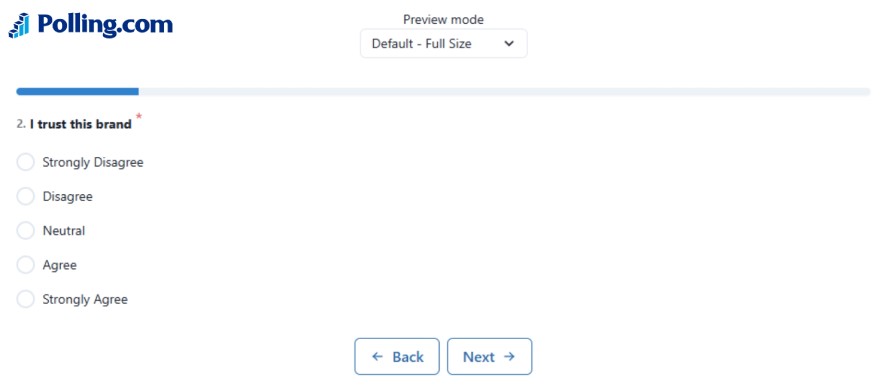
Example: I trust this brand.
- Strongly Disagree
- Disagree
- Neutral
- Agree
- Strongly Agree
A Likert scale for attitude measurement is ideal for measuring customer satisfaction, employee engagement, and brand perception.
Rating Scale Questions
Rating scale questions ask respondents to score a product, service, or experience using a numerical scale.
They are useful for measuring the strength of an opinion or level of satisfaction.
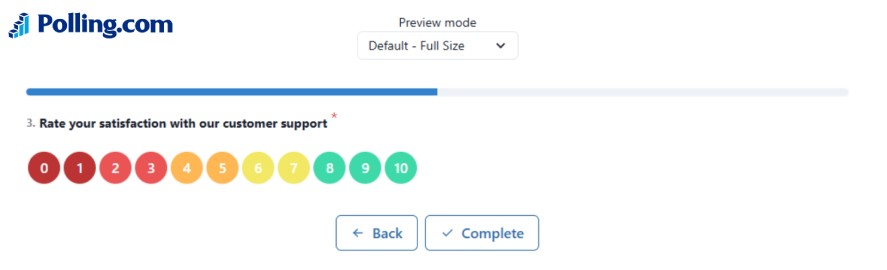
Example: Rate your satisfaction with our customer support.
- Scale: 1 (Very Dissatisfied) to 10 (Very Satisfied)
Rating scales are easy to analyze and work well for tracking changes over time.
Semantic Differential Questions
Semantic differential questions ask respondents to rate something between two opposite adjectives.
This format is commonly used in brand attitude research and customer perception studies.
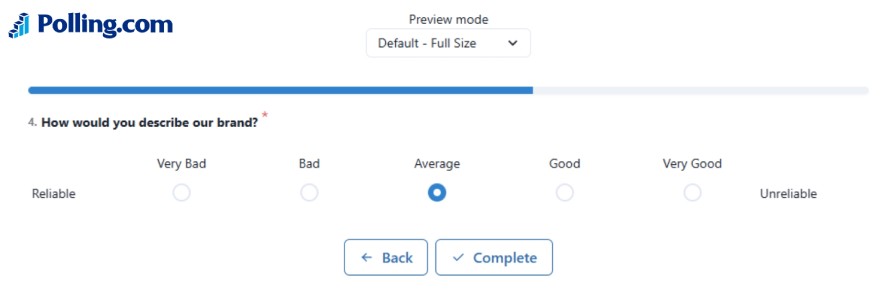
Example: How would you describe our brand?
- Reliable ○ ○ ○ ○ ○ Unreliable
Other examples include:
- Modern ○ ○ ○ ○ ○ Outdated
- Easy to Use ○ ○ ○ ○ ○ Difficult to Use
- High Quality ○ ○ ○ ○ ○ Low Quality
Agreement Questions
Agreement questions ask respondents whether they agree with a statement. They often use a Likert scale but focus specifically on measuring agreement.
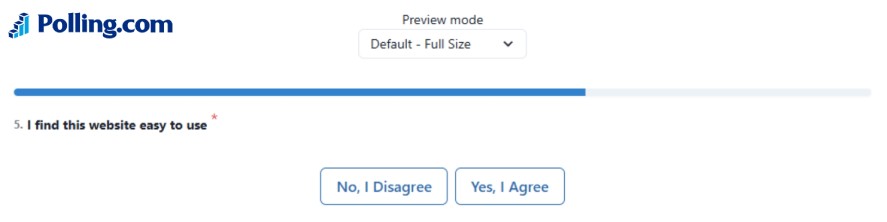
Examples:
- I find this website easy to use.
- The product offers good value for the price.
- The checkout process was simple.
These questions help measure attitudes toward products, services, and customer experiences.
Opinion Questions
Opinion questions encourage respondents to share their views about a topic, feature, or issue.
They may use multiple-choice, rating scales, or open-ended responses.
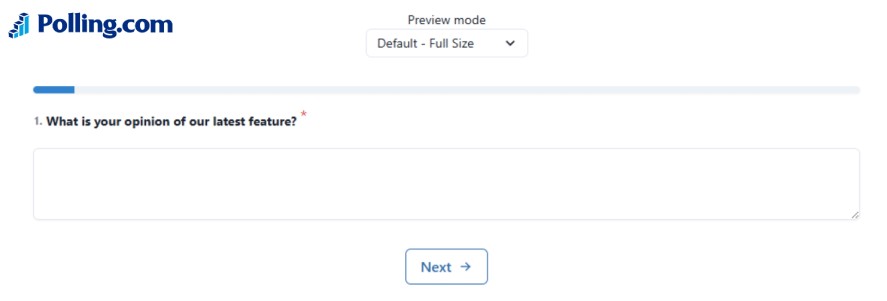
Examples:
- What is your opinion of our latest feature?
- Which policy do you support most?
- How do you feel about our current pricing?
Opinion questions are common in market research, public opinion polls, and product development surveys.
Preference Questions
Preference questions, often called attitudinal choice questions, ask respondents to choose between options based on what they like or value most.
Unlike opinion questions, they focus on comparing alternatives rather than expressing general attitudes.
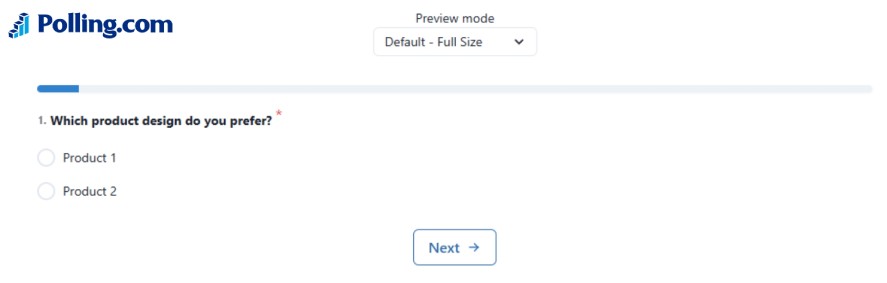
Examples:
- Which product design do you prefer?
- Which feature matters most to you?
- Which of these packaging designs would you be most likely to purchase?
Preference questions are useful for product testing, concept evaluation, and marketing research because they help identify what customers are most likely to choose.
25+ Examples of Attitudinal Questions
The examples below are grouped by category to help you choose the right questions for your survey.
Most can be answered using a 5-point Likert scale ranging from Strongly Disagree to Strongly Agree, although you can adapt them to other rating scale questions if needed.
Customer Satisfaction
These questions measure how customers feel about their overall experience with your business.
- I am satisfied with the quality of this product.
- The service exceeded my expectations.
- I received good value for the money I spent.
- I am satisfied with my overall experience.
- I would purchase from this company again.
Brand Perception
Use these questions to understand how customers perceive your brand and whether they trust it.
- This company is trustworthy.
- I would recommend this brand to others.
- This brand stands out from its competitors.
- This brand delivers on its promises.
- I have a positive impression of this company.
Employee Engagement
These questions help organizations measure employee attitudes toward their workplace and leadership.
- I feel valued at work.
- My manager supports my professional growth.
- I understand how my work contributes to the organization’s goals.
- I feel motivated to do my best work.
- I would recommend this organization as a great place to work.
Product Feedback
Use these questions to evaluate how users feel about specific products or features.
- This feature makes my work easier.
- The interface is intuitive and easy to navigate.
- The product meets my needs.
- The product is reliable.
- I am satisfied with the overall user experience.
Political and Public Opinion
These questions measure opinions about policies, public services, or social issues.
- I support this proposed policy.
- Government services meet my expectations.
- I trust public institutions to make fair decisions.
- Public services provide good value for taxpayers.
- I believe my community’s needs are being addressed effectively.
These attitudinal questions examples can be adapted for customer perception surveys, employee engagement surveys, market research, healthcare studies, and many other applications.
Tip: Good survey question wording should be clear, neutral, and focused on a single idea to collect reliable and meaningful responses.
Best Practices for Writing Effective Attitudinal Questions
Mastering survey question design is essential for collecting reliable feedback.
If you are wondering how do you write attitudinal questions, the process comes down to clarity and neutrality.
Here are some best practices for writing effective attitudinal questions.
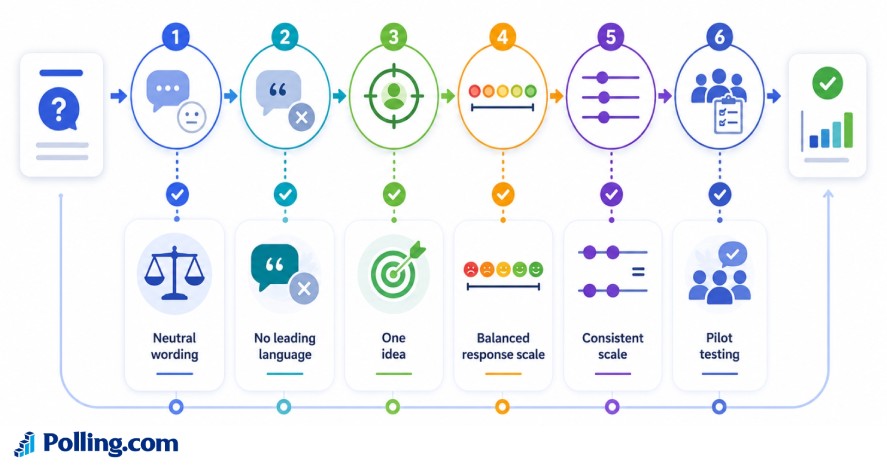
Keep Questions Neutral
How do you avoid bias in attitudinal questions? Avoid words that make one answer seem better than another.
Neutral wording helps respondents share what they really think instead of what they think you want to hear.
Here’s an example of a good question:
How satisfied are you with our customer support?
Now compare that with poorly worded survey questions:
How impressed were you with our outstanding customer support?
Words like outstanding encourage positive responses and can introduce bias into your results.
Avoid Leading Language
Leading questions push respondents toward a particular answer. Instead, ask questions that allow people to respond based on their own opinions.
Here’s a good example:
Do you believe this product offers good value?
Now compare it with a leading question:
Don’t you agree this product offers excellent value?
The second question assumes the product offers excellent value, making it harder for respondents to answer objectively.
Ask One Idea At a Time
What makes a good attitudinal survey question?
It should always focus on a single, unbiased idea that allows respondents to share their true perspectives.
If you ask about two topics at once, you won’t know which one influenced the response.
Here’s a good example:
The website is easy to navigate.
Now compare it with a double-barreled question:
The website is easy to navigate and offers excellent customer support.
A respondent may agree with one statement but disagree with the other, making the answer difficult to interpret.
Use Balanced Response Scales
Your response options should give equal weight to positive and negative opinions.
This makes it easier for respondents to choose the answer that best matches how they feel.
A standard 5-point Likert scale includes:
- Strongly Disagree
- Disagree
- Neutral
- Agree
- Strongly Agree
Avoid scales that leave out negative or neutral options, as they can skew your results.
Keep Scales Consistent
Switching between different scales can confuse respondents and make your data harder to compare.
So, try to use the same response scale throughout your survey.
For example, if most questions use a 5-point agreement scale, don’t suddenly switch to a 10-point satisfaction scale unless there’s a clear reason.
Pilot Test Before Launching
Before sending your survey to everyone, test it with a small group of people from your target audience.
Ask them whether any questions are confusing, difficult to answer, or missing important response options.
Their feedback can help you catch problems early and improve your survey before launch.
Common Mistakes to Avoid
Even well-designed surveys can produce unreliable results if your questions contain common mistakes.
When drafting your survey, how should attitudinal questions be framed? You might also wonder: Should attitudinal statements be positive or negative?
Here are a few issues to watch for when writing attitudinal questions.

Too Many Scale Options
Adding more response options doesn’t always improve your survey.
In many cases, a 5-point or 7-point scale is easier for respondents to understand and produces more consistent results.
Extremely long scales can make it harder for people to choose the option that best reflects their opinion.
Ambiguous Wording
Vague words like often, regularly, good, or easy can mean different things to different people.
Instead of asking: Do you use our product regularly?
Ask: How many times do you use our product each week?
Being specific helps ensure everyone interprets the question the same way.
Ignoring the Survey Context
A well-written question can still produce poor data if it appears in the wrong place or doesn’t fit the audience.
Make sure your attitudinal data survey questions follow a logical order, use language your respondents understand, and match the purpose of your survey.
Attitudinal Questions vs Behavioral Questions
Attitudinal and behavioral questions measure different aspects of your audience.
Using both in the same survey gives you a more complete understanding of what people think and what they actually do.
| Attitudinal Questions | Behavioral Questions |
|---|---|
| Measure opinions, beliefs, and feelings | Measure actions and behaviors |
| Predict future intentions | Reflect past or current behavior |
| Subjective | Objective |
| Example: “I trust this brand.” | Example: “How often do you purchase from this brand?” |
Attitudinal questions explain why people think or feel a certain way, while behavioral questions show what they actually do.
For example, a customer may say they trust a brand but rarely make a purchase. Another customer may buy frequently even if they aren’t particularly loyal.

Combining both question types provides richer insights.
You can compare attitudes with real-world behavior, identify gaps between what people say and what they do, and make better decisions based on a more complete picture of your audience.
How to Analyze Attitudinal Survey Responses
Once you’ve collected responses, the next step is turning them into meaningful insights.
The following methods can help you identify patterns, compare groups, and understand how attitudes change over time.
Calculate Averages And Distributions
Start by summarizing responses for each question.
Calculate the mean score to measure the average attitude. Then, review the distribution to see how opinions are spread across each response option.
For example, an average score of 4.5 out of 5 suggests strong agreement, but the distribution can reveal whether respondents are consistently positive or divided in their opinions.
Identify Trends Over Time
If you run the same survey regularly, compare the results across different time periods.
Trend analysis helps you see whether customer satisfaction, employee engagement, or brand perception is improving, declining, or staying the same.
For example, tracking agreement with the statement “I trust this brand” every quarter can show whether recent business changes have influenced customer attitudes.
Cross-tabulate by Demographic Groups
Cross-tabulation compares responses across different groups, such as age, location, job role, or customer segment.
This helps you understand whether attitudes vary between different audiences.
For example, younger customers may rate a product more positively than older customers, or employees from different departments may report different levels of engagement.
Segment Respondents By Attitudes
Instead of grouping respondents by demographics alone, group them based on similar attitudes.
This makes it easier to identify audiences with shared opinions, motivations, or preferences.
For example, you might create segments such as:
- Brand advocates
- Price-sensitive customers
- Dissatisfied users
- Highly engaged employees
These segments can guide marketing campaigns, product improvements, and customer experience strategies.
Visualize Findings With Charts
Charts make survey results easier to understand and share with stakeholders.
Bar charts can compare average ratings across questions, while line charts highlight changes over time.
Common ways to analyze and present attitudinal survey data include:
- Mean scores to summarize average responses.
- Net agreement to measure the percentage of respondents who selected positive versus negative responses.
- Cross-tabulation to compare attitudes across demographic groups.
- Trend analysis to track changes across multiple surveys.
Presenting your findings visually helps decision-makers identify key patterns and act on survey results more quickly.
How to Create Attitudinal Surveys with Polling.com
Polling.com makes it easy to create, distribute, and analyze attitudinal surveys.
Whether you’re measuring customer satisfaction, employee engagement, or brand perception, the platform provides the tools you need to collect reliable data and turn it into actionable insights.
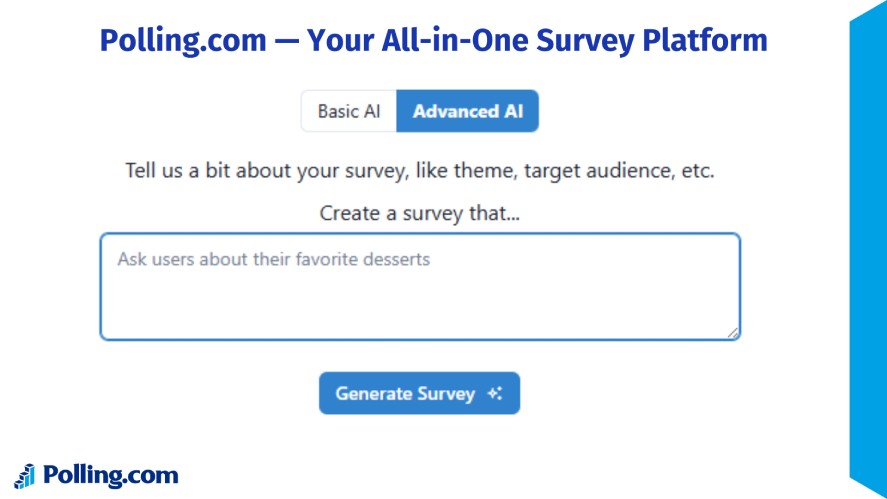
With Polling.com, you can:
- Create surveys with AI-assisted survey generation.
- Choose from multiple question formats, including Likert scales, rating scales, multiple-choice questions, and open-ended text responses.
- Use survey branching and skip logic to ask follow-up questions based on previous answers.
- Target and segment respondents to compare attitudes across different audiences.
- Monitor responses with real-time dashboards and analytics.
- Create unlimited surveys and collect unlimited responses.
- Share surveys through links, QR codes, website embeds, email, and popular integrations.
These features make it easier to design surveys that collect high-quality attitudinal data while simplifying analysis and reporting.
Polling.com vs. Other Survey Tools
Many survey platforms can collect responses. However, they don’t all offer the same level of flexibility for attitudinal research.
For example, Google Forms works well for simple surveys, but it has more limited branching, analytics, and audience segmentation capabilities.
Polling.com offers a broader range of question types, more advanced survey logic, built-in reporting, and collaboration features.
This makes it a stronger choice for organizations that need deeper insights and more scalable survey workflows.
Frequently Asked Questions About Attitudinal Questions
Attitudinal questions measure people’s opinions, beliefs, feelings, preferences, and perceptions. Unlike behavioral questions, they focus on what respondents think rather than what they do.
A common example is: “I trust this brand.” Other examples include “I am satisfied with this product” and “I would recommend this company to others.”
Attitudinal questions measure opinions and perceptions, while behavioral questions measure actions. Using both gives you a more comprehensive understanding of your audience.
Use attitudinal questions whenever you want to understand how people feel about a product, service, brand, workplace, or policy. They are especially useful for customer satisfaction surveys, employee engagement surveys, market research, product feedback, and public opinion research.
A 5-point Likert scale is the most common choice because it’s easy for respondents to understand and simple to analyze. A 7-point scale can provide more detail, while 10-point rating scales are often used to measure satisfaction or likelihood to recommend.
Attitudinal questions can indicate future intentions, but they don’t always predict what people will do. For the most accurate insights, combine attitudinal questions with behavioral questions to compare what respondents say with their actual actions.
Yes, Likert scales are one of the most widely used formats for measuring customer attitudes. They ask respondents to indicate how strongly they agree or disagree with a statement, making them ideal for measuring opinions, beliefs, and perceptions.
Conclusion
Attitudinal questions help you understand what people think, feel, and value.
They complement demographic and behavioral questions by revealing the motivations behind customer decisions, employee engagement, and public opinion.
To collect reliable data, write clear and unbiased questions, use consistent response scales, and pilot test your survey before launch.
Following these best practices will help you gather insights you can confidently use to guide business and qualitative research decisions.
If you’re ready to build your own attitudinal survey, Polling.com makes it easy with AI-assisted survey creation, flexible question types, advanced branching, and real-time analytics.
Start creating your survey today and turn valuable opinions into actionable insights.