
Online Shopping Behavior: Questions to Ask for Surveys

Understanding online shopping behavior is essential in today’s fast-growing digital economy.
As more consumers shift to buying products and services online, businesses need clear insights into how, when, and why people make purchasing decisions.
Surveys play a key role in uncovering these insights.
By asking the right survey questions, businesses can learn about customer preferences, shopping habits, and pain points throughout the buying journey.
This information helps companies refine their strategies and create better customer experiences.
With that in mind, modern platforms like Polling.com make this process easier. The user feedback platform streamlines survey creation, distribution, and analysis.
With real time customer feedback and built-in analytics, businesses can quickly turn customer feedback into actionable insights.
But first, let’s learn why understanding online shopping behavior matters, as it reveals the hidden intent behind every search and scroll
Why Understanding Online Shopping Behavior Matters
The rapid growth of eCommerce has significantly changed how consumers interact with brands.
Shoppers now expect convenience, personalization, and seamless experiences across devices and platforms.
As a result, understanding online shopping behavior has become a critical part of staying competitive.
Collecting behavioral insights through surveys allows businesses to make smarter, data-driven decisions.
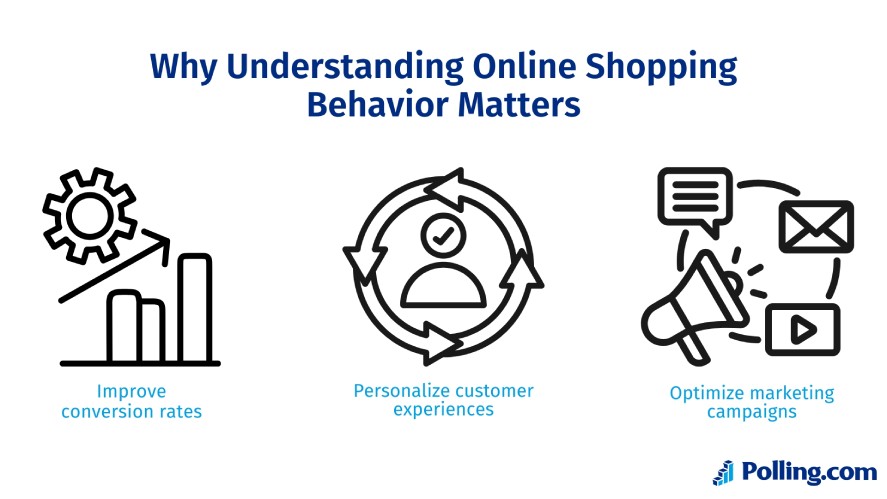
For example, understanding what influences purchasing decisions can help improve conversion rates by reducing friction in the buying process.
These insights also enable companies to personalize customer experiences. They can tailor product recommendations, offers, and messaging based on user preferences and behavior.
In addition, analyzing shopping patterns helps businesses optimize marketing campaigns.
By knowing when, where, and how customers shop, companies can target the right audience with the right message at the right time.
Key Categories of Online Shopping Behavior Questions
To fully understand online shopping behavior, surveys should cover multiple areas of the customer journey.
The following categories help ensure your survey captures actionable insights.
Demographic-Based Questions
Demographic questions provide context about who your customers are.
Information such as age, gender, income, and location helps segment responses and identify patterns across different audience groups.
Example questions:
- What is your age group?
- What is your monthly online shopping budget?
Shopping Frequency and Habits
This category focuses on how often and when customers shop online.
Understanding shopping habits helps businesses identify peak buying times and customer routines.
Example questions:
- How often do you shop online?
- What time of day do you usually make purchases?
Device and Platform Preferences
Customers may shop differently depending on the device or platform they use.
These questions help determine whether users prefer mobile or desktop, as well as marketplaces versus brand websites.
Example questions:
- Which device do you primarily use for online shopping?
- Which platforms do you prefer (marketplaces or brand websites)?
Purchase Motivation Questions
These questions explore what drives customers to make a purchase.
Understanding motivations helps businesses align pricing, messaging, and product positioning with customer expectations.
Example questions:
- What factors influence your purchase decisions (price, reviews, brand)?
- Do discounts or promotions impact your buying behavior?
Customer Experience and Satisfaction
Customer experience questions focus on how users feel about their shopping journey. This helps identify strengths and areas for improvement in the buying process.
Example questions:
- How satisfied are you with your recent online shopping experience?
- What challenges do you face when shopping online?
Cart Abandonment Questions
Cart abandonment is a major challenge in eCommerce.
These questions help uncover why customers leave without completing a purchase and what might encourage them to return.
Example questions:
- Have you ever abandoned a cart? Why?
- What would encourage you to complete your purchase?
Trust and Security Concerns
Trust plays a critical role in online shopping decisions.
These questions help identify concerns related to data privacy, payment security, and overall confidence in online transactions.
Example questions:
- How secure do you feel when making online payments?
- What concerns do you have about online shopping?
Best Practices for Creating Online Shopping Behavior Surveys
Designing an effective CSAT survey is key to collecting accurate and useful data about online grocery shopping consumer behavior.
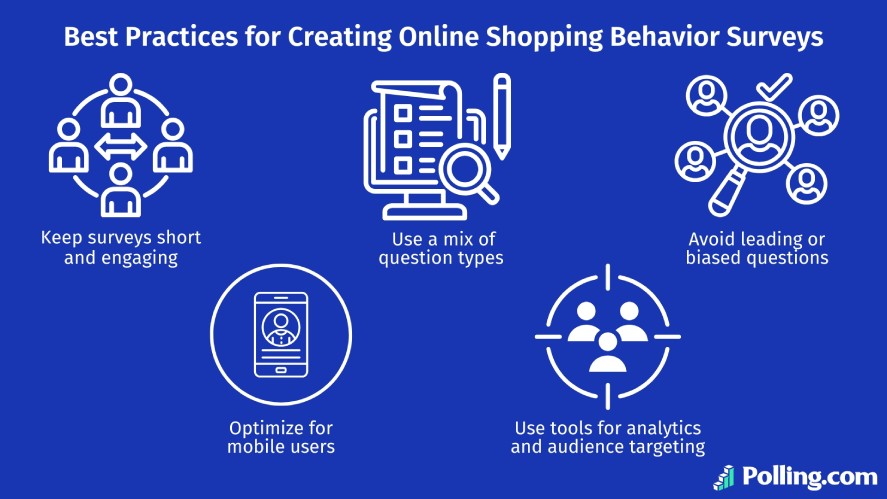
First, keep your customer satisfaction surveys short and engaging to prevent drop-offs.
Most respondents are more likely to complete surveys that take only a few minutes and focus on relevant questions.
Next, use a mix of question types in your CSAT survey questionnaire, including multiple-choice questions, rating scales, and open-ended responses.
This combination allows you to collect both quantitative data for analysis and qualitative feedback for deeper insights.
After that, avoid leading or biased questions that may influence responses. Questions should be clear, neutral, and easy to understand to ensure reliable data.
Also, make sure your survey is optimized for mobile users, as a large portion of online shoppers complete surveys on their phones.
A mobile-friendly design improves accessibility and completion rates.
Finally, use modern product feedback tools like Polling.com to streamline the process.
Features such as real-time analytics, audience targeting, and customizable customer service survey templates help you collect and analyze data more efficiently.
How to Analyze Online Shopping Behavior Survey Results
Analyzing survey data effectively is what turns raw responses into valuable business insights.
Here are the steps to uncover patterns, understand customer intent, and make data-driven decisions that improve performance.
1. Segment Responses by Demographics
Start by organizing your data into meaningful segments such as age, gender, income level, location, or customer type (new vs returning).
This step helps you understand who your customers are and how different groups behave.
For example, younger shoppers may prefer mobile purchases, while older segments might favor desktop.
Moreover, high-income customers may prioritize quality over price, while budget-conscious users respond more to discounts.
Segmentation allows you to avoid “one-size-fits-all” conclusions and instead tailor strategies for specific audience groups.
It also helps identify high-value segments that contribute the most to revenue.
2. Identify Trends and Patterns
Once your data is segmented, look for recurring behaviors and patterns across responses.
This includes identifying common purchase triggers, preferred shopping times, frequently used devices, and repeated pain points.
For example, through customer CSAT survey questions, you might notice that a large percentage of users abandon carts due to high shipping costs or that most purchases happen during specific hours or promotional periods.
Trend analysis is especially powerful when comparing data over time.
Running the same survey regularly allows you to track changes in behavior, measure the impact of marketing campaigns, and detect emerging trends before competitors.
3. Use Data Visualization Tools For Online Shopping Behavior
Large datasets can be difficult to interpret in raw form, which is why visualization is essential.
Use charts, graphs, and dashboards to present your findings in a clear and digestible way.
Bar charts can compare preferences across categories, as seen in CSAT survey examples, while pie charts can show distribution, and line charts can highlight trends over time.
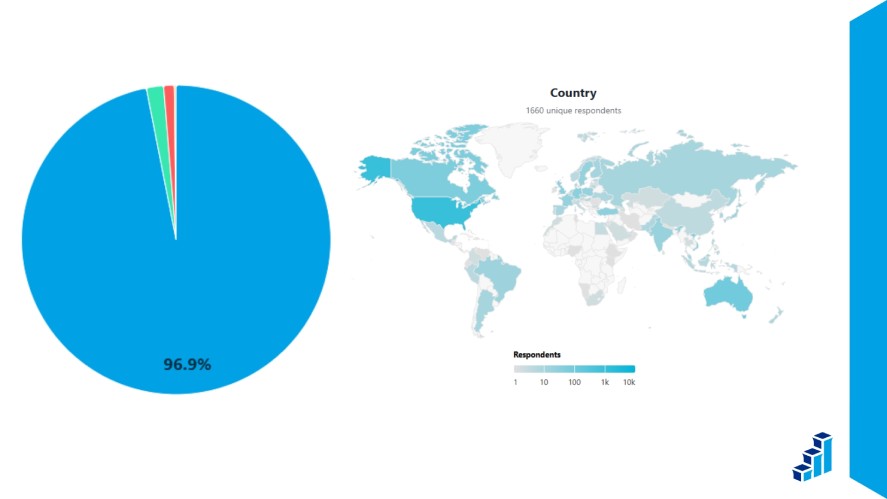
Dashboards allow you to combine multiple visuals into one view, making it easier to monitor performance at a glance.
Modern customer feedback platforms like Polling.com offer real-time visualization.
The customer feedback management tool allows you to track responses as they come in and quickly identify shifts in customer behavior without manual processing.
4. Turn Insights into Actionable Strategies
The final and most important step is applying your findings to real business decisions.
Insights from survey data should directly inform your strategy across marketing, product, and customer experience.
For example:
- If customers prioritize price, you can introduce targeted discounts or promotions.
- If users report friction during checkout, you can simplify the purchase process.
- If certain platforms drive more engagement, you can allocate more marketing budget to those channels.
It’s also important to prioritize actions based on impact.
Focus on changes that address the most common pain points or affect the largest customer segments.
Common Mistakes to Avoid
Even well-intentioned surveys can fail to deliver useful insights if common mistakes are not addressed.
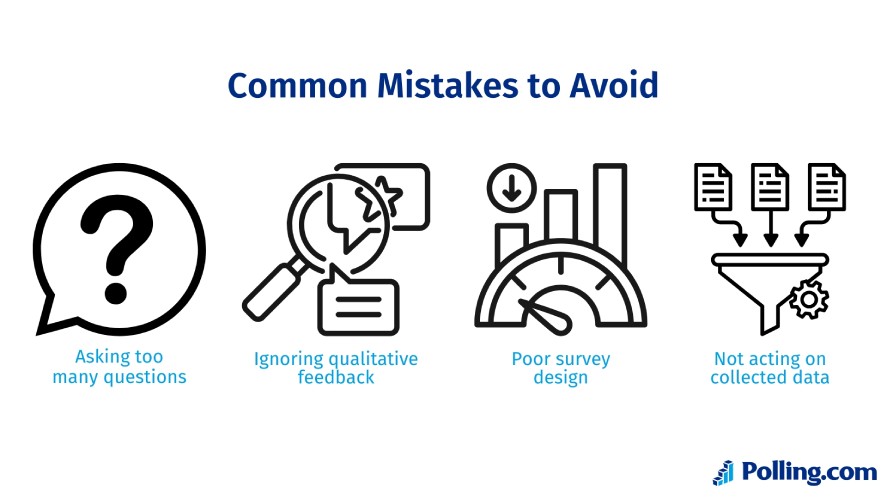
First, asking too many questions can overwhelm respondents and lead to survey fatigue.
Long surveys often result in lower completion rates and rushed answers, reducing data quality. So, focus only on the most relevant sample survey questions that align with your objectives.
Ignoring qualitative feedback is another major mistake.
While quantitative data shows trends, open-ended responses often explain the reasons behind customer behavior.
Skipping this feedback means missing valuable insights into customer motivations and pain points.
Poor survey design (such as confusing wording, biased questions, or a lack of logical flow) can lead to inaccurate or misleading responses.
Questions should be clear, neutral, and easy to understand across different audience segments.
Finally, not acting on collected data limits the value of your customer feedback survey entirely.
Gathering insights without applying them to improve products, marketing, or user experience wastes both time and resources.
Remember, the goal of any survey should be to drive meaningful action.
Conclusion
Asking the right questions is essential to truly understanding online shopping behavior.
Well-designed surveys help businesses uncover customer preferences, identify friction points, and improve the overall shopping experience.
By using a structured approach, companies can make smarter, data-driven decisions.
These insights can lead to higher conversion rates, better customer satisfaction, and more effective marketing strategies.
By leveraging the right customer feedback tools like Polling.com and continuously refining your approach, you can stay ahead in an increasingly competitive eCommerce landscape.