
Gallup Survey: How It Shaped Modern Polling and Data Collection

The Gallup survey has played a foundational role in shaping how modern polling and data collection are conducted today.
From predicting election outcomes to measuring public opinion and workplace engagement, Gallup’s approach has set the standard for reliable and scientific surveys.
In this article, we’ll explore what a Gallup survey is, what is a Gallup poll, how it works, and why it continues to influence the way organizations collect and analyze data.
Let’s start by understanding the core concept behind Gallup surveys.
What Is The Gallup Survey
A Gallup survey is a structured, research-based method of collecting data. It’s designed to measure public opinion, attitudes, and behaviors using scientific sampling techniques.
Often referred to as a Gallup poll, it aims to provide accurate insights that represent a larger population.
The primary purpose of a Gallup survey is to understand what people think about specific topics. This ranges from politics and economics to workplace engagement and social issues.
By carefully selecting respondents and using standardized Gallup survey questions, the results reflect broader trends rather than isolated opinions.
What sets a Gallup survey apart from general surveys is its strong focus on methodology and survey methods.
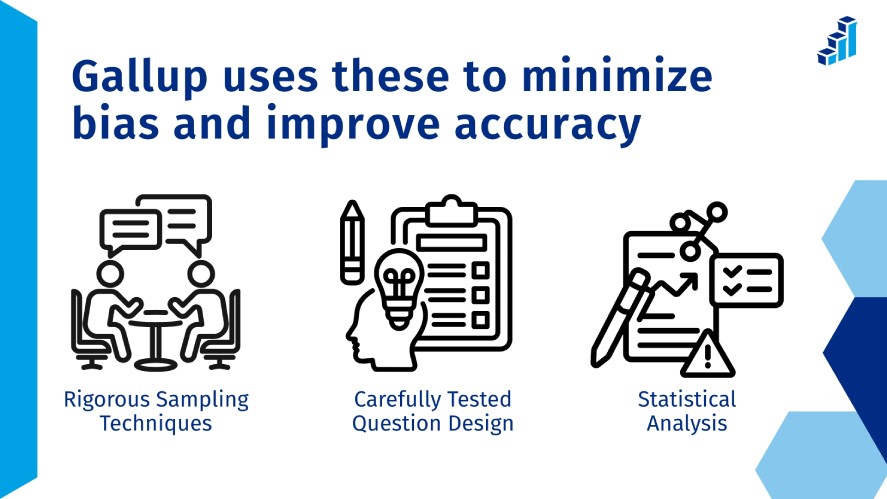
Gallup uses rigorous sampling techniques, carefully tested question design, and statistical analysis to minimize bias and improve accuracy.
This makes Gallup polls widely regarded as some of the most reliable forms of survey research.
Behind these surveys is Gallup, a global analytics and advisory firm. The Gallup survey company is known for their expertise in polling, workplace research, and public opinion studies.
Over decades, Gallup has built a reputation for delivering data-driven insights that influence decision-making across governments, businesses, and organizations worldwide.
The Origins of the Gallup Survey
The origins of the Gallup survey trace back to George Gallup, a pioneer in modern polling and data collection.
In the 1930s, Gallup challenged traditional survey methods that relied on large but unrepresentative samples. He introduced a more scientific approach to measuring public opinion.
In 1935, he founded Gallup, establishing what would become one of the most influential organizations in polling history.
His breakthrough came during the 1936 U.S. presidential election, where his survey method accurately predicted the outcome, while larger, less scientific polls failed.
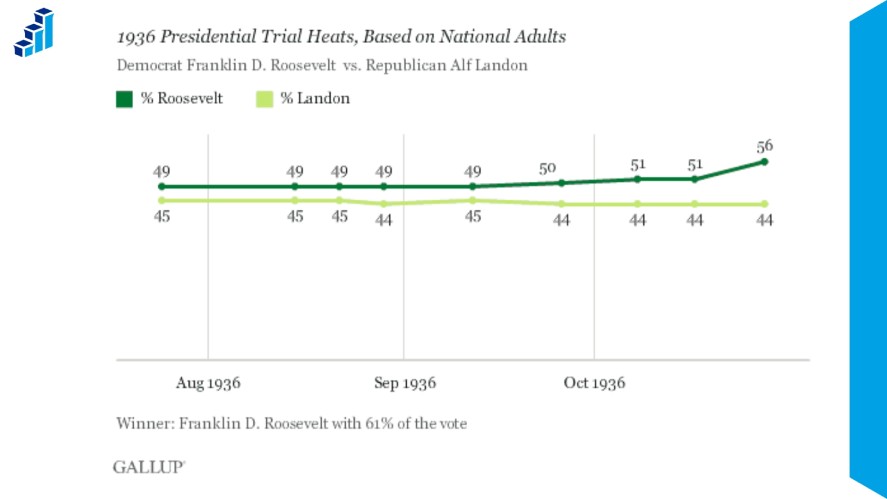
This moment demonstrated that the quality of sampling matters more than quantity and helped answer the question of is Gallup poll reliable. It reshaped how surveys are conducted.
Gallup’s approach revolutionized public opinion polling by emphasizing representative sampling, structured questionnaires, and statistical analysis.
His work quickly gained attention from media organizations. They began using Gallup polls to report on public sentiment.
Over time, Gallup surveys became a trusted source for understanding voter behavior, consumer attitudes, and social trends.
How Gallup Surveys Work
Gallup surveys are built on rigorous scientific principles within a structured survey process designed to ensure accuracy and reliability.
At the core of their methodology is random sampling. It ensures that every individual in a target population has an equal chance of being selected.
This approach helps create a sample that accurately represents the broader population.
Representativeness is critical.
Instead of surveying as many people as possible, Gallup focuses on selecting the right mix of respondents based on factors such as age, gender, location, and other demographics.
This ensures that survey results reflect real-world distributions.
Gallup uses multiple data collection methods depending on the study.
Traditionally, this included telephone interviews, but today it also incorporates online surveys and, in some cases, face-to-face interviews.
Using different methods allows Gallup to reach diverse populations and improve response coverage.
Another key element is statistical reliability, which directly relates to how accurate are polls and surveys.
Gallup surveys report margins of error. It indicates how much the results may vary from the true population value.
For example, a margin of error of ±3% means the actual result is likely within three percentage points of the reported figure.
By combining these, Gallup ensures that their survey results are both credible and widely trusted in research, media, and decision-making.
Key Areas Where Gallup Surveys Are Used
Gallup surveys are widely used across multiple domains.
Their structured methodology makes them valuable for decision-making in politics, business, and research.
Gallup Surveys in Political Polling
One of the most well-known applications of the Gallup poll is in political polling.
These surveys measure voter preferences, approval ratings, and public sentiment on key issues.
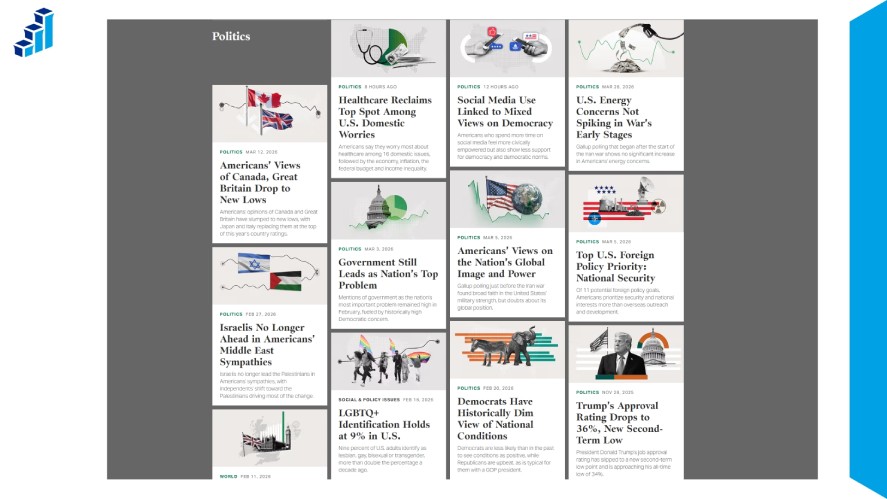
These surveys measure voter preferences, approval ratings, and public sentiment on key issues, clearly linking survey and results.
By tracking election trends and shifts in opinion, Gallup surveys help campaigns understand voter behavior and adjust their strategies.
They also play a major role in shaping media narratives, as news organizations rely on polling data to report on public opinion during elections and major political events.
Employee Engagement and Workplace Insights
Gallup is also widely recognized for its work in workplace research, particularly through the Gallup Q12 survey.
This framework, often referred to as a Gallup staff engagement survey, uses a set of standardized questions to measure employee engagement and satisfaction.
Organizations use these Gallup workplace engagement surveys to understand how employees feel about their roles, management, and work environment.
The insights help companies identify areas for improvement, increase productivity, and build stronger workplace cultures.
Customer Experience and Brand Perception
Gallup surveys are frequently used to measure customer satisfaction, loyalty, and overall brand perception.
By analyzing customer feedback and reviewing survey examples with data, businesses can better understand what drives purchasing decisions and long-term loyalty.
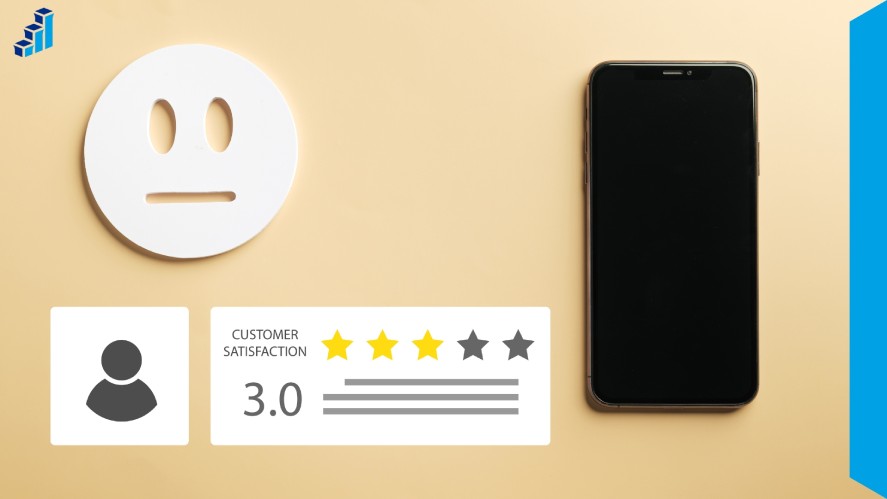
These insights play a key role in shaping business strategies. This includes improving customer service to refining products and marketing campaigns.
Understanding customer sentiment allows companies to stay competitive and responsive to changing expectations.
Global Research and Social Trends
Beyond business and politics, Gallup conducts large-scale global studies that track social and economic trends.
These surveys measure factors such as happiness, wellbeing, and economic confidence across different countries.
The findings are often used by governments, policymakers, and academic institutions to inform decisions and research.
By providing consistent, long-term data, Gallup helps stakeholders understand global patterns and address societal challenges more effectively.
Why Gallup Surveys Are Trusted Worldwide
Gallup surveys have built a strong global reputation due to their consistent methodology and long history of reliable results.
Over decades, Gallup has refined its approach to ensure accuracy. This makes its surveys a benchmark in the field of public opinion research.
One key reason for this trust is accuracy and consistency, along with transparency around topics like are Gallup surveys anonymous.
Gallup applies standardized survey methods, carefully designed questions, and scientifically selected samples across studies.
This consistency allows results to be compared over time and across different populations.
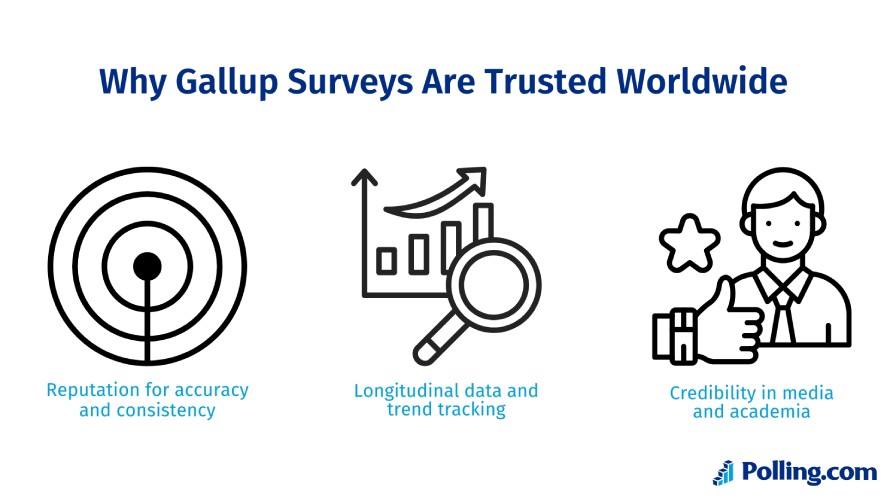
Another important factor is Gallup’s focus on longitudinal data and trend tracking.
By conducting surveys regularly over many years, Gallup can identify shifts in public opinion, economic outlook, and social attitudes.
These long-term insights are especially valuable for governments, businesses, and researchers looking to understand change over time.
Gallup surveys also hold strong credibility in media and academia.
Major news organizations frequently cite Gallup polls when reporting on public opinion, while academic institutions use the data for research and analysis.
This widespread adoption reinforces Gallup’s position as a trusted source of survey data.
Limitations of Gallup Surveys
Despite their strengths, Gallup surveys are not without limitations, especially in today’s rapidly evolving digital environment.
One challenge is sampling in modern digital landscapes.
As communication habits shift away from traditional channels, reaching a truly representative sample has become more complex.

Moreover, certain populations may be harder to contact, which can affect survey coverage.
There are also potential biases and non-response issues.
Like all surveys, Gallup polls can be influenced by who chooses to respond and who does not. If certain groups are underrepresented, results may not fully reflect the broader population.
Finally, Gallup surveys can be costly and less accessible compared to modern online survey tools.
Their rigorous methodology often requires significant resources. It makes them less practical for smaller businesses or teams.
In contrast, digital survey platforms offer faster deployment, lower costs, and greater flexibility for everyday data collection needs.
Gallup Survey vs Modern Online Survey Tools
While Gallup surveys have set the gold standard for scientific polling, modern online survey tools have introduced new levels of speed, flexibility, and accessibility.
Understanding the differences between these approaches helps organizations choose the right method based on their goals and resources.
One of the main differences lies in methodology and execution.
Traditional Gallup surveys rely on carefully controlled sampling techniques and structured data collection methods to ensure representativeness.
In contrast, digital survey platforms prioritize ease of use. They allow businesses to quickly create and distribute surveys to targeted audiences through email, websites, or apps.
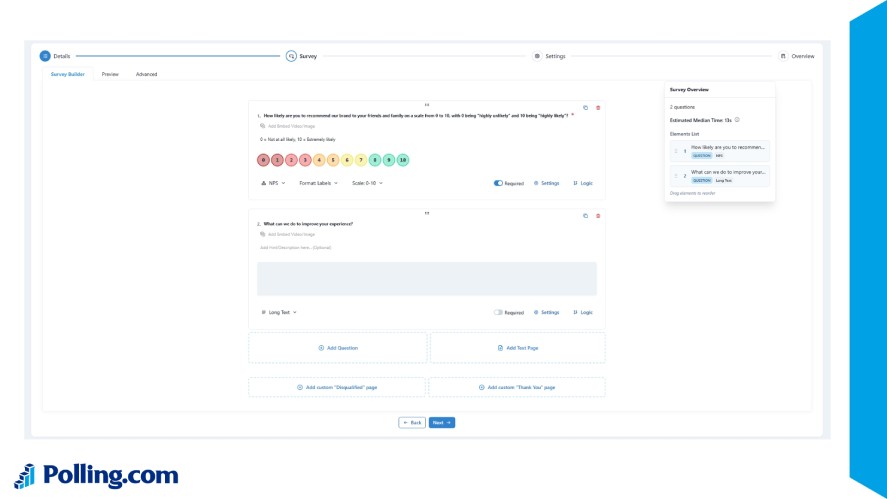
When it comes to speed and scalability, modern tools have a clear advantage.
Online surveys can be launched in minutes and reach thousands of respondents almost instantly.
Gallup-style polling, while more rigorous, typically requires more time for sampling, data collection, and analysis.
Affordability is another key distinction. Gallup surveys often involve higher costs due to their research design and execution.
On the other hand, online survey tools are generally more cost-effective. This makes them accessible to startups, small businesses, and growing teams.
One of the biggest advantages of digital platforms is real-time data collection and analysis.
Businesses can monitor survey responses as they come in, track performance metrics, and make immediate adjustments.
This enables faster decision-making and more agile strategies compared to traditional polling methods.
Ultimately, both approaches have their strengths.
Gallup surveys excel in statistical rigor and large-scale public opinion research, while modern online survey tools offer speed, flexibility, and practical insights for everyday business use.
How Businesses Can Apply Gallup-Style Survey Techniques
Businesses don’t need the full scale of a traditional Gallup survey to benefit from its principles.
By adopting key elements of Gallup’s methodology, organizations can significantly improve the quality and reliability of their own surveys.
One important practice is using structured questionnaires.
Well-organized surveys with clearly defined questions ensure consistency across responses. It makes data easier to analyze and compare.
This also helps reduce confusion for respondents and improves completion rates.
Equally important is unbiased question design. Questions should be neutral, clear, and free from leading language that could influence responses.
For example, instead of asking “How much do you love our product?”, a more objective approach would be “How satisfied are you with our product?”.
This ensures that the data collected reflects genuine opinions.
Finally, businesses should focus on leveraging data for decision-making.
Collecting survey responses is only the first step. What matters most is how the insights are applied.
Companies can use survey data to improve customer experience, refine marketing strategies, enhance products, and optimize internal processes.
Applying a structured and data-driven approach helps turn feedback into measurable results.
Conclusion
The Gallup survey has played a critical role in shaping modern polling and data collection.
Its emphasis on scientific sampling, structured survey design, and statistical reliability has set the standard for how surveys should be conducted.
Even in today’s digital landscape, these principles remain highly relevant.
While modern tools have made surveys faster and more accessible, the core ideas behind Gallup’s methodology are still essential for producing trustworthy insights.
For businesses looking to apply these proven techniques, platforms like Polling.com offer a practical solution.
By combining ease of use with powerful analytics, they help you design high-quality surveys, collect data quickly, and turn results into actionable insights.