

Academic Research Survey: Top Online Tools (Free & Paid)

An academic research survey is one of the most essential tools for gathering data in scholarly investigations. Whether it’s a student thesis, a doctoral dissertation, or a large-scale institutional study, surveys help researchers collect firsthand information, measure variables, and support or refute hypotheses.
As we move deeper into 2026, technology continues to transform the way researchers conduct their work. The rise of data collection tools, the integration of AI tools for academic research, and the increasing expectations for compliance and accessibility have reshaped the landscape. Researchers now face a variety of choices in selecting the right digital tools, but not all platforms are designed with academic rigor in mind.
This comprehensive guide explores the best survey platforms for researchers in 2026. We’ll look at why selecting the right tool is more important than ever, what features to prioritize, and how each platform compares based on your unique academic needs.
Why the Right Survey Platform Matters More Than Ever in 2026
Choosing a suitable tool for your academic research survey is no longer just about ease of use or visual design. It’s about data quality, research ethics, user experience, and long-term viability. In an era where data misuse can jeopardize entire projects and institutional trust, the tool you use plays a direct role in the success of your research.
Data Integrity and Research Outcomes
First, let’s talk about accuracy. Poorly designed survey tools can generate inconsistent or misleading responses. Limited question branching, technical bugs, or awkward layouts can compromise your data collection. This, in turn, affects the validity of your findings and the overall strength of your academic research.
To avoid this, high-quality platforms provide AI-assisted logic and branching features. These tools guide respondents smoothly through questions that are relevant to them, reducing confusion and dropout rates. Ultimately, your survey result analysis becomes more precise and reliable.
Adhering to Modern Ethics and Global Compliance Standards
Next, there’s the matter of ethics. Research involving human participants must follow rigorous ethical standards, including Institutional Review Board (IRB) approval and adherence to data protection regulations like GDPR. Any academic research survey platform must be able to support these needs.
Modern survey platforms offer built-in consent form templates, automatic data anonymization, and secure data handling. For global researchers, this means fewer compliance risks and smoother approval processes.
Usability and Accessibility in a Post-AI World
Accessibility isn’t a feature anymore; it’s an expectation. With AI enhancing usability, today’s tools are expected to cater to all audiences, including participants with visual, auditory, or cognitive impairments. A well-designed tool can significantly increase survey respondents’ completion rates.
From clean mobile interfaces to multilingual support and screen reader compatibility, accessibility features ensure that your research survey reaches the widest and most diverse group of respondents possible.
Evolving Needs of Researchers in 2026: AI Tools, Automation, and More
In 2026, the expectations for academic research platforms are higher than ever. Researchers are now looking for more than form builders—they want intelligent platforms that can generate questions using AI for academic research, analyze patterns, and even help write reports.
Moreover, automation is streamlining repetitive tasks. For instance, some tools automatically generate citations, clean messy data, or visualize insights through AI-powered dashboards. These advancements are no longer future-facing—they are happening now and giving researchers back their time.
Core Features Every Academic Survey Tool Should Offer in 2026
Let’s now look at the core functionalities that every strong academic research survey tool should have in 2026. Whether you’re working on a student capstone or a government-funded research project, these features help you gather valid, useful, and ethical data.
Question Logic, AI-Suggested Questions, and Adaptive Branching
One of the most critical components of any research survey is logic. You need your tool to ask the right questions to the right people at the right time. Conditional logic and adaptive branching allow surveys to adjust dynamically based on previous answers, which increases both relevance and response accuracy.
In 2026, some tools go a step further by using AI tools for academic research to suggest questions based on your study’s objectives or previous research in your field. This makes survey building faster and helps align your questions with academic standards.
Real-Time Collaboration and Team-Based Editing
Modern academic research building is rarely done alone. Projects often involve research teams, faculty advisors, and external collaborators. Tools that allow shared access, real-time editing, and threaded comments make it easier for everyone to stay aligned and produce high-quality work.
For group-based student research, this functionality is especially helpful. When multiple users can work on a survey simultaneously and see changes in real time, collaboration becomes efficient and seamless.
Built-in Analytics, Dashboards, and AI-Powered Insights
Collecting data is only part of the job. You also need to analyze and interpret it. Leading platforms now offer in-tool analytics that visualize patterns, trends, and relationships. AI engines assist by highlighting unusual data points, segmenting respondents, or summarizing results.
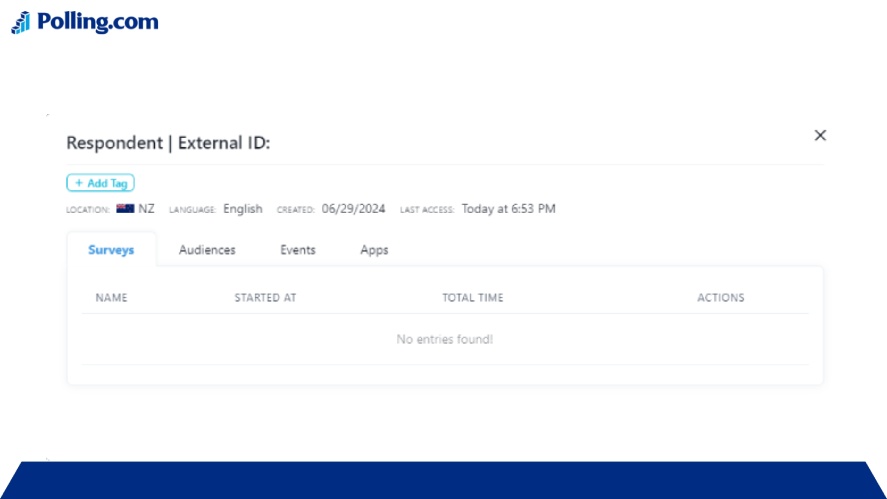
Instead of exporting data manually and running separate analyses, researchers can now access digestible, visual summaries inside the platform. This speeds up the survey result analysis and makes findings easier to present to stakeholders or include in academic papers.
Data Privacy, Anonymity, and Export Formats
Data privacy has become a non-negotiable in academic research. Platforms should ensure that respondent identities remain protected and that sensitive data is stored securely. Export capabilities are also important—your tool should be compatible with SPSS, R, Excel, or whatever format your institution requires.
Some platforms even include audit trails and tamper-proof data logs to meet IRB or grant reporting requirements. For researchers dealing with confidential topics or vulnerable populations, these features are critical.
Multi-device Support, Offline Collection, and Accessibility
In many studies, especially those involving fieldwork or low-connectivity regions, researchers need to collect data offline. Platforms that allow surveys to be downloaded and filled out without an internet connection—and then synced later—are vital for global research.
Mobile optimization is also crucial. Many survey respondents now participate using smartphones, so your survey needs to look and function properly across all screen sizes. This ensures high response rates and more inclusive data collection.
The Top Academic Research Survey Platforms of 2026
Now that we know what features to look for, let’s compare the top tools researchers are using in 2026. Each one offers unique strengths and use cases, from simple student projects to complex longitudinal studies.
Polling.com – Best Overall for Academic Research

Overview Polling.com leads the field with its academic-specific features, strong AI integrations, and user-friendly design. It’s tailored for higher education and research institutions, with built-in IRB templates and extensive logic tools.
Ideal For Doctoral research, funded university projects, and collaborative academic studies
Key Strengths
- Advanced AI-driven survey design
- Real-time logic optimization
- Full compliance with IRB, GDPR, and HIPAA
- Pre-made academic templates
- Visual dashboards for instant survey result feedback
Potential Limitations
- Best features require an institutional license
- Limited customization on the free tier
Polling.com’s focus on ethical, compliant, and intelligent design makes it the top choice for researchers who need reliable, scalable solutions.
Qualtrics
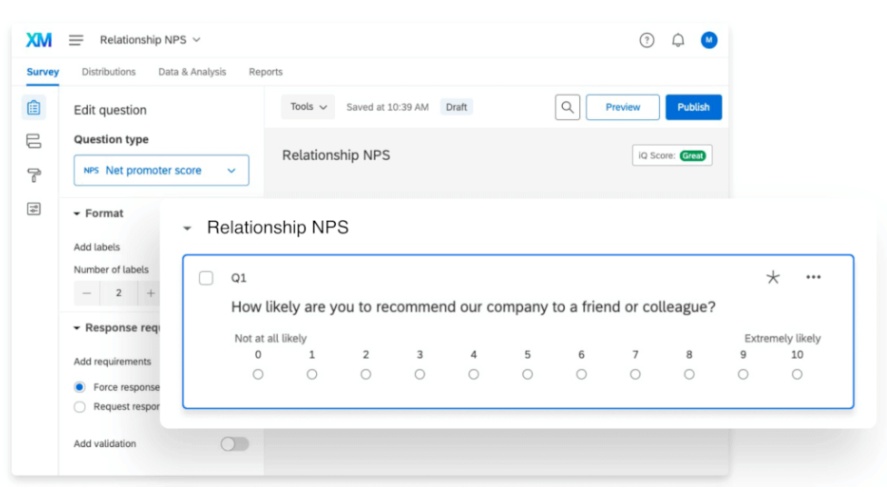
Overview Still a giant in the survey world, Qualtrics offers an enterprise-grade platform trusted by universities worldwide. In 2026, it continues to lead in analytics, question diversity, and cross-departmental integrations.
Ideal For Large universities and complex research projects
Key Strengths
- Professional survey design and logic features
- Exceptional multilingual support
- Strong integrations with statistical software
Potential Limitations
- Expensive for individuals or small research teams
- Learning curve for new users
Google Forms (2026 Version)
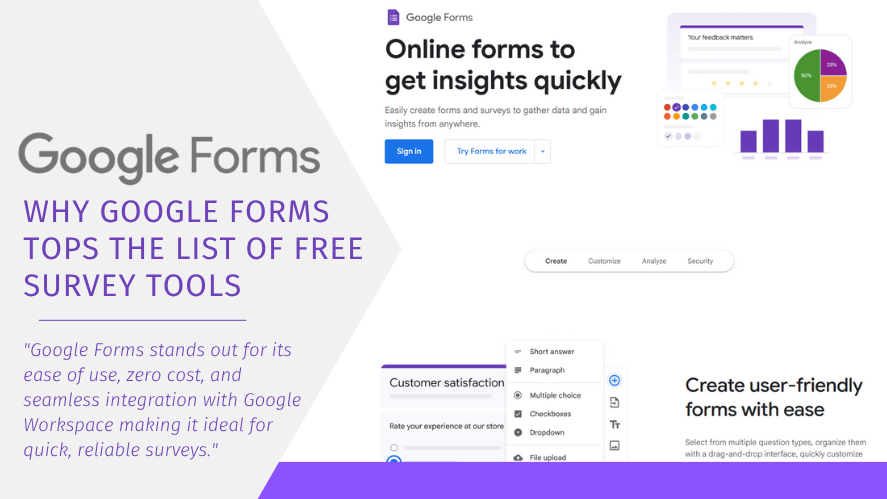
Overview Google Forms remains a popular entry-level tool. It has received updates to support AI-based suggestions and real-time response validation in 2026.
Ideal For Pilot studies, class projects, and basic student research
Key Strengths
- Easy and free to use
- Integrates with Google Sheets for quick analysis
- Simple mobile interface
Potential Limitations
- Minimal logic and branching options
- Not suitable for high-compliance research
LimeSurvey
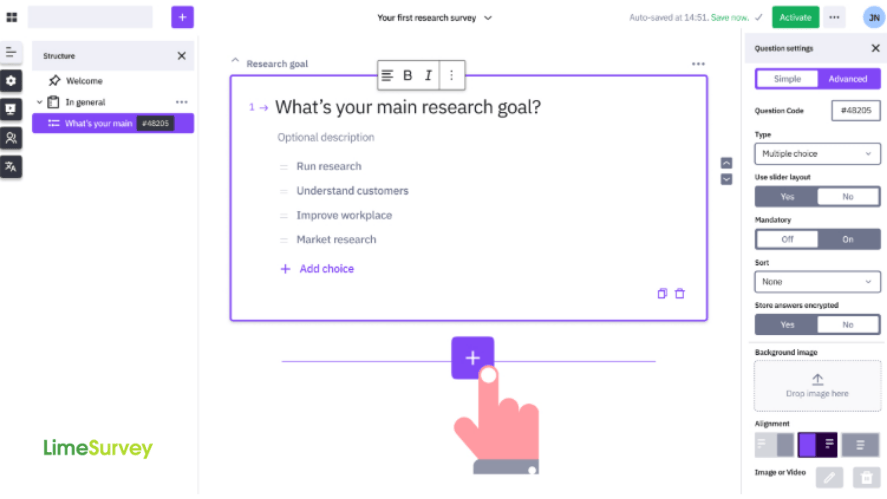
Overview An open-source platform for those who want complete control over their surveys. LimeSurvey appeals to researchers who are technically inclined and need flexible customization.
Ideal For Self-hosted research projects or universities with dedicated IT support
Key Strengths
- Highly customizable logic
- Full ownership of data
- No subscription fees
Potential Limitations
- Requires more setup time
- Less user-friendly for beginners
SurveyPlanet
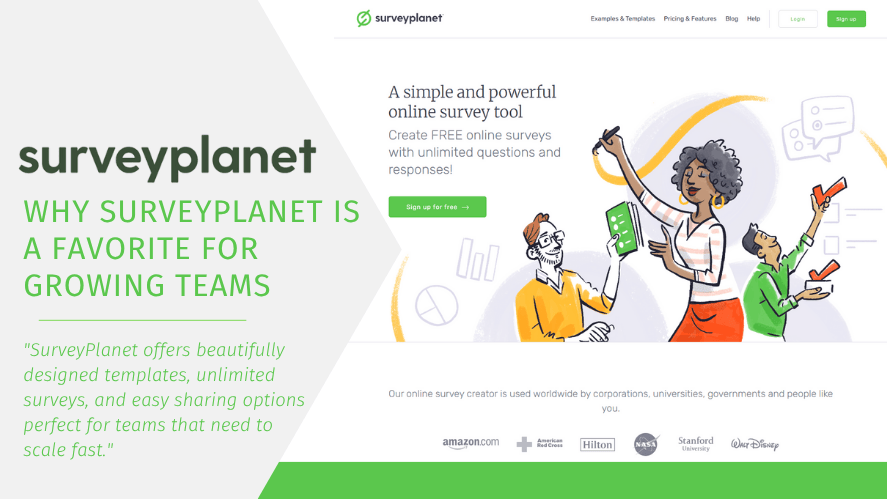
Overview A clean and simple platform designed for ease of use, SurveyPlanet suits researchers who need to launch a survey quickly without sacrificing professionalism.
Ideal For Independent researchers, nonprofit projects, or quick studies
Key Strengths
- Fast setup
- Professional templates
- Helpful for short-term data collection methods
Potential Limitations
- Lacks deep analytics features
- Limited integrations with research software
New Trends in Academic Research Survey Tools (2026 Update)
The academic research survey landscape is changing faster than ever. With AI, data privacy laws, and global collaboration shaping how research is done, tools must evolve to keep up. Let’s explore the key trends shaping the way researchers collect and analyze data in 2026.
AI-Enhanced Survey Creation and Analysis
One of the biggest changes in 2026 is the deeper integration of artificial intelligence in survey platforms. Today’s tools go beyond simple form builders. They can now analyze your research goal and suggest relevant, unbiased questions automatically.

Some platforms even optimize logic paths as more data is collected. For example, if early responses indicate a pattern, the AI may adjust follow-up questions to dive deeper into those trends. These ai tools for academic research improve both the quality and efficiency of surveys, reducing human error and saving time.
In analysis, AI can sort data faster than ever, highlight anomalies, and even generate summary narratives for your research report.
Privacy-First Design and Local Data Storage
As institutions become more aware of data security and sovereignty, there’s a strong shift toward platforms that prioritize privacy from the start. In 2026, more tools are offering on-premise storage options or giving researchers the choice of server location.
This is especially helpful for researchers in countries with strict data laws like GDPR in Europe or HIPAA in the United States. Privacy-first design ensures that the survey respondents remain protected, and researchers remain compliant.
Integration with LMS Platforms
With more universities using learning management systems like Moodle, Blackboard, and Canvas, survey platforms are now integrating directly with these systems. This allows students and faculty to distribute surveys through class portals, capture grades, or align survey data with coursework.
For example, an instructor running a student research methods course can now launch a survey from inside the LMS and track responses in real time. This integration streamlines the academic research building process.
Mobile Optimization and Offline Capabilities
Mobile readiness is no longer optional. A large number of surveys in 2026 are completed on mobile devices. Platforms must therefore be optimized for all screen sizes, load times, and even allow offline data collection in areas with limited internet.
Offline capability is essential for researchers doing fieldwork in rural areas or international studies where Wi-Fi access is limited. Once internet access is restored, the data syncs automatically without loss.
Smart Translation and Global Language Support
As academic research becomes more global, tools must support multilingual surveys. The best platforms offer real-time translation powered by AI, allowing respondents to take the survey in their native language. Some even adapt culturally sensitive phrasing.
This ensures that cross-cultural studies and international collaborations maintain data consistency and inclusivity across diverse populations.
Comparison Table: Top Academic Survey Tools (2026 Edition)
To make your decision easier, here’s a quick-reference comparison table of the top academic research survey tools based on core features.
| Feature | Polling.com | Qualtrics | Google Forms | LimeSurvey | SurveyPlanet |
|---|---|---|---|---|---|
| Pricing Model | Freemium + Institutional Plans | Institutional Licensing | Free | Free/Open Source | Freemium |
| AI Support | Yes | Yes | Limited | No | No |
| Logic Capabilities | Advanced | Advanced | Basic | Advanced | Moderate |
| IRB Compliance Features | Full support | Available | Manual setup | Manual | Limited |
| Mobile Support | Excellent | Excellent | Good | Good | Excellent |
| Offline Data Collection | Yes | No | No | Yes | No |
| Best Use Case | Graduate/Doctoral Research | Institutional Studies | Basic Student Research | Tech-savvy Independent Researchers | Nonprofit or Entry-Level Projects |
How to Choose the Best Academic Survey Platform for Your Research
Choosing the right platform isn’t just about features. It’s also about matching the tool to your specific research needs, resources, and constraints. Here’s a practical guide to help you make that decision.
Match Tool to Research Scope
Not all projects require the same level of complexity. If you’re conducting an undergraduate project, a simple tool like Google Forms may suffice. But if you’re managing a multi-phase doctoral study with international survey respondents, a more advanced platform like Polling.com or Qualtrics is likely necessary.
Smaller scope projects benefit from speed and simplicity. Larger, more formal projects demand control, compliance, and analytic depth.
Consider Your Field
Different academic disciplines have different needs. Social sciences and psychology often rely on complex branching logic and validated scales. In contrast, public health and environmental science may require mobile optimization and offline collection for field surveys.
Consider what kinds of data collection methods are standard in your field and choose a platform that supports those requirements natively.
Budget and Licensing Options in 2026
Cost can be a deal-breaker, especially for independent researchers or students. Some platforms offer institutional licenses that give you full access through your university. Others have generous free tiers or discounts for education.
For example, Polling.com offers a robust free version with options to upgrade, while Qualtrics typically requires access through your academic institution.
Time, Technical Skills, and Learning Curve
Some platforms have a steep learning curve but offer unparalleled customization. Others are beginner-friendly but lack advanced features. Consider your comfort level with technology and the time you have to learn new tools.
If you’re working on a deadline or lack technical support, opt for tools with strong user communities or excellent tutorials.
Integration With Institutional Systems and Tools
The best survey platforms work seamlessly with the tools you already use. Whether it’s SPSS, R, Excel, or your university’s LMS, check for compatibility before you commit. Integration saves time and ensures that your data flows cleanly between systems.
This is particularly important when your project involves survey result analysis, data cleaning, or presentation to academic boards.
Tips for Designing High-Quality Academic Surveys

No matter how advanced your tool is, your academic research survey will only be as good as its design. Here are five proven tips to ensure high-quality data collection.
Define Research Goals and Hypotheses First
Start with clarity. Know what you’re trying to find out before you write a single question. A strong research objective helps you select the right platform, choose question types, and structure your survey result collection.
Use Neutral, Unbiased Language
Avoid leading questions or emotionally charged wording. Neutral language ensures that respondents are not pushed toward a particular answer, which maintains the validity of your data collection.
Pilot Test Before Full Launch
Before going live, test your survey on a small group. This helps you catch errors, refine logic paths, and assess how long the survey takes to complete. A good pilot test reduces dropouts and increases overall data quality.
Use Validated Scales Where Possible
When measuring things like opinions, satisfaction, or behaviors, use established tools like Likert scales. Validated scales add credibility to your research and make your findings more comparable to other studies in your field.
Ensure Data Privacy and Informed Consent
Before collecting any data, inform your survey respondents about how their data will be used. Most modern platforms offer tools for consent forms and anonymity settings. These help you comply with IRB protocols and maintain ethical standards.
Case Studies: How Researchers Use Survey Tools in 2026
To make these concepts more concrete, here are real-world examples of how various tools are used in actual academic research projects.
Graduate Student Using Polling.com
Maria, a PhD candidate in sociology, used Polling.com for her dissertation on cultural adaptation among first-generation immigrants. With its AI logic and multilingual support, she reached over 1,000 participants across five countries. The built-in dashboards helped her quickly identify trends and present her findings to her university committee.
University Project on Qualtrics
A public health department at a major university conducted a large-scale behavioral study on vaccine adoption. Using Qualtrics, they ran surveys across multiple states with complex skip logic and mobile optimization. The IRB tools helped them gain quick approval, and the analytics dashboard streamlined their reporting process.
Open-source Project on LimeSurvey
A nonprofit research group used LimeSurvey to collect feedback from community members in rural Africa. Because of connectivity issues, they needed a platform with strong offline data collection capabilities. LimeSurvey’s open-source model allowed them to fully customize the tool for their needs and host data on their own servers for maximum control.
Conclusion: The Best Tool Depends on Your Research Goals
There is no single best platform for every academic research survey. The ideal tool depends on your research goals, discipline, available resources, and technical skill level. What matters most is selecting a platform that supports ethical data practices, delivers accurate insights, and enhances—not complicates—your work.
That said, if you’re looking for a platform that balances power, usability, and compliance in one package, Polling.com stands out as the most complete solution for academic researchers in 2026. Its thoughtful design, AI support, and academic-ready features make it a future-proof choice for serious research.