
Survey Trends for 2026: AI, Mobile, Personalization, and More (Updated)

Updated for 2026: This article has been fully updated to reflect the latest survey trends, platform expectations, and privacy-first best practices shaping how teams collect and use feedback today.
Understanding survey trends in 2026 matters more than ever. People expect faster, simpler surveys on mobile. Teams want insights right away, not weeks later. And privacy expectations continue to rise across regions and industries.
In 2026, companies like Polling.com are leading the way. They are using AI, improving mobile access, adding smart personalization, and following strict privacy laws to build better surveys. Let’s explore the five biggest trends that are changing how surveys work.
Below are the key trends changing how modern surveys are planned, delivered, and analyzed.
What’s New in 2026
In 2026, surveys are shifting from “forms that collect answers” to “systems that trigger action.” The biggest changes include:
- AI is moving beyond analytics into assistants and workflow automation (drafting questions, summarizing themes, routing feedback).
- Mobile feedback is increasingly in-the-moment, driven by short formats and better device experiences.
- Personalization is becoming privacy-first, with clearer consent and safer data handling.
- Survey tools are integrating deeper into business stacks so feedback can power CRM, support, and reporting in real time.
AI’s Growing Role in Modern Survey Trends
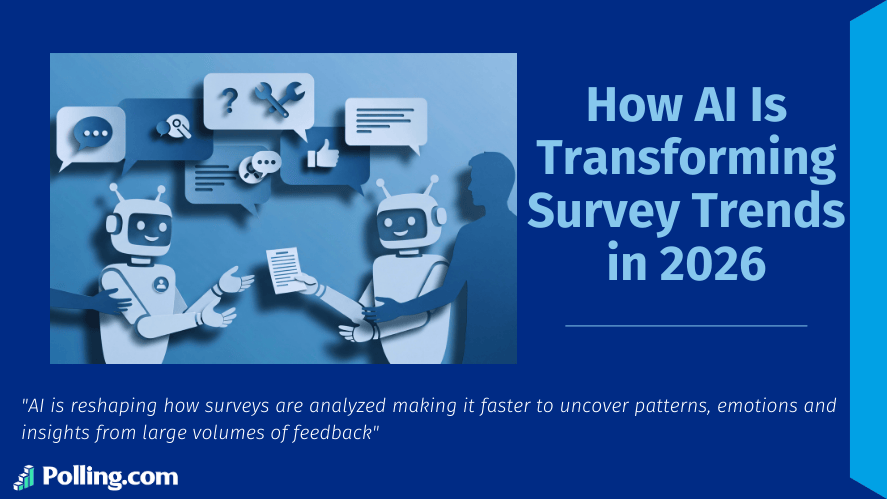
One of the most important survey trends in 2026 is the growing use of artificial intelligence. AI tools are helping survey creators collect and understand feedback much faster and more accurately than before.
Smarter Survey Data Analysis
AI helps teams process large volumes of survey data quickly, including open-ended answers. Instead of manually sorting comments, AI can group themes, highlight repeated issues, and summarize sentiment so teams get usable insights sooner.
As a result, companies get faster and clearer insights. This helps them make better decisions without spending hours reading through answers. In addition, it improves the quality of survey data analysis.
Conversational Surveys Using AI Assistants
AI is also changing how surveys are delivered. Instead of filling out long forms, users now talk to AI assistants that guide them through the process. These ai-powered surveys feel more like a real conversation.
The benefit is clear. People feel more relaxed and are more likely to finish the survey. In many cases, these ai personal assistant tools adjust questions based on how the user responds. This makes the survey smarter and more personal.
Predictive Tools for Better Questions
In 2026, more teams rely on AI to refine questions before launch. AI can flag unclear wording, spot leading language, and recommend better phrasing based on patterns from past surveys. This supports higher-quality data and reduces avoidable bias.
How Polling.com Uses AI
Polling.com has built smart tools that use ai powered systems to improve every step of the survey process. These tools help reduce errors, shorten surveys, and give better feedback.
For instance, they use AI to scan past answers, adjust survey paths, and make sure the questions are easy to understand. This boosts both speed and quality in survey data gathering.
Mobile Survey Trends for Better Engagement
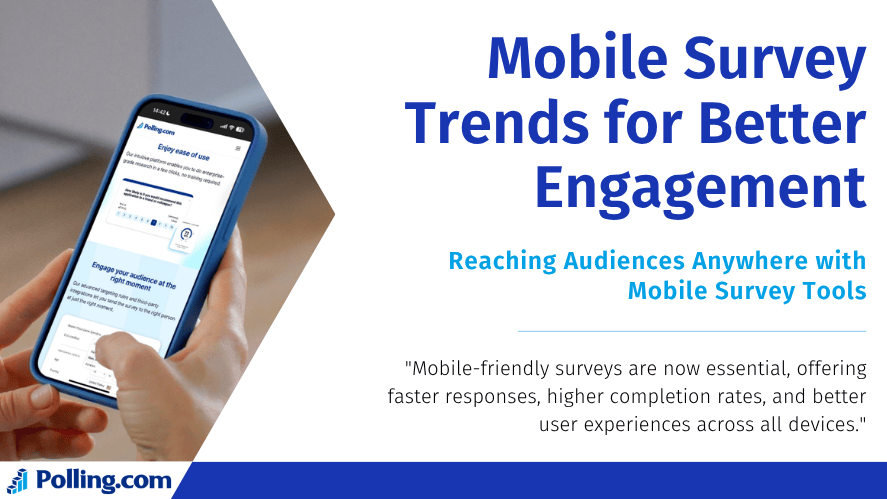
Mobile-first is no longer optional. Many surveys are completed on phones, and users quit quickly if a survey feels slow, cramped, or confusing. In 2026, the best-performing surveys are built for small screens first, then adapted to desktop.
Mobile-First Design for All Devices
Surveys that are hard to read on a phone usually get skipped. That is why mobile-ready surveys are key. They load fast, look good on all devices, and are simple to complete.
Polling.com focuses on mobile-first survey design. Their surveys are easy to use on any screen size. As a result, more people finish them, and businesses get better data.
Micro-Surveys Are on the Rise
Micro-surveys (one to three questions) are popular because they respect attention spans. They work well right after key moments like a purchase, a support chat, or feature usage. In 2026, teams often run micro-surveys more frequently and use them as an early warning system for satisfaction drops.
These surveys increase engagement because they only take a few seconds. Also, they improve survey and data collection without overwhelming the user.
Polling.com’s Mobile Features
Polling.com has added features that make mobile surveys better. For example, their surveys include simple buttons, voice input, and automatic updates. These tools help users respond quickly and easily.
Because of this, mobile surveys from Polling.com often get higher response rates than longer forms. In addition, this mobile focus supports better survey data collection across different locations and devices.
Personalized Survey Experiences Drive Higher Participation
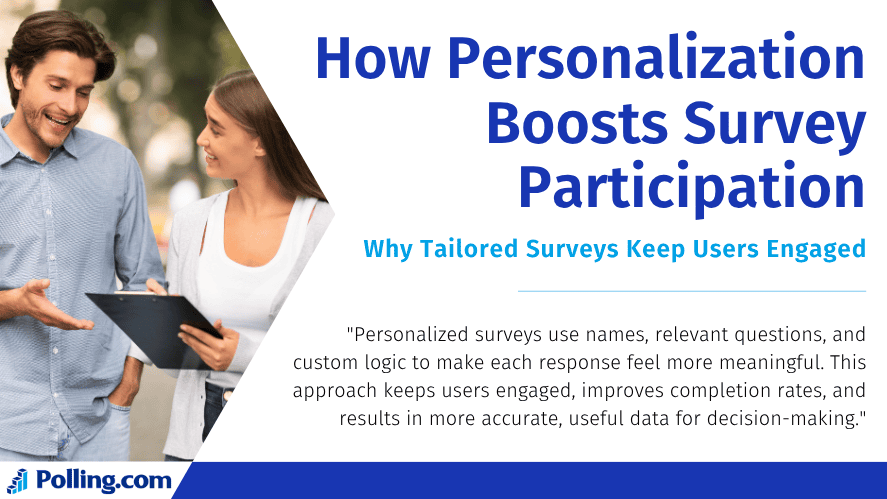
Personalization remains a top trend because relevance drives completion. When questions match the user’s situation, they feel easier to answer and less annoying. In 2026, personalization is also becoming more careful and privacy-aware.
Smart Branching and Logic
One way to personalize a survey is by using smart logic. This means the survey changes based on what the user says. If someone answers “yes” to a question, the next question follows that path. If they answer “no,” they get a different one.
This branching method keeps the survey short and focused. It also makes the experience feel more natural. As a result, users are more likely to finish the survey.
Using Behavior and Past Data
Personalization can use past answers or behavior, but in 2026 it should be done with clear consent and minimal data collection. The best approach is to personalize the experience while still limiting what you store and how long you keep it.
Better Surveys Mean Better Insights
When people feel like the survey “knows” them, they are more honest and detailed in their answers. This gives businesses better insight survey results.
Polling.com supports personalized survey design by using AI and logic-based tools. These features help businesses gather data that truly reflects their audience.
Ethical Surveying: A Rising Priority in 2026

Ethical surveying is rising because users pay attention to privacy, and regulators are adding more rules around data and AI. In 2026, “privacy-first” is not just a legal checkbox. It’s a trust signal that affects response quality.
Privacy Laws Are Changing Surveys
Laws like GDPR and CCPA require companies to protect user information. This includes explaining why the data is needed, how it will be used, and who will see it.
To follow these rules, surveys must include consent options and privacy notices. Polling.com adds these to every survey by default. This helps users feel safe and informed.
Transparency Builds Trust
Being open about survey data collection helps build trust. When users know how their answers will be used, they are more likely to respond honestly.
For example, adding a simple message that explains the purpose of the survey can increase participation. In addition, offering a summary of results afterward shows users their input mattered.
Polling.com’s Commitment to Privacy
Polling.com follows all privacy laws and best practices. They also use synthetic data for testing and development. This means fake data is used instead of real user info during system updates or training.
Synthetic data generation allows for safe, efficient testing while protecting users. This approach is becoming more common across the industry.
In short, ethical surveys not only meet legal rules but also lead to better responses. Trust is key in any kind of survey and data collection.
Survey Tools Becoming Part of the Business Stack
Surveys are no longer standalone tools. One of the top survey trends today is connecting survey tools with other business systems like CRMs and dashboards. This creates a smoother workflow and faster results.
Linking Surveys With CRM and BI Tools
Modern survey platforms now link directly with tools like Salesforce, HubSpot, and Power BI. This allows survey results to be stored and used right away.
When survey data moves automatically into your CRM, you can act fast. For example, if a customer gives a low rating, your support team can follow up immediately. This keeps feedback from getting lost.
Real-Time Reactions
When survey tools are connected to your system, responses can trigger actions instantly. A happy customer can receive a thank-you email. An unhappy one can get a support call. These real-time loops improve service and customer loyalty.
Polling.com offers strong integration features. Their surveys can send data directly into your CRM or marketing tools. This helps you get faster insights and better follow-up.
Polling.com vs. Others
Many platforms offer CRM links, but Polling.com takes it further. Their clear insights survey system helps companies track how feedback connects to goals.
For example, you can link a product review survey to sales results. You can also track user journeys and behavior with their insights survey tool. This gives you a full picture of the customer experience.
Conclusion
Survey trends in 2026 point in one direction: faster feedback, smarter workflows, and higher trust.
Here’s the recap:
- AI helps improve questions, analysis, and follow-up workflows.
- Mobile-first and micro-surveys increase completion and speed.
- Personalization boosts relevance, but must stay privacy-first.
- Ethical surveying builds trust and supports growing compliance needs.
- Integrations help turn feedback into action across your business stack.
If you want to keep up with these trends, Polling.com is the platform to explore. Their tools are easy to use, smart, and built with today’s needs in mind.
Stay ahead with Polling.comand build better surveys in 2026.