

Real-time Feedback Systems: Transforming Education, Healthcare, and More

Real-time feedback systems are changing how people learn, work, and make decisions today. Instead of waiting hours or days, users now get instant insights that help them act right away.
Because of this, businesses, schools, and healthcare providers can respond faster and improve results quickly. As a result, these systems are no longer optional. They are becoming essential tools for modern organizations.
In this guide, you will learn how real-time feedback systems work, why they matter, and where they are used across industries.
What Are Real-time Feedback Systems?
Real-time feedback systems are tools that collect and deliver information instantly. Unlike traditional feedback methods, these systems provide immediate responses based on live data.
For example:
- Teachers can see student answers during a lesson
- Doctors can monitor patient conditions in real time
- Businesses can track customer satisfaction instantly
Because feedback happens instantly, users can make quick decisions and fix problems early.
Why Real-time Feedback Systems Are Important
In the past, feedback often arrived too late. By the time someone reviewed it, the chance to act had already passed. However, real-time feedback systems solve this problem.
Key reasons why they matter:
- Faster decision-making
Immediate insights help teams act without delay - Improved accuracy
Errors can be detected and corrected early - Higher engagement
Users stay involved when they see instant results - Better outcomes
Quick adjustments lead to stronger performance
As a result, organizations that use real-time feedback systems can stay competitive and responsive.
Benefits of real-time feedback systems.
Real-time feedback systems offer clear advantages across industries. When used correctly, they improve both performance and user experience.
Improved Performance and Efficiency
Immediate feedback helps identify problems early. Because of this, teams can fix issues before they grow.
In addition:
- Workflows become smoother
- Productivity increases
- Time is used more efficiently
Better Decision-Making
Real-time data allows leaders to make informed decisions quickly. Instead of guessing, they rely on accurate insights.
For example:
- Businesses can adjust marketing campaigns instantly
- Managers can respond to employee performance in real time
As a result, decisions become more strategic and effective.
Increased customer and employee satisfaction.
- Immediate feedback leads to improved service quality and it’s customer experience.
- Employees receive prompt recognition and guidance, boosting morale and performance.
Higher Customer and Employee Satisfaction
When feedback is instant, people feel heard and valued. This leads to better experiences overall.
- Customers receive faster service improvements
- Employees get timely recognition and guidance
Because of this, satisfaction and loyalty often increase.
Case Studies and Statistics:
- Education: Schools use real-time feedback systems. They say that these systems have improved student performance and engagement.
- Healthcare: Hospitals that use these systems have seen shorter patient recovery times. They’ve also seen increased efficiency.
- Business: Retailers use real-time customer feedback. They’ve seen higher customer satisfaction and more sales.
Real-world Applications of Real-time Feedback Systems
Real-time feedback systems are used across many industries. Each sector uses them in different ways, but the goal remains the same: faster insights and better results.
In Education
In education, real-time feedback helps both students and teachers.
How it improves learning:
- Students see their results instantly
- Teachers adjust lessons based on live responses
- Engagement increases during classes
For example, online quizzes and interactive tools provide immediate results. Because of this, students understand their progress right away.
Providing instant assessments and feedback to students:
- Tools like online quizzes and interactive platforms offer instant results. They let students see their understanding. They let teachers adjust their teaching.
In Healthcare
Healthcare is one of the most critical areas where real-time feedback systems are used.
Common use cases:
- Monitoring patient vital signs
- Sending alerts for sudden health changes
- Tracking treatment progress in real time
Because doctors receive instant updates, they can respond quickly. As a result, patient care becomes faster and more accurate.
In Business and Retail
Businesses rely to improve customer experience and operations.
Examples include:
- Customer feedback kiosks in stores
- Live chat support and instant surveys
- Real-time sales and behavior tracking
Because of these tools, businesses can respond to customer needs immediately. This leads to better service and higher sales.
In Manufacturing
In manufacturing, improving efficiency and reduce downtime.
Key applications:
- Monitoring production lines
- Detecting defects early
- Predicting equipment failures
As a result, companies can avoid costly delays and maintain high-quality standards.
Technologies behind feedback systems.
Several technologies power real-time feedback systems. These tools work together to collect, process, and deliver data instantly.
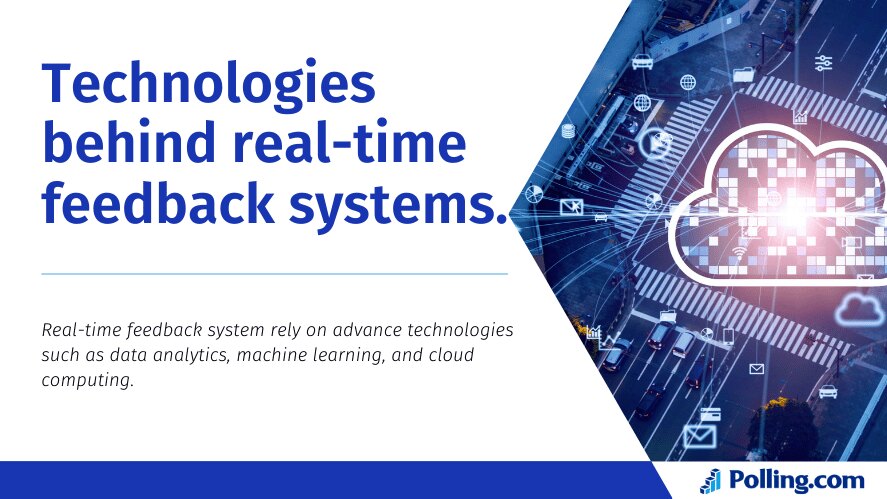
Sensors and IoT devices:
- Devices collect data from the physical world. They send it to processing systems in real-time.
Machine Learning and Artificial Intelligence:
- Algorithms that analyze data patterns and provide predictive insights.
Data Analytics and Cloud Computing:
- Platforms that process vast amounts of data quickly and store it for future analysis.
Examples of Technology Providers and Platforms:
- Education: Edmodo, Google Classroom.
- Healthcare: Philips IntelliVue, GE Healthcare.
- Business: Salesforce, Medallia.
- Manufacturing: Siemens MindSphere, PTC ThingWorx.
Challenges and limitations.
While feedback systems offer many benefits, they also come with challenges. Understanding these helps organizations use them more effectively.

Challenges of Real-time Feedback Systems
While real-time feedback systems offer many benefits, they also come with challenges. Understanding these helps organizations use them more effectively.
1. Data Privacy and Security Risks
Real-time systems collect large amounts of data. Because of this, protecting user information becomes critical.
- Sensitive data can be exposed if not secured properly
- Systems must follow strict data protection standards
As a result, companies need strong security measures and compliance policies.
2. High Implementation Costs
Setting up real-time feedback systems often requires investment.
- Hardware like sensors and devices
- Software platforms and cloud services
- Ongoing maintenance and updates
Because of this, smaller organizations may find it harder to adopt these systems.
3. Technical Complexity
Real-time systems rely on multiple technologies working together. If not managed well, this can create issues.
- Integration with existing systems can be difficult
- Teams may need technical training
However, proper planning can reduce these challenges.
4. Information Overload
Too much real-time data can overwhelm users.
- Constant alerts can reduce focus
- Too many insights can slow decision-making
Because of this, it is important to filter and prioritize data.
Future Trends of Real-time Feedback Systems (2026 and Beyond)
Real-time feedback systems continue to evolve. New technologies are making them smarter and more accessible.
1. Smarter AI Integration
Artificial intelligence is improving how feedback is analyzed.
- Systems can predict outcomes more accurately
- Insights become more personalized
As a result, users receive more meaningful recommendations.
2. Growth of Wearable Technology
Wearable devices are expanding real-time feedback into daily life.
- Fitness trackers monitor health instantly
- Smart devices provide continuous performance data
Because of this, real-time feedback is becoming more personal and proactive.
3. Expansion Across New Industries
More industries are adopting feedback systems.
- Agriculture uses sensors for crop monitoring
- Energy sectors track usage and efficiency
- Public safety systems respond faster to emergencies
As a result, these systems are becoming a standard across sectors.
How to Get Started with Real-time Feedback Systems
If you are planning to use real-time feedback systems, start with a clear approach.
Simple steps to follow:
- Define your goal
Identify what you want to improve, such as customer experience or performance - Choose the right tools
Select platforms that match your needs and budget - Start small
Test the system in one area before scaling - Train your team
Ensure users understand how to use the system - Analyze and improve
Use insights to refine your process over time
By following these steps, you can successfully implement feedback systems.
Frequently Asked Questions
Tools that collect and deliver instant data or responses. They help users make faster and better decisions.
They provide immediate insights, which improve performance, decision-making, and user experience.
They are commonly used in:
Education
Healthcare
Business and retail
Manufacturing
Examples include:
Live surveys and polls
Patient monitoring systems
Customer feedback apps
Real-time analytics dashboards
Costs vary depending on the system. While some tools are affordable, advanced systems may require higher investment.
Conclusion
They are changing how we operate in many sectors. These include education, healthcare, business, and manufacturing. These systems offer significant benefits, including improved performance, enhanced decision-making, and increased satisfaction.
However, They also present challenges. These need to be addressed. They include data privacy concerns and high costs. Technology continues to advance. More advanced AI and wearables will enhance feedback systems. They will make them indispensable tools for the future.
The growing importance of adopting these systems cannot be overstated. Such organizations use real-time feedback. They will be better able to face challenges. They can seize opportunities and stay competitive. The future of real-time feedback tech is promising. It has endless possibilities for innovation and improvement.