
Survey Introduction Examples: 20 Ways to Start a Survey

The best survey introduction examples show respondents what a survey is about before they begin answering questions.
A clear opening can explain the purpose, set expectations, and help people feel more comfortable sharing their answers.
It also gives respondents basic details, such as how long the survey may take and what will happen with their responses.
A good introduction does not need to be long.
It should give people enough information to understand what they are being asked to do without delaying the survey.
In this guide, you will learn what makes a good survey introduction, what information to include, and how to write a survey introduction that is clear and useful.
You will also find 20 survey introduction examples for customer feedback, research, employee surveys, events, and other common uses.
What Is a Survey Introduction?
A survey introduction is the short opening that appears before the survey questions.
It gives respondents the basic information they need before they start answering.
A survey intro usually explains why the survey is being conducted, who is collecting the responses, how long it should take, and how the answers will be used.
When relevant, it can also explain privacy, anonymity, or any other important details respondents should know.
The introduction helps prepare people for what comes next.
For example, a customer survey might explain that the questions are about a recent purchase, while a research survey may briefly describe the study and its purpose.
The survey questions introduction is different from the survey questions themselves.
Its job is to provide context and instructions, while the questions collect the actual information from respondents.
Why Is a Good Survey Introduction Important?
A clear survey introduction helps respondents understand what they are about to do before they see the first question.
It can build trust by explaining who is conducting the survey, why their feedback is needed, and how their answers will be handled.
A good opening also sets clear expectations.
Respondents can see how long the survey should take, what they need to do, and whether their responses are anonymous.
This makes the survey easier to follow and can help people feel more comfortable completing it.
What Should a Survey Introduction Include?
Below is what a survey introduction should include to ensure respondents have the information they need.
A Clear Welcome
Start with a short and friendly greeting.
A simple welcome makes the survey feel more approachable without taking up much space.
The Purpose of the Survey
Tell respondents why you are asking for their feedback.
For example, you might be collecting opinions about a product, understanding employee experiences, or conducting academic research.
Who Is Conducting the Survey
Name the company, organization, school, research group, or researcher behind the survey when this information is relevant.
Knowing who is collecting the responses can make the survey feel more trustworthy.
Estimated Completion Time
Give respondents a realistic estimate of how long the survey will take.
This helps people decide when they have enough time to complete it.
Privacy or Anonymity Information
Explain how responses will be handled when privacy is important to the survey.
If the survey is anonymous, say so clearly. If responses are linked to participants, explain that instead.
Simple Instructions For Survey Introduction Examples
Include any basic information respondents need before starting.
For example, tell them whether they should answer based on a recent experience, choose one answer per question, or complete every question.
A Short Thank You
Finally, end the introduction with a brief thank-you message.
Recognizing the respondent’s time helps create a polite and positive start to the survey.
How to Write a Survey Introduction
A good survey introduction gives respondents the key details they need without slowing them down.
If you are learning how to write a survey introduction, use the steps below to create a clear and useful opening.
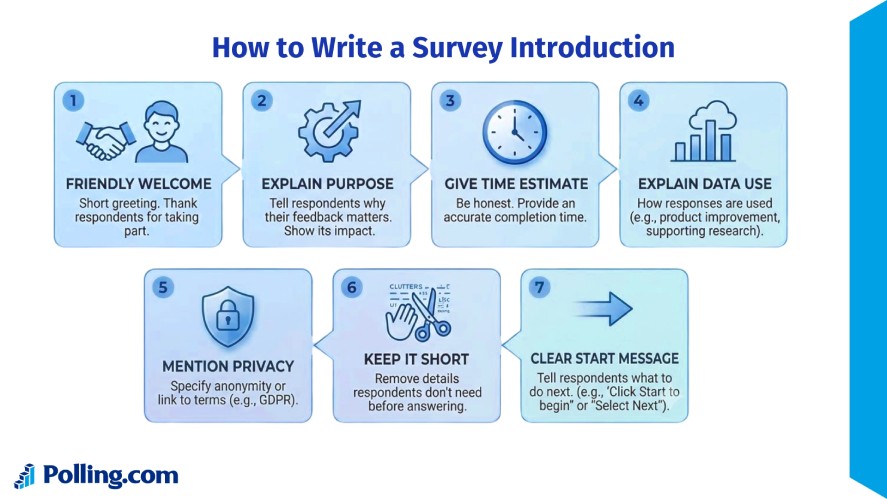
1. Start With a Friendly Welcome
Begin with a short greeting that makes the survey feel approachable.
You can simply thank people for taking part or welcome them to the survey.
2. Explain the Survey Purpose
Tell respondents why you are asking for their feedback.
A clear purpose helps people understand what their answers will be used for and why their participation matters.
3. Tell Respondents How Long It Takes
Give an honest estimate of the completion time.
Saying that a survey takes five minutes when it actually takes 15 can frustrate respondents and reduce trust.
4. Explain How Their Answers Will Be Used
Briefly explain what you plan to do with the responses.
For example, answers might help improve a product, understand customer needs, evaluate an event, or support research.
5. Mention Privacy When Needed
Tell respondents whether their answers are anonymous or connected to identifying information.
If there are specific privacy terms (like GDPR) they need to understand, include the relevant details before they begin.
6. Keep the Introduction Short
A clear introductory paragraph for survey respondents should provide context without becoming another long piece of content to read.
Remove details that respondents do not need before answering the first question.
7. End With a Clear Start Message
Finish by telling respondents what to do next.
A simple message such as “Click Start to begin” or “When you’re ready, select Next” gives people a clear way to move from the intro to a survey into the questions.
20 Survey Introduction Examples
The right survey introduction depends on who is answering and why you are collecting the responses.
The examples below cover common customer, employee, research, education, event, and general survey situations.
You can adapt the wording, time estimate, and privacy details to fit your own survey.
1. Customer Satisfaction Survey Introduction
Example introduction: Thank you for choosing [Company Name]. We would like to learn about your recent experience with us. This survey takes about 3 minutes to complete, and your feedback will help us improve our products and services.
Best used for: A customer survey introduction following a purchase, service, or support interaction.
Why it works: It quickly explains why the customer is being asked for feedback and how their answers can help.
2. Product Feedback Survey Introduction
Example introduction: We would like to hear what you think about [Product Name]. This short survey asks about your experience with the product and what we could improve. It should take about 5 minutes to complete. Thank you for sharing your feedback.
Best used for: Collecting feedback about an existing product or feature.
Why it works: It tells respondents exactly what they are being asked about and sets a clear time expectation.
3. Employee Feedback Survey Introduction
Example introduction: We want to hear about your experience working at [Company Name]. This survey asks for your feedback on areas such as communication, teamwork, and workplace support. It takes about 5 minutes to complete. Your responses will help us identify areas for improvement.
Best used for: Gathering feedback about the employee experience.
Why it works: It gives employees a clear reason to participate and explains how their feedback may be used.
4. Employee Engagement Survey Introduction
Example introduction: Your feedback can help us understand how employees feel about their work and the workplace. This survey takes about 7 minutes to complete and covers topics such as engagement, communication, and support. Please answer each question based on your current experience.
Best used for: Measuring employee engagement and workplace experiences.
Why it works: The introduction explains what the survey covers and tells respondents how they should approach the questions.
5. Market Research Survey Introduction
Example introduction: We are conducting this survey to better understand consumer preferences for [Product or Category]. Your answers will help us learn about customer needs, preferences, and buying habits. The survey takes about 5 minutes to complete.
Best used for: Market research and consumer research surveys.
Why it works: It clearly states the research purpose without trying to influence respondents’ answers.
6. Academic Research Survey Introduction
Example introduction: You are invited to take part in a research study about [Research Topic]. This survey asks about your experiences and opinions related to this topic and should take about 10 minutes to complete. Your responses will be used for research purposes. Please answer each question as honestly as possible.
Best used for: Academic studies, student research, and other research projects.
Why it works: This survey introduction for research gives participants basic context about the study and what their responses will be used for.
7. Student Survey Introduction
Example introduction: We would like to learn more about your experience in [Class, Program, or School]. This survey takes about 5 minutes and asks about your learning experience, challenges, and what could be improved. There are no right or wrong answers, so please share your honest opinions.
Best used for: Student feedback and education surveys.
Why it works: The wording reassures students that the survey is about their experience rather than testing their knowledge.
8. Event Feedback Survey Introduction
Example introduction: Thank you for attending [Event Name]. We would like to hear what you thought about the event, including the sessions, activities, and overall experience. This survey takes about 3 minutes to complete. Your feedback will help us improve future events.
Best used for: Post-event feedback surveys.
Why it works: It connects the survey directly to the event and explains why completing it is useful.
9. Website Feedback Survey Introduction
Example introduction: We would like to hear about your experience using our website. This short survey asks what worked well and where we could make the experience easier. It takes about 2 minutes to complete. Thank you for helping us improve the site.
Best used for: Website usability and visitor feedback surveys.
Why it works: It keeps the request focused on the website experience and sets a very short time expectation.
10. Online Survey Introduction
Example introduction: Thank you for taking part in our survey. We are collecting feedback about [Topic] to better understand your needs and experiences. This online survey takes about 5 minutes to complete. Your answers will help us improve [Product, Service, or Experience].
Best used for: General online surveys that do not fit a more specific category.
Why it works: This online survey introduction example provides the basic information respondents need without adding unnecessary details.
11. Questionnaire Introduction
Example introduction: Thank you for completing this questionnaire about [Topic]. The questions ask about your experiences, preferences, and opinions. Please answer each question based on your own experience. The questionnaire should take about 5 minutes to complete.
Best used for: Questionnaires used for research, feedback, or information gathering.
Why it works: This questionnaire introduction example gives clear instructions and prepares respondents for the type of questions they will see.
12. Brand Awareness Survey Introduction
Example introduction: We are conducting a survey to understand how people recognize and view brands in [Industry or Category]. The survey takes about 5 minutes to complete and asks about your awareness, familiarity, and opinions. Please answer based on your own knowledge and experience.
Best used for: Brand awareness and brand perception research.
Why it works: It explains the research goal without suggesting which brands respondents should recognize or prefer.
13. Customer Service Survey Introduction
Example introduction: Thank you for contacting [Company Name]. We would like to learn about your recent customer service experience. This survey takes about 3 minutes to complete and asks about your interaction with our support team. Your feedback will help us improve our service.
Best used for: Surveys sent after a customer support interaction.
Why it works: It keeps the survey focused on one recent experience, which can make the questions easier to answer.
14. Post-Purchase Survey Introduction
Example introduction: Thank you for purchasing [Product Name]. We would like to learn about your experience with your purchase and the buying process. This survey takes about 3 minutes to complete. Your feedback will help us improve the customer experience.
Best used for: Feedback collected shortly after a purchase.
Why it works: It gives respondents a clear time frame and focuses their answers on the recent purchase.
15. New Product Survey Introduction
Example introduction: We are exploring a new product idea and would like to hear your opinion. This survey asks about your needs, preferences, and reactions to the concept. It takes about 5 minutes to complete. Your feedback will help us decide how to develop the product.
Best used for: Testing new product ideas before development or launch.
Why it works: It explains that the product is still being explored and makes the purpose of the feedback clear.
16. Anonymous Survey Introduction
Example introduction: Thank you for taking part in this survey. Your responses are anonymous and will not be used to identify you. The survey takes about 5 minutes to complete and asks about [Topic]. Please answer honestly based on your own experience.
Best used for: Surveys where respondents may be more comfortable answering without providing identifying information.
Why it works: It puts the anonymity information near the start so respondents know how their answers will be handled before they begin.
17. Short Survey Introduction
Example introduction: We would love to hear your feedback about [Topic]. This survey has just a few questions and should take less than 2 minutes to complete. Your answers will help us improve [Product, Service, or Experience]. Thank you for your time.
Best used for: Very short surveys with only a few questions.
Why it works: It emphasizes the small time commitment and gives respondents a clear reason to participate.
18. Long Survey Introduction
Example introduction: Thank you for taking the time to complete this survey about [Topic]. The survey covers several areas and should take about 15 minutes to complete. Please answer each question as accurately as you can. Your responses will help us better understand [Research Goal or Purpose].
Best used for: Detailed research surveys with multiple sections.
Why it works: It gives respondents an honest time estimate before they start, which helps them decide whether they have enough time to finish.
19. Nonprofit Survey Introduction
Example introduction: Your feedback can help [Organization Name] better understand the needs and experiences of the people we serve. This survey takes about 5 minutes to complete. Your responses will help us improve our programs and plan future services. Thank you for sharing your perspective.
Best used for: Nonprofit, community, and service-user feedback surveys.
Why it works: It connects participation to a clear purpose and explains how the feedback may support future programs.
20. General Survey Introduction
Example introduction: Thank you for taking part in our survey about [Topic]. We are collecting feedback to better understand your experiences and opinions. The survey takes about 5 minutes to complete. Your responses will help us learn more about [Purpose]. Thank you for sharing your time and feedback.
Best used for: A flexible starting point for surveys covering a wide range of topics.
Why it works: This survey intro sample includes the core elements most surveys need and can be adapted by changing the topic, purpose, and time estimate.
Read More: How to Write Good Survey Questions for Free Online Survey Tools
Simple Survey Introduction Template
Use the following survey introduction sample as a starting point, then adjust the details to match your audience and purpose.
Greeting: Thank respondents for taking part.
Survey purpose: Briefly explain what the survey is about and why you are collecting responses.
Estimated completion time: Tell respondents how long the survey should take.
Privacy statement: Explain whether responses are anonymous or how identifying information will be handled.
How responses will be used: Tell respondents how their answers will support your research, business, organization, or other goal.
Thank-you message: Thank people for giving their time and feedback.
Start instruction: Tell respondents what to do next.
Survey Intro Sample
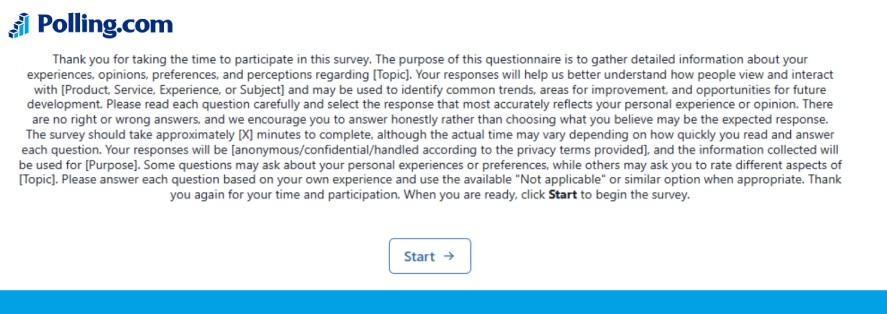
Thank you for taking part in our survey about [Topic]. We are collecting feedback to better understand [Purpose]. The survey takes about [X] minutes to complete. Your responses will be [anonymous/confidential/handled according to…]. We will use the feedback to [Explain How Responses Will Be Used]. Thank you for sharing your time and opinions. When you are ready, click Start to begin.
This sample of survey introduction works for many types of surveys.
Simply replace the sections in brackets with information that is accurate for your specific survey.
Good Survey Introduction Example
A good survey introduction example gives respondents enough information to understand the survey without making the opening too long.
It should feel natural rather than reading like a list of instructions.
Example of a Survey Introduction
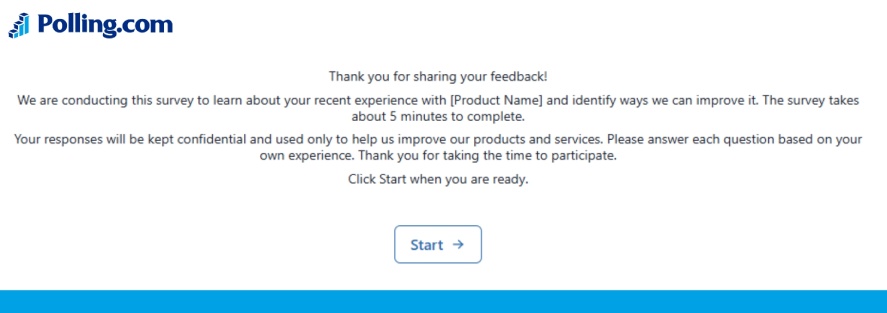
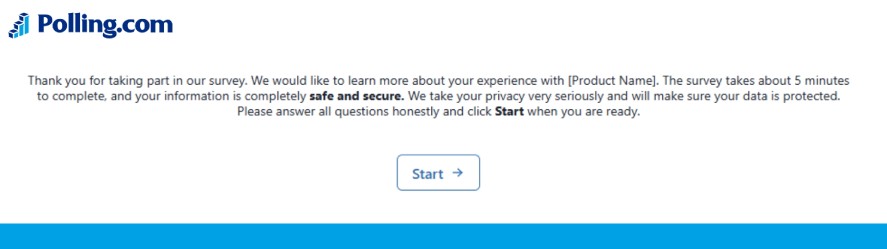
Thank you for sharing your feedback. We are conducting this survey to learn about your recent experience with [Product Name] and identify ways we can improve it. The survey takes about 5 minutes to complete. Your responses will be kept confidential and used only to help us improve our products and services. Please answer each question based on your own experience. Thank you for taking the time to participate. Click Start when you are ready.
Why This Survey Introduction Example Works
- Greeting: It opens with a simple thank-you that recognizes the respondent’s time.
- Purpose: It explains that the survey focuses on a recent product experience and improvement.
- Time estimate: The five-minute estimate helps set expectations before the survey begins.
- Privacy: It explains how the responses will be handled instead of making a vague promise about privacy.
- Instructions: Respondents are told to answer based on their own experience.
- Thank you: The closing thanks people for participating.
- Start message: The final instruction makes the next step clear.
This structure can be adapted for customer surveys, employee feedback, market research, academic research, and many other survey types.
Common Survey Introduction Mistakes to Avoid
A survey introduction should give respondents enough context to feel prepared, but not so much that they lose interest before reaching the first question.
Avoid these common mistakes when writing your survey opening.
Making the Introduction Too Long
A long introduction can make a simple survey feel like a lot of work.
Include the details respondents need, then move quickly to the first question.
Not Explaining the Purpose
People are more likely to understand a survey when they know why it is being conducted.
So, briefly explain what you want to learn and how the responses will be used.
Using Difficult or Technical Words
Avoid industry terms, academic language, or complex phrases that your audience may not understand.
Use simple words that make the survey easy to follow.
Giving an Unrealistic Time Estimate
Do not promise that a survey takes two minutes if most people need ten minutes to finish it. Test the survey first and use a time estimate that reflects the actual experience.
Making Vague Privacy Claims
Statements such as “Your data is safe” may not tell respondents what they need to know.
If privacy matters, explain whether responses are anonymous, confidential, or linked to identifying information.
Adding Too Many Instructions
Only include instructions that respondents need before they start.
Detailed explanations about every question type can make the introduction harder to read.
Starting With Promotional Language
A survey introduction should focus on the survey and the respondent, not on selling a product or service.
Promotional claims can make the survey feel biased and may affect how people respond.
Tips for Writing Better Survey Introductions
When looking at how to write an intro for a survey, keeping it short, clear, and relevant to your audience is essential.
Use these simple practices when reviewing your opening:
- Write short sentences: Keep each sentence focused on one main idea.
- Use common words: Choose familiar language instead of technical or complex terms.
- Tell people why their answers matter: Explain how their feedback will be used or what it can help improve.
- Give an honest time estimate: Base the estimate on actual testing rather than a guess.
- Match the tone to the audience: A customer survey, employee survey, and academic survey may need different levels of formality.
- Explain privacy clearly: Tell respondents how their answers will be handled when privacy is relevant.
- Remove unnecessary information: Cut details that do not help respondents understand or complete the survey.
- Test the survey before sending it: Complete the survey yourself and check the wording, timing, instructions, and overall flow.
These steps can make the opening easier to understand and help respondents move into the questions with fewer distractions.
Frequently Asked Questions About Survey Introduction Examples
Start with a short welcome or thank-you message. Then explain the purpose of the survey, how long it should take, and any important privacy information. End with a simple instruction that tells respondents how to begin.
A survey introduction should usually include the survey purpose, who is conducting it, the estimated completion time, and basic instructions. When relevant, explain how responses will be handled and whether the survey is anonymous.
Most survey introductions should be short enough to read in less than a minute. Include the information respondents need before starting, but remove details that are not necessary for completing the survey.
A good survey introduction clearly explains what the survey is about, why the responses are needed, and how long it will take. For example, a customer survey might thank the respondent, mention a recent purchase, give a five-minute time estimate, and explain how the feedback will be used.
Start with a brief welcome and explain what the questionnaire covers. Tell respondents why you are collecting the information, how long it should take, and how they should answer the questions. Add privacy information when needed.
Yes, when privacy is relevant to the survey. Clearly state whether responses are anonymous or confidential and explain how identifying information will be handled. Only make privacy claims that accurately describe how the survey works.
Yes, an honest time estimate helps respondents know what to expect before they begin. Test the survey beforehand so the estimate reflects how long it actually takes most people to complete.
Conclusion
A clear survey introduction helps respondents understand what they are about to do and what their answers will be used for.
Explain the purpose of the survey, give a realistic time estimate, and set expectations before the first question.
If privacy or anonymity matters, explain how responses will be handled in simple terms.
Keep the wording short and easy to understand.
Remove details that respondents do not need and choose a tone that fits your audience.
The survey intro examples in this guide can give you a starting point, but the best wording will depend on your survey and respondents.
Once your introduction is ready, you can use Polling.com to create and launch your survey and start collecting responses.