
Household Budget Survey Questions for Accurate Insights

A household budget survey helps you understand how people earn, spend, and save money in their daily lives. But how do you make sure the data you collect is accurate and useful? The answer starts with asking the right questions and designing your survey the right way.
Today, many businesses, researchers, and even governments rely on a well-built survey to guide decisions. At the same time, tools like Polling.com make it much easier to create and manage online surveys without needing advanced skills. Because of this, more organizations can now collect better financial data faster.
In this guide, you will learn what a household budget survey is, why it matters, and how to create one that delivers real insights.
What Is a Household Budget Survey
A household budget survey is a type of survey used to collect detailed information about income, expenses, savings, and financial habits. If you are asking what is household budget survey, it simply means a structured way to study how households manage their money.
In most cases, this survey collects both numbers and behavior patterns. As a result, it gives a full picture of financial health.
Key Goals of a Household Budget Survey
First, it helps you understand income versus expenses. You can clearly see how much money comes in and how much goes out.
Next, it tracks spending behavior. This shows where people spend the most, whether on essentials or non-essentials.
Finally, it identifies trends over time. For example, you might notice that grocery spending is rising or that savings are dropping.
Real-World Use Cases
Governments often use household budget surveys to shape policies. For instance, they may adjust taxes or create support programs based on real data.
At the same time, businesses use this data in a market study survey. This helps them understand what customers can afford and what they value.
In addition, fintech apps use this information to build smarter budgeting tools. So, the impact of a simple survey can be very wide.
Why Household Budget Surveys Matter
A household budget survey is not just about numbers. It is about making better decisions.
To begin with, it helps organizations rely on facts instead of guesses. This leads to smarter planning.
Also, it supports economic research. Experts can study spending habits and understand changes in the economy.
Another key benefit is better product targeting. When businesses know how people spend, they can offer the right products at the right price.
For individuals, the value is just as strong. A good survey can highlight spending habits and encourage better financial planning.
Because of these benefits, using strong survey questions becomes very important.
Types of Household Budget Survey Questions
When creating a household budget survey questions set, it is important to cover all areas of financial life. This ensures you do not miss key insights.
At the same time, knowing the right questions to ask for surveys improves the quality of your data.
Here is a quick overview of the most important household budget survey questions by category:
| Category | Example Questions | Purpose |
|---|---|---|
| Income | What is your monthly income? What are your income sources? | Understand earning patterns |
| Expenses | What are your monthly expenses? How much do you spend on essentials? | Track spending behavior |
| Savings & Investment | How much do you save monthly? Do you invest regularly? | Measure financial stability |
| Debt & Liabilities | Do you have debts? How much do you repay monthly? | Assess financial obligations |
| Lifestyle & Behavior | Do you follow a budget? What do you overspend on? | Analyze spending habits |
Now, let’s look at each category in more detail.
Income-Related Questions
Income questions are the starting point of any survey.
- What is your total monthly household income?
- What are your primary sources of income?
- Is your income stable or variable?
These are simple but powerful survey questions. They give a clear base for further analysis.
Expense Tracking Questions
Next, you need to understand spending.
- What are your monthly fixed expenses?
- How much do you spend on groceries, utilities, and transportation?
- What percentage of income goes to essentials?
These are good survey questions examples because they focus on real behavior. They also make it easier to compare data across groups.
Savings and Investment Questions
After expenses, savings come into focus.
- How much do you save monthly?
- Do you invest regularly?
- What are your financial goals?
If you are thinking about what are good survey question formats, these work well because they mix numbers with personal goals.
Debt and Liability Questions
Debt is another key part of financial health.
- Do you currently have outstanding debts?
- What types of debt do you carry?
- How much do you repay each month?
When writing survey question sets, including debt helps you understand financial pressure.
Lifestyle and Spending Behavior Questions
Finally, behavior adds deeper meaning to the data.
- How often do you make non-essential purchases?
- What categories do you overspend on?
- Do you follow a budget plan?
These questions follow survey design best practices because they go beyond numbers and explore habits.
Best Household Budget Survey Questions to Ask
Now that you know the types of questions, it is time to focus on the most effective ones.
A strong household budget survey should include questions like:
- What is your monthly household income after taxes?
- How do you allocate your monthly budget?
- What are your top three expense categories?
- How often do you review your budget?
- Do you use budgeting tools or apps?
- What financial challenges do you face?
These are considered a good survey question set because they are clear and direct. They also give useful insights without confusing the respondent.
In addition, tools like Polling.com make writing a survey questionnaire much easier. For example, you can use conditional logic to show follow-up questions only when needed. This improves both accuracy and user experience.
How to Design an Effective Household Budget Survey
Design plays a big role in how well your survey performs. Even the best questions can fail if the structure is poor.
So, let’s look at some simple rules.
First, keep questions clear and short. This is key when learning how to write good survey questions.
Second, use a mix of formats. Multiple choice, rating scales, and open responses all have their place.
Third, protect privacy. Financial data is sensitive, so anonymity builds trust.
Next, make sure your survey works well on mobile. Many people complete online surveys on their phones.
Finally, use logic branching. This is one of the top survey best practices. It allows the survey to adapt based on answers, which keeps it relevant.
Polling.com stands out here because it offers strong survey design best practices with easy setup.
Common Mistakes to Avoid in Household Budget Surveys
Even with the right intent, many surveys fail because of simple mistakes. So, it is important to know what to avoid when creating a household budget survey.
First, avoid asking overly complex questions. When questions are too long or confusing, people may skip them or give incorrect answers. Instead, focus on clarity when writing survey question sets.
Next, be careful with intrusive questions. Financial topics can feel personal, so it is better to keep questions respectful and optional when needed.
Another common issue is ignoring demographics. Without details like age, location, or income group, your data becomes harder to analyze. As a result, your insights may not be very useful.
Also, many people forget to update their survey. However, spending habits change over time. So, reviewing and improving your survey regularly is part of good survey best practices.
Finally, poor analysis can ruin good data. Even if you collect strong responses, you need a clear plan to study and use the results.
Tools to Create Household Budget Surveys
Choosing the right free online survey maker can save time and improve results. While there are many tools available, some stand out more than others.
Polling.com
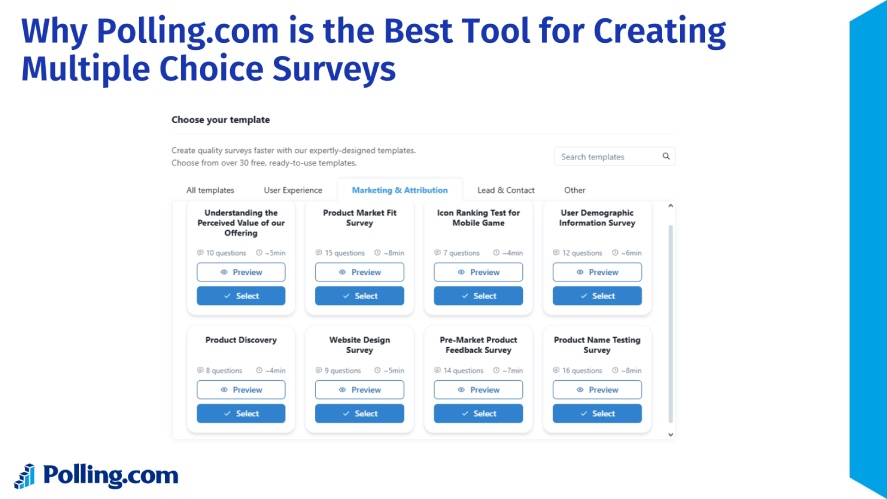
Polling.com is a strong choice for creating a household budget survey. It is simple to use, yet powerful enough for deep insights.
Here is why many users prefer it:
- Easy customization for all types of survey questions
- Advanced analytics for better understanding
- Clean and simple user experience
- Smart logic branching for better flow
- Fast setup compared to other platforms
Because of these features, it works well for both beginners and professionals running online surveys.
Other Tools
Google Forms is easy to use and free. However, it has limited analysis features.
SurveyMonkey is popular and offers many options. Still, it can become expensive as you scale.
Typeform is known for its clean design. However, it may not provide the same level of data depth as other tools.
In comparison, Polling.com offers a better balance of ease and power, especially for a market study survey.
How to Analyze Household Budget Survey Results
Once your survey is complete, the next step is analysis. This is where your data turns into real insights.
First, look for spending patterns. For example, you might notice that most households spend a large share on housing or food.
Next, segment your data. Group responses by income level, age, or location. This helps you see how different groups behave.
Then, track trends over time. If you run the same household budget surveys regularly, you can spot changes and predict future behavior.
After that, turn your findings into action. Businesses can adjust pricing, governments can improve policies, and individuals can plan better budgets.
Following these steps ensures you get the most value from your survey.
Frequently Asked Questions
A household budget survey is used to collect data about income, expenses, savings, and spending habits. It helps businesses, researchers, and governments understand financial behavior and make better decisions.
Good survey questions focus on income, expenses, savings, and debt. For example, asking about monthly income, top expenses, and saving habits can give clear and useful insights.
To write good survey questions, keep them simple and clear. Avoid confusing words and focus on one idea per question. This follows basic survey best practices and improves response quality.
Household budget surveys are important because they show how people manage money. This helps with economic research, business planning, and improving financial tools.
Common mistakes include asking complex questions, using unclear wording, and ignoring user privacy. Following survey design best practices can help avoid these issues.
You can use tools like Polling.com, Google Forms, SurveyMonkey, and Typeform. Polling.com is a strong option because it offers advanced features and an easy setup.
You can improve response rates by keeping your survey short, using clear survey questions, and making it mobile-friendly. Also, using logic branching can make the experience smoother.
Start by identifying patterns in income and spending. Then, group responses by demographics and track trends over time. This helps turn raw data into useful insights.
Conclusion
A well-designed household budget survey can reveal powerful insights about how people manage money. From income and expenses to savings and behavior, the right data helps drive better decisions.
However, success depends on asking the right household budget survey questions and following strong survey design best practices. Clear structure, simple wording, and smart tools all play a role.
At the same time, using a platform like Polling.com makes the process much easier. From creating online surveys to analyzing results, it helps you move from data collection to real insights faster.
In the end, whether you are running a market study survey or improving a financial product, the value of a strong survey is clear.
Start building your household budget survey today with Polling.com and turn your data into meaningful action.