
Secure Survey Tool: How to Protect Data and Boost Trust

A secure survey tool is a platform that collects survey responses while protecting sensitive data. It uses strong security and privacy controls to keep information safe.
This includes personal details, opinions, and internal business feedback. The tool ensures data is collected, stored, and analyzed securely throughout the survey process.
Security is more important than ever for online surveys.
Many surveys handle personal data, employee input, customer insights, or research survey and results. If this data is exposed, it can cause serious harm.
An insecure survey tool may lead to data leaks, legal penalties, and loss of trust.
In contrast, secure online survey tools reduce these risks. They help organizations meet legal requirements, protect respondent privacy, and show that data is handled responsibly.
Features like GDPR compliance and encrypted responses are not just technical details. They are essential for trust and compliance.
Whether you are using surveys as a customer feedback platform, an employee engagement tool, or a research method, security directly impacts response rates, data quality, and long-term credibility.
Key Security Features of a Secure Survey Tool
A reliable secure survey tool combines multiple security layers to protect data, prevent abuse, and ensure compliance without complicating the user experience.
Here are the key features to look for in a secure survey tool.
End-to-End Encryption & SSL/TLS
End-to-end encryption ensures that survey responses are protected both in transit and at rest.
When respondents submit answers, technologies like SSL/TLS encryption prevent data from being intercepted or read by unauthorized parties.
Once stored, encrypted databases help protect survey results even if servers are compromised. This level of encryption is a baseline requirement for any secure online survey tool.
Data Protection Standards & Compliance
Secure survey tools align with recognized data protection frameworks such as GDPR, HIPAA, ISO 27001, and similar standards.
Compliance demonstrates that a platform follows strict rules around data handling, storage, and access.
This is especially important for businesses handling customer data, healthcare organizations collecting patient feedback, and researchers working with sensitive information.
Using compliant survey tools reduces legal risk and strengthens organizational credibility.
Access Controls & User Authentication
Access controls define who can view, edit, and manage survey data.
Secure survey and polling software typically offers password protection, role-based permissions, and authentication options such as single sign-on (SSO).
These features ensure that only authorized users can access survey results. They reduce the risk of internal data misuse or accidental exposure.
Anti-Spam & Bot Prevention in a Secure Survey Tool
Anti-spam measures protect surveys from automated attacks and low-quality responses.
Features like reCAPTCHA, IP restrictions, and automated abuse detection help block bots and duplicate submissions.
This not only improves survey security, but also enhances data quality by ensuring responses come from real participants.
In the end, cleaner data leads to more reliable survey analytics and better decision-making.
Why Security Is Essential for Surveys
Surveys often collect sensitive personal, professional, or organizational data.
This can include names, email addresses, employee opinions, customer feedback, health-related information, or confidential business insights.
When this data is not properly protected, it becomes a serious liability. So, using insecure survey tools exposes organizations to multiple risks.
Data leaks or breaches can lead to serious consequences. These include regulatory penalties under laws like GDPR or HIPAA, legal action from affected users, and lasting damage to brand reputation.
Even one security incident can weaken user trust. It can also reduce future response rates, making surveys less effective as a data collection method.
Secure survey tools help reduce these risks. They use encryption, access controls, and built-in compliance safeguards throughout the survey process.
These tools restrict who can view or manage responses. They also protect data during transfer and storage, ensuring privacy requirements are met by design.
For respondents, this means their information is handled responsibly. For organizations, it means reduced risk, stronger compliance, and higher-quality, more reliable data.
Common Use Cases for Secure Survey Tools
Secure survey tools are widely used in situations where data privacy and trust matter most. They support many industries and research environments that handle sensitive information.
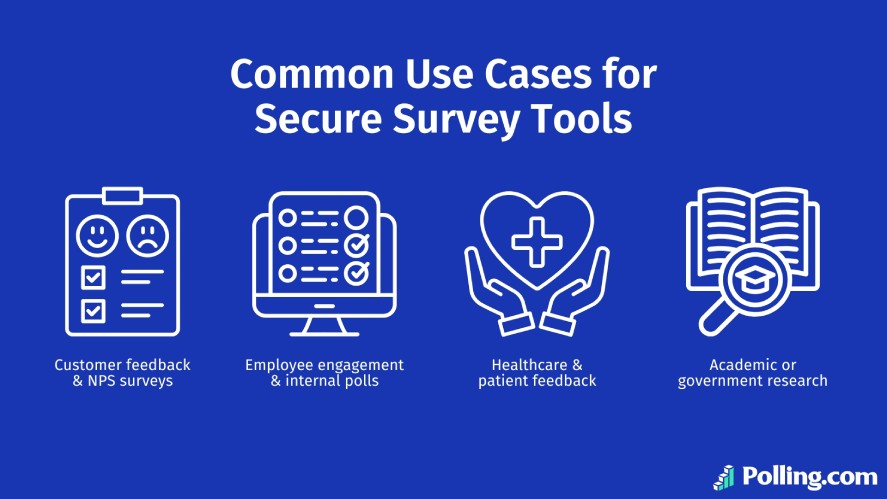
In customer feedback and NPS surveys, businesses often collect data tied to purchases or service experiences.
Secure survey tools protect customer identities and personal details. This allows companies to collect honest feedback while staying compliant and maintaining trust.
For employee engagement and internal polls, surveys may include HR data, workplace opinions, or management feedback.
Strong access controls ensure that only authorized users can view results. This protects employee privacy and encourages more open responses.
In healthcare, surveys must follow strict privacy rules such as HIPAA.
Secure online survey tools help keep patient data confidential. At the same time, they allow organizations to gather insights that improve care quality and services.
Academic and government research also rely on secure survey tools. These surveys often include sensitive demographic or behavioral data.
Security features support anonymity, data integrity, and ethical compliance, which are essential for credible research outcomes.
Checklist: Choosing the Right Secure Survey Tool
Not all survey tools are built with security in mind.
When evaluating a secure survey tool, use the checklist below to make sure it meets both your data protection needs and operational requirements.
| Criteria | Description | Checklist |
|---|---|---|
| Strong encryption (in transit + at rest) | Look for tools that use SSL/TLS for data in transit and encryption for data at rest to prevent unauthorized access | |
| Compliance with legal standards | A secure survey tool should support compliance with major regulations such as GDPR, HIPAA, or ISO 27001 | |
| Access and permission controls | Role-based access, admin permissions, and restricted sharing help ensure that only authorized users can view or manage survey data | |
| Data ownership policies | Avoid platforms that reuse, resell, or analyze your responses without explicit consent | |
| Audit logs and tracking | Audit trails are critical for accountability, internal reviews, and compliance audits | |
| User authentication (MFA, SSO) | Multi-factor authentication and single sign-on reduce the risk of unauthorized access, especially for teams managing sensitive survey results | |
| Backup and disaster recovery | Reliable backup systems and recovery plans ensure survey data is not lost due to system failures or security incidents |
Examples of Secure Survey Tools
Several survey and polling platforms place a strong emphasis on security, privacy, and compliance.
Below are common survey examples with data often cited for their secure survey capabilities.
BlockSurvey
Known for its privacy-first approach, BlockSurvey offers end-to-end encryption and minimizes data exposure. It is often favored by users who prioritize anonymity and strict data control.
SurveyMonkey
A widely used survey tool with robust enterprise-grade security. It supports multiple compliance standards such as ISO 27001 and SOC 2, along with secure data storage and access controls.
formrun/secure form tools
Some form-based survey tools provide SSL/TLS encryption and ISMS or ISO 27001 certifications, making them suitable for basic secure data collection needs.
Enterprise platforms (e.g., Qualtrics)
Advanced research platforms often include strong security frameworks, audit logs, and compliance options tailored for large organizations, academic research, or government use.
Polling.com
Polling.com is a secure survey tool that balances strong encryption, compliance readiness, clear data ownership, and ease of use.
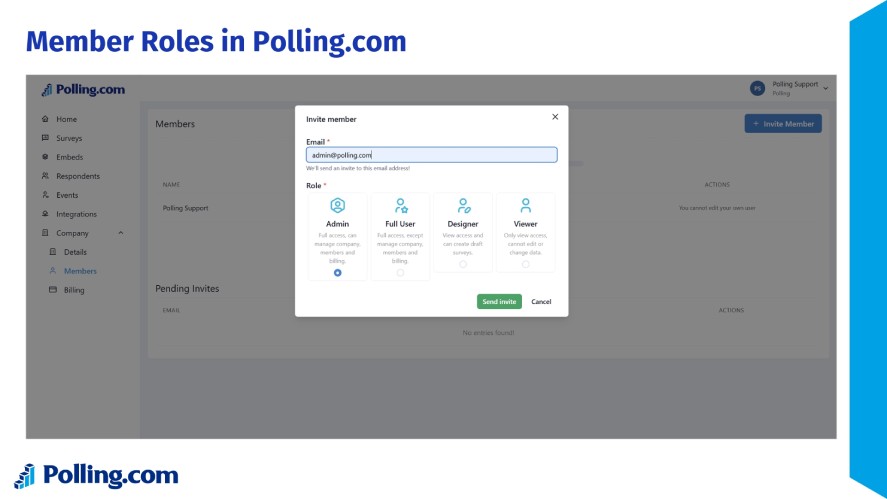
This makes it suitable for businesses that need secure data collection without complex setup or enterprise-level overhead.
Best Practices for Using a Secure Survey Tool
Even the most secure survey customer feedback management tool can fail if it is not used properly. Following basic best practices helps keep survey data safe, compliant, and resistant to risk.
Strong account security should be the first priority.
Survey administrators should use unique, complex passwords and enable multi-factor authentication whenever possible.
This simple step greatly reduces the chance of unauthorized access.
Access control also needs regular review. Teams should check who can view or manage surveys, remove inactive users, and limit admin permissions.
Reviewing audit logs helps confirm that only approved users are accessing sensitive data.
Training is another key factor.
Employees also play a key role in survey security. They should understand basic data privacy rules and know how to handle survey responses correctly.
This includes sharing results securely and recognizing potential security risks before they cause problems.
Finally, security must extend beyond the survey tool itself.
Many surveys connect to CRM systems, analytics platforms, or other third-party services. These tools must meet the same security and compliance standards.
Weak integrations can expose survey data, even when the main user feedback platform is secure.
Conclusion
Choosing the right secure survey tool is essential for trust, compliance, and reliable insights.
Surveys often collect sensitive personal, employee, or business information. Any security gap can lead to data breaches, legal penalties, and long-term damage to reputation.
There is no one-size-fits-all solution. Businesses should choose survey customer feedback tools based on security features, compliance requirements, use cases, and budget.
For teams looking to improve survey security, Polling.com offers resources to help select the right platform. These tools support safer data handling and more confident decision-making.