
GDPR Survey: A Complete Guide to Compliance for Your Business

A GDPR survey is a structured set of questions designed to assess how well an organization understands and applies the requirements of the General Data Protection Regulation (GDPR).
Rather than focusing on customers, this type of survey is typically used internally to evaluate data protection practices, awareness levels, and compliance readiness across teams.
The primary purpose of a GDPR survey is to identify compliance gaps, increase internal awareness, and create documented evidence of accountability.
By systematically collecting responses from employees and stakeholders, businesses can uncover weak points in consent handling, data storage, security practices, or knowledge of data subject rights before they become regulatory risks.
Any organization that collects, processes, or stores personal data of EU residents can benefit from running a GDPR survey, regardless of company size or location.
In today’s data privacy landscape, where enforcement is increasing and customer trust is closely tied to data protection, GDPR surveys play a crucial role in proactive compliance and risk management.
Understanding the Role of a GDPR Survey
A GDPR survey serves as a practical tool for turning regulatory requirements into measurable, actionable insights across an organization.
Why Businesses Need GDPR Surveys
GDPR surveys help ensure that internal teams understand core GDPR principles and know how they apply to daily operations.
They are especially useful when preparing for audits or regulatory inspections, as they highlight areas that may require process improvements or additional training.
By identifying weaknesses early, organizations can reduce the risk of non-compliance and potential penalties.
Beyond risk management, GDPR surveys also act as an educational tool, reinforcing good data protection survey habits and promoting a culture of privacy awareness.
Who Should Participate in a GDPR Survey?
A GDPR survey should involve all teams that interact with personal data, including:
- IT
- HR
- Legal
- Marketing
- Customer Support

Data Protection Officers (DPOs) play a key role in reviewing results and guiding remediation efforts.
In some cases, third-party vendors or partners may also be included, especially if they process data on the organization’s behalf.
As a best practice, GDPR surveys should be treated as an ongoing accountability mechanism and not a one-time compliance checkbox.
Key Areas to Cover in a GDPR Survey
An effective GDPR survey should be structured around the core principles of the GDPR regulations.
By grouping questions into clear thematic areas, organizations can systematically evaluate compliance, identify weak points, and prioritize corrective actions.
Data Collection and Lawful Basis
This section focuses on whether personal data is collected in a lawful, transparent, and purpose-driven manner.
The survey should assess if the organization has clearly defined lawful bases for processing data, such as consent, contractual necessity, or legitimate interest.
It should also evaluate whether individuals are properly informed about what data is collected, why it is collected, and how it will be used, ensuring transparency from the very first point of data collection techniques.
Consent and Communication
Consent remains a critical area of GDPR compliance.
Survey questions here should determine whether explicit and informed consent is obtained where required, and whether consent records are properly maintained.
It is equally important to assess communication practices, including whether users can easily withdraw consent and if unsubscribe or opt-out mechanisms are clear, accessible, and consistently honored across all channels.
Data Subject Rights
GDPR grants individuals strong rights over their personal data.
This part of the survey should examine whether the organization has established processes that allow individuals to access, correct, or delete their data upon request.
It should also verify whether there are documented timelines, responsibilities, and workflows in place to respond to data subject requests within the legally required timeframes.
Data Storage and Security
Data security is a cornerstone of GDPR compliance.
Survey questions in this area should explore where personal data is stored, whether storage locations comply with regional and contractual requirements, and what technical safeguards are in place.
This includes assessing the use of encryption, anonymization, or pseudonymization, as well as understanding who has access to sensitive data and how access is controlled and monitored.
Breach Detection and Response
Organizations must be prepared to detect and respond to data breaches quickly.
This section should evaluate whether a formal breach response policy exists and if it aligns with GDPR notification requirements.
It should also assess whether employees understand their roles in identifying, escalating, and reporting potential breaches, and whether regular training or simulations are conducted to maintain readiness.
Employee Awareness and Training
Human error is a common source of compliance risk. A GDPR survey should therefore assess the level of employee awareness across the organization.
Questions should focus on whether staff have received GDPR training, how recent that training was, and whether there is a structured, recurring training program to keep data protection knowledge up to date as regulations and internal processes evolve.
How to Create a GDPR Survey (3 Steps)
Designing a GDPR survey is not just about asking questions; it’s about collecting information that leads to real compliance improvements.
A well-designed survey helps uncover gaps, clarify responsibilities, and support documented accountability across the organization.
Step 1: Define the Purpose and Audience
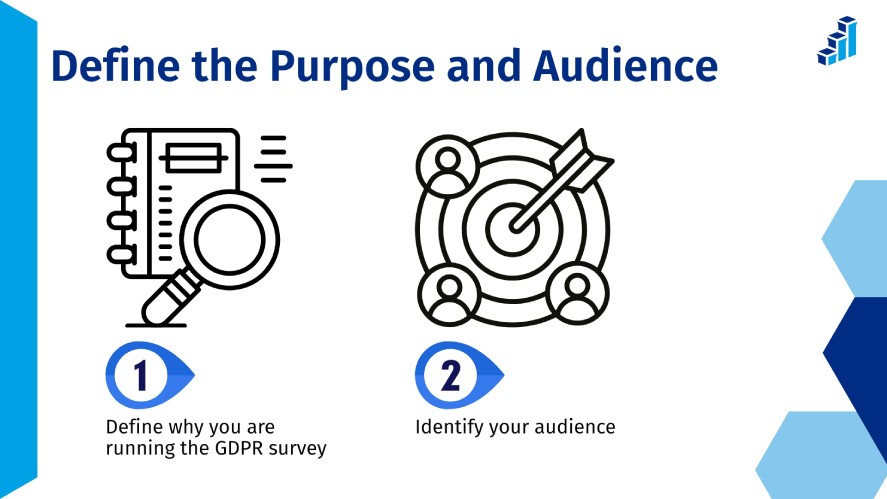
Start by clearly defining why you are running the GDPR survey.
Is it meant for an internal compliance review, preparation for an external audit, or an ongoing monitoring effort?
The purpose will shape both the depth and tone of your questions.
Next, identify your audience.
A general employee survey should focus on awareness and everyday data handling practices, while surveys for specific teams can go deeper into technical, legal, or operational responsibilities.
Defining the audience early ensures your survey stays relevant and actionable rather than overly broad or confusing.
Step 2: Create Questions that Drive Action
Effective GDPR survey questions should reveal behaviors, not just theoretical knowledge.
Use a balanced mix of Yes/No questions for clear compliance checks, Likert scale questions to measure confidence or consistency, and open-ended questions to uncover process gaps or misunderstandings.
Keep language simple and non-technical wherever possible.
Employees should be able to answer based on their real-world experience, not guess legal terminology.
Well-designed questions don’t just identify problems; they point directly to where training, policy updates, or process changes are needed.
Example questions include:
- Do we always ask for consent before collecting personal data?
- Have you received GDPR training in the last 12 months?
- Can you explain how a customer would request their data be deleted?
These types of questions help connect GDPR principles to daily workflows and responsibilities.
Step 3: Choose the Right Survey Platform
The survey platform you use is just as important as the questions you ask.
A GDPR survey should be conducted using a secure survey design tool that prioritizes data privacy, encryption, and compliance-friendly data handling.
Built-in reporting and survey analytics features are also essential for turning responses into audit-ready documentation.
Polling.com is well-suited for GDPR surveys because it combines compliance-focused infrastructure with ease of use.
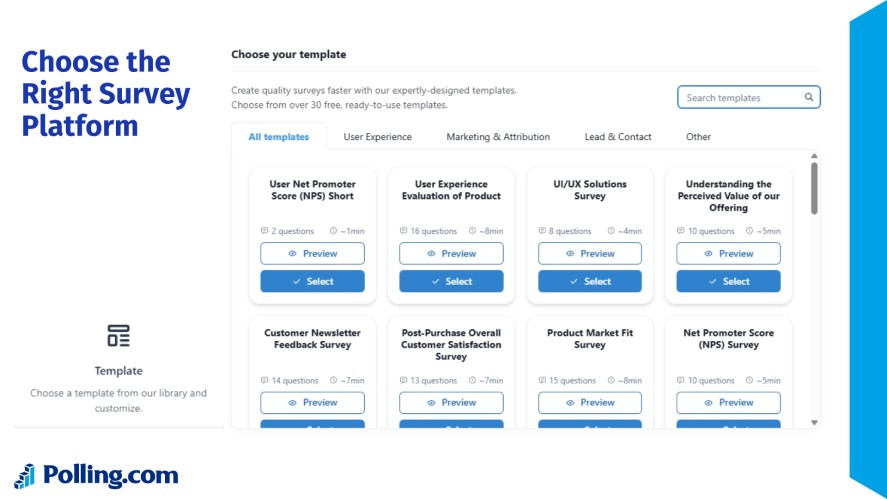
The survey tool offers:
- Pre-built GDPR survey templates
- EU-hosted data centers
- Custom reporting for audit readiness
- Simple UI for employee and admin use
Choosing a secure, purpose-built survey and polling software helps ensure that your GDPR survey process is compliant from start to finish.
Interpreting and Acting on GDPR Survey Results
Collecting responses is only the first step.
The real value of a GDPR compliance survey comes from how you analyze the data and turn insights into concrete compliance improvements.
How to Analyze Responses
Begin by reviewing overall response patterns to identify areas of low awareness, inconsistent practices, or uncertainty.
Repeated “not sure” answers or wide variation in confidence levels often signal unclear policies or insufficient training.
Next, segment responses by department, role, or region. This makes it easier to spot compliance hotspots.
For example, a marketing team struggling with consent rules or a regional office unclear on data retention procedures.
Grouped analysis helps prioritize actions where the risk is highest rather than treating all issues as equal.
Use Results to Improve Processes
Next, use the findings to drive practical changes across your organization.
Survey results can highlight where privacy policies need clarification or updating, especially if employees interpret rules differently.
They also reveal which teams require additional GDPR training or refreshers.
In more technical areas, responses may expose weaknesses in access control, data storage, or handling procedures.
Addressing these gaps early, before an audit or incident, reduces compliance risk and strengthens overall data governance.
Document for Accountability
Finally, treat your GDPR survey results as formal compliance records.
Archive completed surveys, summaries, and action plans as part of your GDPR documentation.
These records demonstrate due diligence and proactive risk management if regulators or auditors request evidence.
Maintaining clear documentation not only supports compliance but also shows that your organization actively monitors, reviews, and improves its data protection practices over time.
Common Mistakes When Running a GDPR Survey
Even well-intentioned GDPR surveys can fall short if they’re poorly designed or improperly executed.
One frequent mistake is asking vague or overly technical questions.
If questions are unclear or filled with legal jargon, respondents may guess, skip items, or provide inconsistent answers.
GDPR surveys should use plain language that employees across roles can understand, while still being precise enough to assess actual practices.
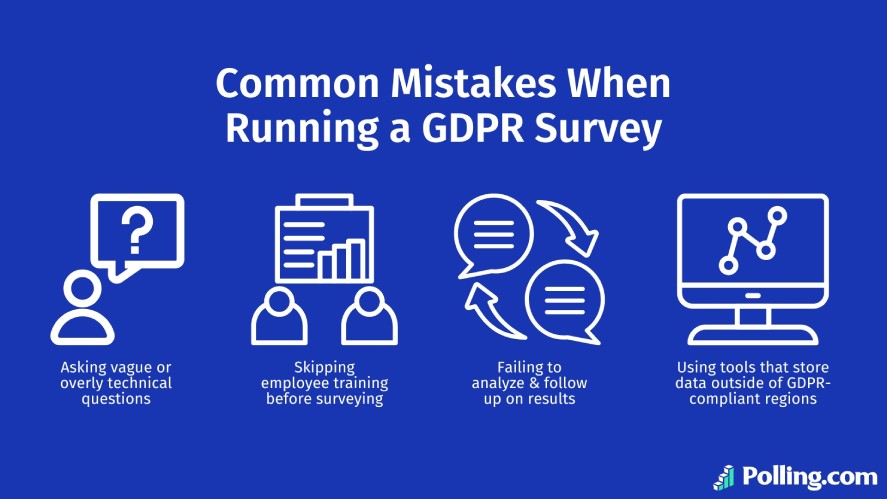
Another issue is skipping employee training before running the survey.
When staff have little or no baseline understanding of GDPR principles, survey responses may reflect confusion rather than real compliance gaps.
Basic awareness training before surveying leads to more reliable answers and more actionable results.
Many organizations also fail to analyze results or follow up with concrete actions.
Collecting responses without reviewing trends, addressing weaknesses, or communicating next steps turns the survey into a checkbox exercise rather than a compliance tool.
A GDPR survey should always feed into process improvements, training plans, or policy updates.
Finally, using free business analytics software that stores data outside GDPR-compliant regions can create new compliance risks.
GDPR surveys often contain sensitive internal information, so it’s critical to choose platforms with appropriate data residency, survey security controls, and survey privacy safeguards.
The wrong tool can undermine the very compliance effort the survey is meant to support.
Best Practices for GDPR Surveys
Following best practices ensures your GDPR survey delivers accurate insights, encourages honest participation, and supports long-term compliance rather than a one-off check.
Run Surveys Annually
GDPR compliance is an ongoing process, not a one-time task.
Running GDPR surveys on a yearly basis helps organizations track progress, spot new risks, and adapt to regulatory or operational changes.
By adding GDPR surveys to your annual compliance calendar, you create a consistent rhythm for review, improvement, and documentation.
Customize for Different Roles
Not every employee handles personal data in the same way.
Tailoring questions for specific roles, such as IT, HR, marketing, or third-party vendors, makes the survey more relevant and more accurate.
Role-specific surveys help uncover department-level gaps that a generic, one-size-fits-all approach would miss.
Keep It Anonymous (When Necessary)
In some cases, anonymity encourages more honest and accurate responses, especially when employees are unsure about compliance or fear blame.
Anonymous GDPR surveys can surface hidden issues and knowledge gaps that might otherwise go unreported, giving organizations a clearer picture of their true privacy posture.
Integrate Surveys into Broader Data Governance
GDPR surveys work best when they are part of a larger data governance framework.
Combine survey findings with Data Protection Impact Assessments (DPIAs), vendor risk assessments, internal audits, and ongoing training programs.
This integrated approach helps ensure that insights from surveys translate into real policy, process, and security improvements.
Start Your GDPR Survey Journey Today
GDPR surveys are essential tools for assessing and improving an organization’s privacy readiness.
They help identify compliance gaps, raise internal awareness, and provide valuable documentation for audits and regulatory reviews.
Rather than relying on assumptions, GDPR surveys offer a structured, evidence-based way to understand how data protection is handled across your business.
With the right approach and a secure, GDPR-compliant platform like Polling.com, businesses can design, launch, and analyze GDPR surveys quickly and confidently.
Ready to launch your GDPR survey? Use Polling.com’s GDPR Survey Builder to assess and protect your organization with confidence.