
10 Proven Ways to Detect Fake Survey Response

Survey response quality is the foundation of reliable business data. If your survey response data is flawed, every decision built on top of it becomes risky. So the real question is simple. Are your survey responses truly coming from real people who care about your questions?
Today, surveys drive product launches, marketing strategies, political polling, customer experience programs, and growth planning. Because of this, companies work hard to get survey responses and improve their response rate. However, there is a growing problem that many teams overlook. Not all survey responses are real.
Fake survey responses are increasing across industries. Some are generated by bots. Others come from people rushing through surveys just to claim incentives. There are even AI generated survey responses that look human at first glance. As a result, data integrity is now a serious concern.
This matters because decisions based on flawed data can cost companies millions. A misleading survey response rate may look impressive on a dashboard, yet still hide major quality issues. Even worse, a high survey response percentage does not guarantee accuracy.
For example, imagine you launch a new product feature because survey responses show strong demand. Later, you discover many responses came from fraudulent accounts. The result is wasted development time, wasted ad spend, and lost trust from stakeholders.
That is why data validation is no longer optional. Platforms like Polling.com recognize this challenge. Instead of focusing only on helping users get survey responses, they prioritize response validation and fraud detection from the start.
In this guide, you will learn why survey response quality matters more than ever, the common types of fake responses, and practical ways to verify authenticity before bad data harms your business.
Why Survey Response Quality Matters More Than Ever

The Cost of Poor-Quality Survey Response
At first, a high response rate feels like success. However, if the quality is low, the damage can be significant.
The response rate definition refers to the percentage of completed surveys compared to the number sent out. While that metric is important, it does not measure honesty or attention. A strong survey participation rate means little if many entries are fake.
Poor-quality survey responses can lead to:
- Wrong product decisions
- Misleading customer satisfaction scores
- Inflated Net Promoter Score results
- Inaccurate demand forecasting
- Poor targeting in advertising campaigns
For instance, if your average survey response rate normally sits at 25 percent and suddenly jumps to 60 percent without any major campaign change, that spike should raise questions. A typical survey response rate varies by industry, but dramatic increases often signal problems.
Moreover, businesses often compare results against a survey response rate benchmark. Yet if fraudulent data inflates your numbers, the benchmark becomes meaningless.
In short, low-quality survey responses create false confidence. And false confidence is expensive.
How Fake Response Distort Analytics and Polling
Fake data does more than lower accuracy. It reshapes analytics in subtle ways.
First, fraudulent responses can skew satisfaction metrics. For example, incentive hunters may rush through answers without reading carefully. This behavior can create patterns such as straight lining, where respondents select the same rating for every question.
Second, political polling becomes vulnerable. Even small distortions in respondent rate can shift perceived public opinion. When survey responses are used to predict elections or shape policy, the stakes are even higher.
Third, marketing teams rely heavily on survey responses examples to guide campaigns. If those examples are built on fake entries, messaging strategies will miss the mark.
Over time, distorted data weakens forecasting models. Revenue predictions become unreliable. Customer churn projections become inaccurate. Ultimately, leadership loses trust in research altogether.
Therefore, protecting survey response quality is not just a technical issue. It is a strategic priority.
Common Types of Fake Survey Responses
Before you can detect fraud, you need to understand how it happens. Below are the most common forms of manipulation seen today.
Bot Generated Survey Response
One of the fastest growing threats comes from automation. Bots can submit hundreds of survey responses within minutes.
These automated scripts often target surveys that offer rewards or allow open public links. In some cases, organizations that buy survey responses unknowingly receive bot traffic instead of real human input.
Here are common warning signs:
- Extremely fast completion times
- Repetitive answer patterns
- Identical open ended responses
- Nonsensical text in comment fields
Because bots operate at scale, they can quickly inflate your survey response rate. However, the data they generate holds no real insight.
Duplicate Survey Response
Another issue involves real people submitting multiple entries. This often happens when incentives are involved.
For example, a respondent may attempt to increase their reward by filling out the same survey several times. Without proper monitoring, duplicate survey responses can distort the respondent rate and lead to biased conclusions.
Detection methods include:
These measures help ensure that each participant submits only one valid response.
Straight Lining and Random Clicking
Not all fake responses come from bots. Sometimes real humans provide low effort answers.
Straight lining occurs when someone selects the same answer across all scale questions. For example, choosing Strongly Agree for every item without reading the content.
Random clicking is another issue. Respondents rush through the survey just to finish quickly, often because they want a reward. As a result, answers lack consistency and depth.
When reviewing sample survey responses, you may notice patterns such as:
- Contradictory answers across related questions
- Irrelevant comments in open text fields
- Very short completion times
Although these participants are technically human, their input still reduces data quality.
Incentive Hunters and Survey Farms
Incentives can improve your survey participation rate. However, they can also attract the wrong audience.
Incentive hunters complete surveys only for rewards. They are not invested in the topic and often provide careless answers.
Even more concerning are organized survey farms. These are networks of individuals who complete large volumes of surveys daily. Because they operate at scale, they can significantly distort your survey response percentage.
While it may be tempting to focus on how to get survey responses quickly, speed should never replace authenticity.
10 Ways to Verify If Survey Response Are Real
Now that you understand the risks, let us explore practical ways to protect your data.
1. Monitor Completion Time
Every survey has a reasonable completion window. If your questionnaire requires ten minutes to read and answer carefully, a response submitted in one minute is suspicious.
By analyzing completion time data, you can flag entries that fall far below the expected range. While some fast readers exist, extreme outliers often signal fraud.
Over time, you can establish benchmarks based on your typical survey response rate and average completion duration.
2. Use Attention Check Questions
Attention checks are simple yet powerful.
For example, you might include a question that says, Please select Strongly Agree for this statement. Respondents who fail this check likely are not reading carefully.
These checks help filter out random clicking and careless responses. They also improve overall data reliability without adding much survey length.
3. Analyze Open Ended Responses
Open text answers reveal a lot about authenticity.
Look for patterns such as:
- Copy and paste responses repeated across entries
- Generic statements unrelated to the question
- Text that appears machine generated
As AI generated survey responses become more advanced, manual review alone may not be enough. Therefore, many platforms now use natural language processing tools to detect suspicious patterns.
4. Track IP and Device Fingerprinting
Tracking technical identifiers helps prevent duplicate entries.
When multiple survey responses originate from the same IP address or device within a short period, that cluster deserves investigation.
Device fingerprinting adds another layer of protection by identifying unique hardware and browser characteristics.
5. Verify Geo Location
If your survey targets customers in a specific country or city, geo location verification is essential.
For instance, if you are studying U.S. consumer behavior but receive a surge of responses from unrelated regions, the data may not align with your audience criteria.
Geo verification ensures that your survey response data reflects the population you intended to reach.
6. Use CAPTCHA and Bot Protection
While bots are becoming more advanced, basic protection still blocks a large percentage of automated attacks.
CAPTCHA tools require users to confirm they are human before submitting a survey response. Although this step may feel small, it creates friction that most automated scripts cannot bypass easily.
In addition, advanced bot protection systems analyze behavior. They monitor mouse movements, typing speed, and interaction patterns. Humans behave differently from bots. Over time, these systems learn to recognize suspicious activity.
If your survey response rate suddenly increases after making a survey link public, adding CAPTCHA is one of the fastest ways to regain control.
7. Run Consistency Checks Across Questions
Consistency is a powerful validation tool.
For example, if a respondent claims they have never used your product but later rates product satisfaction, that contradiction signals a problem. Likewise, if someone selects that they are under 18 in one question and later indicates 25 years of work experience, the data does not align.
Consistency checks compare related answers across the survey. When responses conflict, they can be flagged for review or removed.
This method helps protect your respondent rate from hidden inaccuracies. It also improves trust in your survey responses examples when presenting insights to stakeholders.
8. Use Panel Verification Systems
Verified panels offer an additional layer of protection. Instead of relying on open public links, panel systems use pre screened participants.
These panels verify identity, location, and demographic details before allowing participation. As a result, the quality of survey responses tends to be higher.
This approach is very different from services that encourage businesses to buy survey responses. Purchased responses often prioritize volume over authenticity. Verified panels prioritize data accuracy.
If you are comparing your numbers against a survey response rate benchmark, using a trusted panel helps ensure your comparison is meaningful.
9. Conduct Response Pattern Analysis
Beyond individual checks, statistical analysis can reveal patterns that humans may miss.
Response pattern analysis looks at:
- Unusual clustering of answers
- Identical rating distributions
- Repeating sequences across many entries
For instance, if dozens of respondents choose the exact same answer pattern across a long list of questions, that pattern may not be natural.
Advanced systems compare current data against historical trends, including your average survey response rate and typical survey response rate. When behavior deviates sharply, alerts are triggered.
Over time, pattern analysis strengthens your overall survey response validation process.
10. Work With a Secure Survey Platform
Finally, the platform you use matters more than many realize.
Some businesses choose a free survey maker with unlimited responses because it appears cost effective. However, unlimited access often means limited protection.
Secure platforms invest in:
- Built in fraud detection
- Real time monitoring dashboards
- Automated filtering systems
- Advanced analytics
Polling.com, for example, focuses on protecting survey response integrity from the start. Instead of simply helping users get survey responses, the platform emphasizes validation and authenticity.
This approach reduces fraud risk in business research, NPS programs, and political surveys. When data drives high stakes decisions, security should not be optional.
How Polling.com Ensures Authentic Survey Response
Polling.com integrates multiple layers of protection into its system.
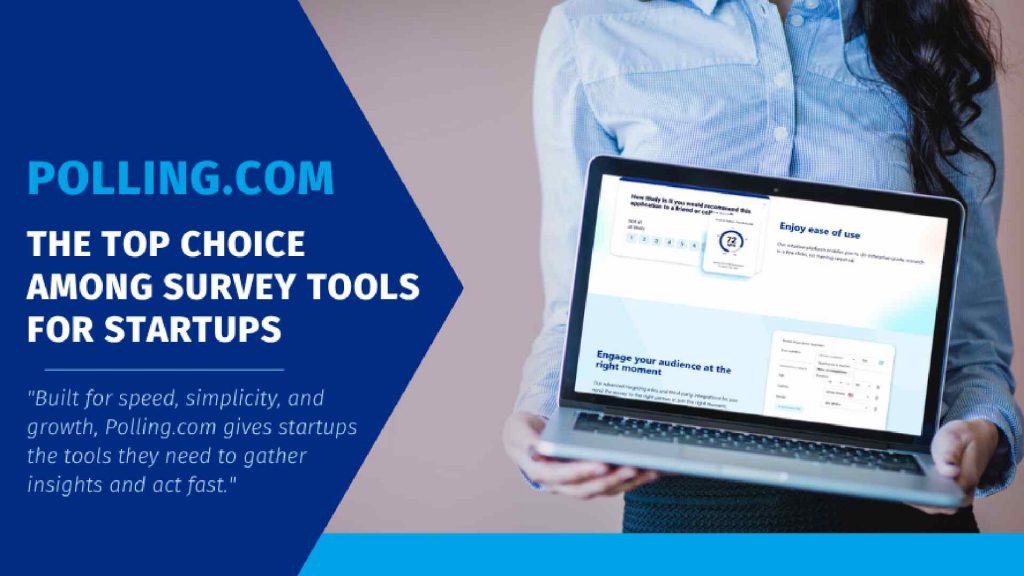
First, built in fraud detection automatically flags suspicious activity. This includes unusual completion times, duplicate technical identifiers, and irregular response patterns.
Second, advanced filtering systems remove low quality entries before results are finalized. This prevents distorted survey response percentage metrics from reaching decision makers.
Third, real time monitoring dashboards allow researchers to track trends as they happen. If a sudden spike occurs in your survey response rate, you can investigate immediately.
Unlike many generic tools, Polling.com is designed for serious research. It supports business intelligence, customer satisfaction programs, and political polling where data accuracy directly affects strategy.
In short, the platform treats validation as a core feature rather than an afterthought.
The Role of AI in Detecting Fake Survey Response

Artificial intelligence now plays a growing role in survey validation.
Machine Learning Fraud Detection
Machine learning models analyze thousands of survey responses simultaneously. They identify subtle behavioral signals that manual review might miss.
These signals include:
- Typing rhythm
- Answer selection speed
- Pattern repetition
- Language structure in open text fields
As AI generated survey responses become more common, detection systems must evolve at the same pace. Machine learning helps close that gap.
Pattern Recognition in Large Data Sets
Large scale surveys produce massive amounts of data. AI systems compare current responses to historical baselines.
If your survey participation rate normally follows a steady curve but suddenly spikes at unusual hours, AI tools can detect the anomaly quickly.
Similarly, if the distribution of answers shifts dramatically compared to previous studies, that deviation may indicate manipulation.
By combining statistical modeling with behavioral analysis, AI strengthens survey response quality control.
The Future of Survey Validation
Looking ahead, survey validation will become even more sophisticated.
Future systems may rely on:
- Behavioral biometrics
- Adaptive questioning that changes based on answers
- Real time fraud scoring
The goal remains simple. Protect the authenticity of survey responses so organizations can trust their insights.
Red Flags That Your Survey Response Might Be Fake
Even with strong systems in place, it is important to recognize warning signs.
Here are common red flags:
- Extremely high completion rates within a short time
- Repeated open ended responses across many entries
- Identical demographic profiles submitted in clusters
- Sudden traffic spikes from unexpected regions
- Sharp increases in survey response rate without marketing changes
If your average survey response rate suddenly doubles overnight, investigate the source. While growth is positive, unexplained spikes often signal automated activity.
Monitoring these signs regularly helps maintain a healthy and realistic respondent rate.
Best Practices to Prevent Fake Survey Response Before They Happen
Prevention is always easier than cleanup. By designing your survey carefully, you can reduce fraud risk from the beginning.
Limit Incentives Strategically
Incentives can boost participation, but they must be balanced.
Instead of offering large universal rewards, consider smaller targeted incentives. This approach attracts genuinely interested participants while discouraging survey farms.
Keep Surveys Concise
Long surveys increase fatigue. When respondents feel overwhelmed, they rush.
If you are wondering how to get survey responses without sacrificing quality, start by shortening your questionnaire. Clear and focused surveys improve both engagement and authenticity.
Target the Right Audience
Careful targeting reduces random participation.
Use email lists, verified panels, or segmented audiences. When your survey reaches people who care about the topic, the quality of survey responses improves naturally.
Use Secure Survey Links
Avoid posting sensitive research links publicly. Private or tokenized links prevent unauthorized sharing.
This step protects your survey participation rate from being inflated by unintended audiences.
Combine Quantitative and Qualitative Validation
Numbers alone do not tell the full story.
Compare rating scales with open ended answers. If someone gives extremely positive ratings but provides negative written feedback, review that entry closely.
Blending quantitative and qualitative analysis strengthens your overall validation strategy.
Conclusion: Trustworthy Survey Response Lead to Better Decisions
In the end, survey response quality determines the value of your insights.
A high response rate may look impressive. A strong survey response percentage may satisfy reporting goals. Yet none of these metrics matter if the data behind them is unreliable.
Authentic survey responses provide clarity. They guide smarter product decisions, improve marketing performance, and strengthen forecasting accuracy.
By understanding the response rate definition, monitoring your survey response rate benchmark, and protecting your survey participation rate with strong validation methods, you turn data into a competitive advantage.
Most importantly, you build confidence. When leadership trusts the data, decisions move faster and with greater certainty.
Investing in validation tools, advanced detection systems, and secure platforms like Polling.com is not just about preventing fraud. It is about protecting the future of your business.
Because in a world driven by data, trustworthy survey responses are not optional. They are essential.